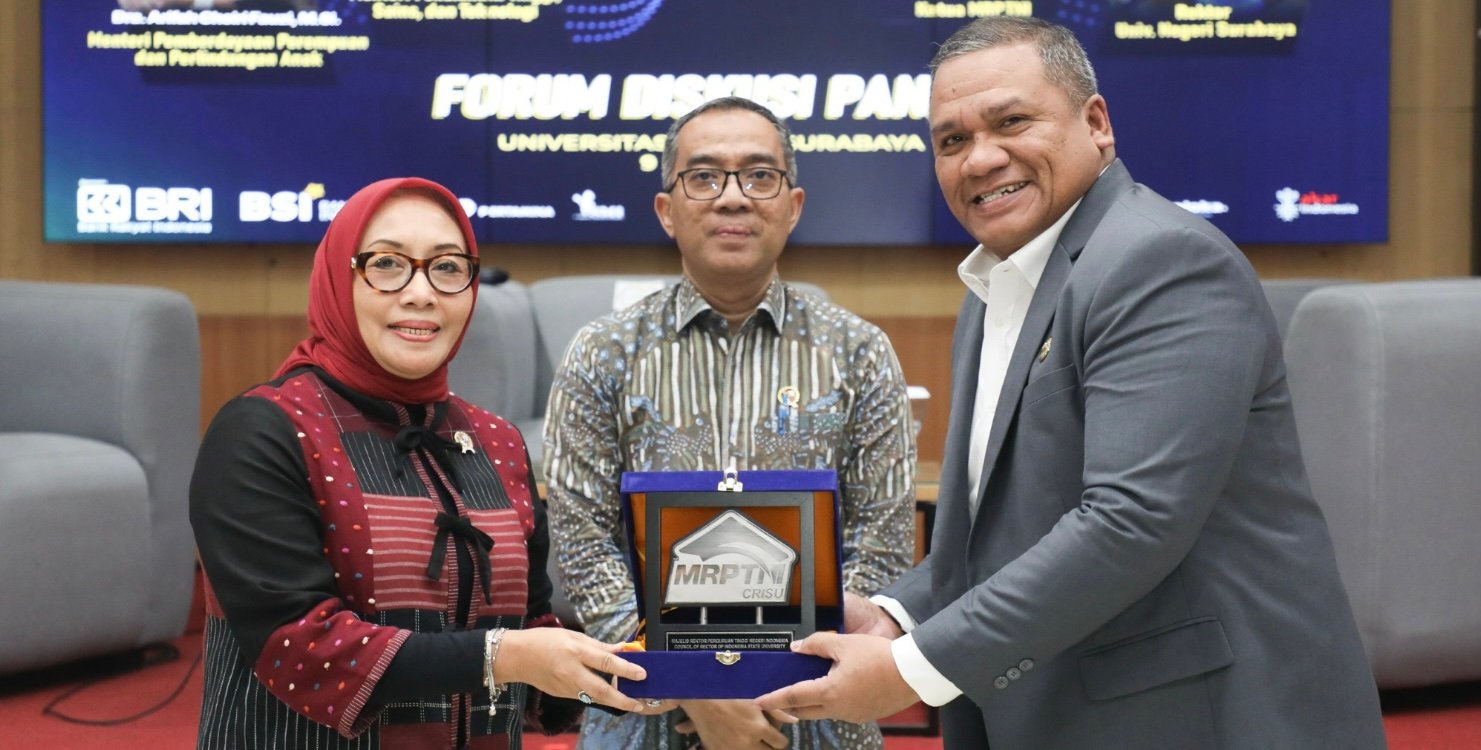
Minister of Women’s Empowerment and Child Protection Arifah Fauzi (left) at the Rector’s Expressions (REx) Chapter 3 on May 11, 2026. (Kementerian Pemberdayaan Perempuan dan Perlindungan Anak RI)
On May 11, speaking at the Rector’s Expressions (REx) Chapter 3 forum hosted by Universitas Negeri Surabaya, Minister of Women’s Empowerment and Child Protection Arifah Fauzi praised universities that have established dedicated task forces to prevent and address violence on campus, reflecting Indonesia’s intensifying efforts to tackle violence within its higher education.
Known as the Task Force for the Prevention and Handling of Violence in Higher Education, these units are designed to create a safe reporting space and provide support for victims of abuse within academic institutions.
Minister Arifah emphasised that universities must have a central role in ensuring campuses remain safe, inclusive and conducive to learning. According to her, institutions should implement accessible reporting channels, safeguard the confidentiality of victims and witnesses and provide comprehensive support services for those affected by violence.
The issue remains pressing. Data from the 2024 National Survey on Women’s Life Experiences (SPHPN) shows that one in four women aged 15-64 in Indonesia has experienced physical and/or sexual violence. Meanwhile, the 2024 National Survey on Children and Adolescents’ Life Experiences (SNPHAR) indicates that one in two adolescents aged 13–17 has encountered physical, emotional or sexual violence.
Government policy has increasingly responded to these realities. Legal protections were strengthened through the 2022 Law on Sexual Violence Crimes and reinforced by a 2024 regulation from the Ministry of Education governing violence prevention and response within universities. Earlier research from the Directorate General of Higher Education also revealed a persistent reporting gap: while 77% of lecturers acknowledged that sexual violence had occurred on campus, roughly 63% of cases were never formally reported.
Authorities view the expansion of the task force as a critical step toward addressing this “iceberg phenomenon”. By improving reporting mechanisms and coordination between ministries and institutions, the government hopes to foster safer academic environments, which is an essential foundation for developing Indonesia’s future and strengthening institutional trust.
About The Author