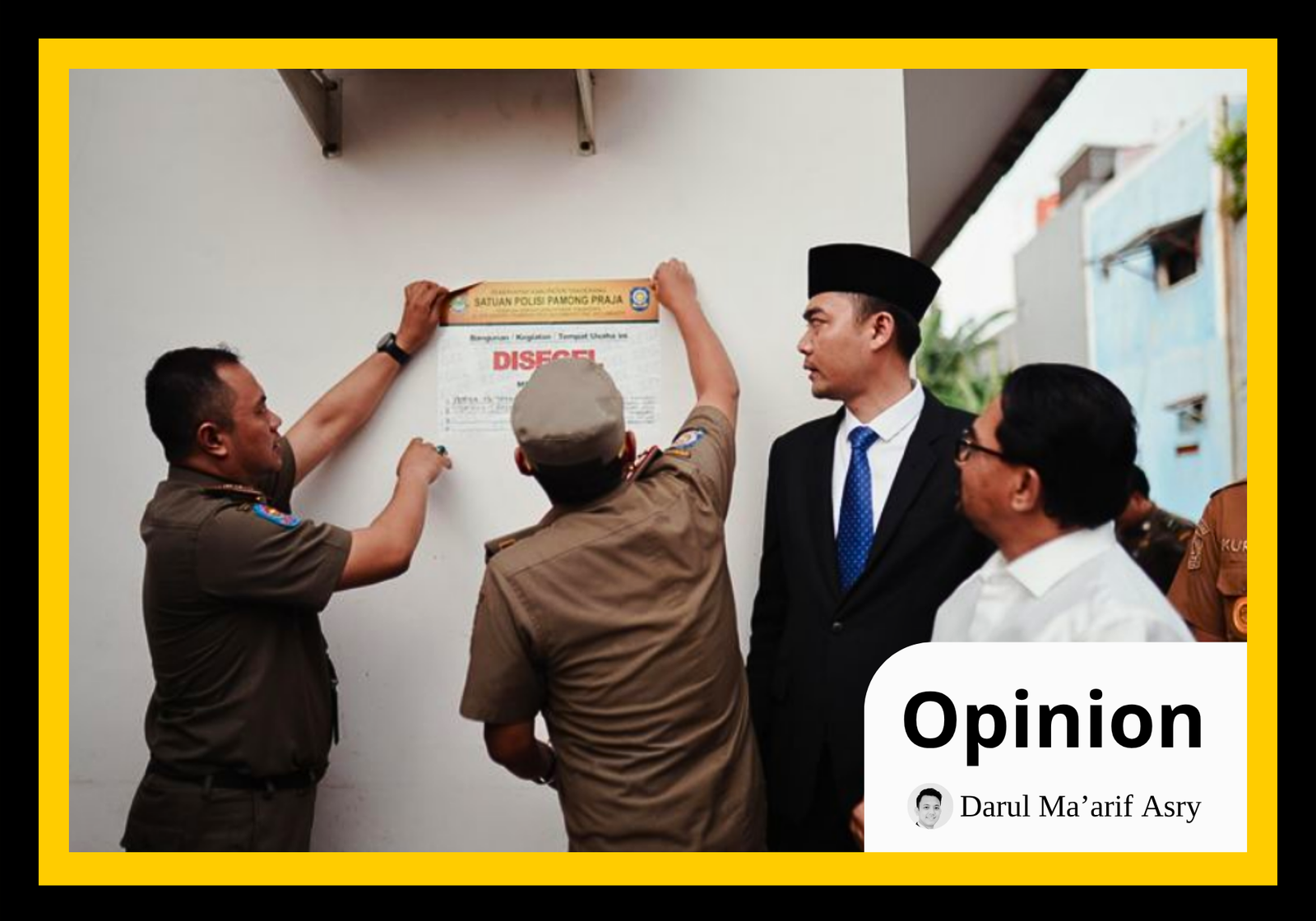
Revocation of the ban on the use of the Christian prayer house belonging to the Persekutuan Oikumene Umat Kristen (POUK) in Teluknaga, Indonesia, in April 2026, following mediation by Indonesia’s Ministry of Religious Affairs. (Personal documentation of the Special Staff to the Minister of Religious Affairs)
Darul Ma’arif Asry is the Director of Nasaruddin Umar Office, Fellow at the Centre for Interfaith and Multicultural Studies, Delegate of the 2025 Australia-Indonesia Muslim Exchange Programme and participant of the Interreligious Peacebuilding: Peace, Religion and Encounter Programme, United States–Ministry of Religious Affairs, Republic of Indonesia (2024). The views expressed are his own and do not represent SEA Daily or that of another organisation.
In a well-known saying attributed to the fourth caliph in Islam, Ali ibn Abi Talib stated that when you encounter another person, there are only two possibilities; they are either your brother in faith or your brother in humanity. It is a striking reflection, not least because it came from one of the earliest converts to Islam, whose formative years were spent observing the daily example of Prophet Muhammad.
Before Islam became a majority faith in various countries, such as Indonesia, and indeed one of the fastest-growing religions globally, as noted by Pew Research Center, it was a marginalised belief system in the Arabian Peninsula. Early Muslims were often among society’s most vulnerable: the poor, the oppressed, and those subjected to the harshest injustices.
Historical accounts, widely documented and even depicted in film, recount the brutal persecution endured by these early believers. They were tortured under the scorching desert sun, dragged across the sands and punished simply for practising their faith. One of the earliest martyrs, Sumayyah bint Khayyat, was killed for refusing to renounce her belief. The suffering was not merely individual but collective. The early Muslim community in Mecca faced economic boycotts and social isolation. Even the Prophet himself was stoned and bloodied when seeking refuge in Ta’if.
Yet history also records an important moment of compassion beyond religious boundaries. Protection for these persecuted Muslims was first granted not by fellow believers, but by a Christian ruler, Ashama ibn Abjar. This episode underscores a moral truth often overlooked, that solidarity can transcend faith.
The turning point came when the community in Yathrib (now Medina) offered support, eventually enabling Muslims to return to Mecca not as a persecuted minority but in a position of strength. Crucially, when victory came, it was not marked by vengeance. The Prophet, even with a force of 10,000, did not compel conversion nor exact retribution upon those who had wronged him. Instead, he granted them amnesty and upheld their dignity. Many embraced Islam not by coercion, but through witnessing the very noble character of a just majority.
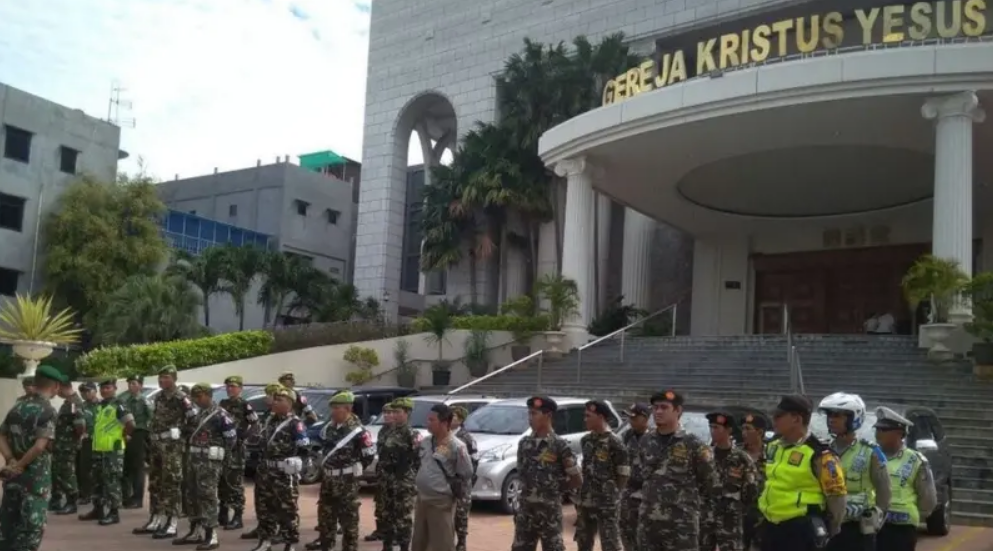
The tradition of Barisan Ansor Serbaguna (Banser), a paramilitary wing of Nahdlatul Ulama (the largest Muslim organization in Indonesia and the world) entails voluntarily safeguarding churches across Indonesia during Christmas celebrations. (BBC.com)
This historical transformation, from oppressed minority to compassionate majority, forms the ethical backdrop to Ali’s words. Respect for human dignity, regardless of religious affiliation, is not an optional virtue in Islam; it is foundational.
For Muslims in Indonesia living as a part of the majority today , this legacy carries practical implications. Ensuring that people of other faiths can worship freely is not merely a constitutional matter, it is a moral one rooted in prophetic example. Where such tolerance falters, it suggests not strength of faith but a lapse in historical and ethical memory.
Prophet Muhammad’s covenant with the Christians of Najran further reinforces this principle. It emphasised protection of their places of worship, respect for their clergy and a prohibition against forced conversion. It even extended to assisting the maintenance of their religious institutions if needed. Such commitments, recorded in classical Islamic sources, were not only on paper, they were enacted. The Prophet once welcomed Najran’s Christian delegation to perform their prayers in his own mosque.
This spirit of respect continued under leaders such as Umar ibn al-Khattab (the second caliph in Islam), who, upon entering Jerusalem in 636 CE, chose not to convert the revered Church of the Holy Sepulchre into a mosque, preserving its sanctity for Christians.
Today, while some Muslim minorities around the world continue to face discrimination, this should not be misinterpreted as justification for intolerance in Muslim-majority societies. On the contrary, the prophetic model demonstrates restraint, forgiveness, and protection when power shifts.
Personal experiences of living as a Muslim minority in countries such as theUS and Australia can be deeply instructive. They reveal the challenges of limited religious facilities and the importance of support from those of different faiths. These experiences ought to inspire reciprocal attitudes at home.
If we appreciate the support we receive abroad in securing our rights to worship and access halal provisions, then consistency demands that we advocate for the same rights for minority communities domestically. If we feel anger when fellow Muslims are prevented from practising their faith elsewhere, then moral coherence requires us to respond with equal concern when others are denied theirs.
Understanding minority experience is not about grievance. It is about empathy. To truly grasp the ethical vision of Islam, one must not only study history but internalise it. And sometimes, the most powerful way to do so is to experience, even briefly, what it means to stand as the minority.
A mindset such as this needs to be continually amplified, beginning within our region of Southeast Asia, in line with the eastern values we uphold and mutually respect. By doing so, we can preserve stability and peace, as history has shown that this region has been relatively more stable than many others across the world.
About The Author