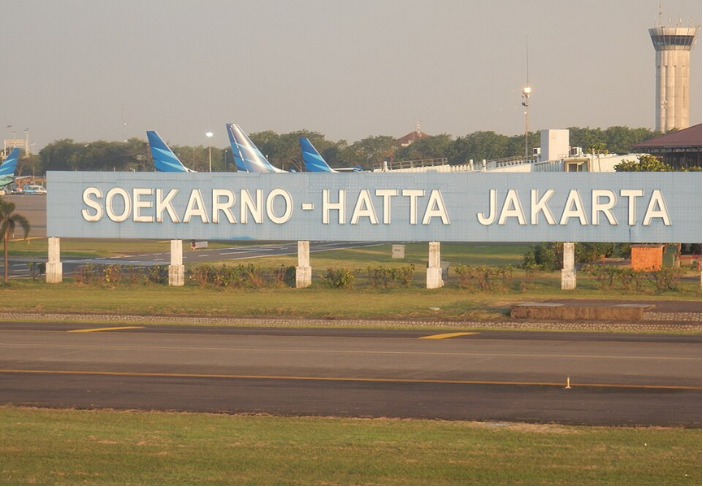
Soekarno-Hatta International Airport in Jakarta, Indonesia’s busiest airport, which was forced to halt operations due to the eruption of Anak Krakatau volcano. (Wikimedia/Charles)
The relentless 25-hour eruption of Mount Anak Krakatau has reportedly eased, but Indonesia’s Centre for Volcanology and Geological Hazard Mitigation (PVMBG) continues to maintain the volcanic activity at a “Level 3 Alert”. Aviation at the country’s busiest airport remained suspended until September 7.
Over 1500 regional flights have been disrupted since the intense wave of eruptions commenced near midnight on September 4. The volcano, located in the Sunda Strait, approximately 150 kilometres west of Jakarta, has propelled massive columns of volcanic ash up to 50,000 feet into the air.
Eight domestic airports across Western Java and Southern Sumatra immediately halted operations from September 5. A recent update from Transportation Minister Dudy Purwagandhi confirmed the prolongation of these closures, attributing the decision to “aviation safety amid unpredictable atmospheric conditions”.
Minister Dudy further instructed commercial carriers to provide affected passengers with ticket refunds. “The most important thing is that passengers’ rights to ticket refunds must be guaranteed by the airlines so they do not have to wait needlessly. Reopening will only occur once we can fully guarantee safe atmospheric conditions,” he affirmed.
Neighburing country carriers, such as Singapore Airlines, and its budget arm Scoot, have also cancelled Singapore-Jakarta flights scheduled for September 7.
Lana Saria, head of Indonesia’s Geological Agency, reassured the public that the most recent series of eruptions lacks the potential to trigger a tsunami at this time. For context, the catastrophic 1883 eruption of Mount Krakatau, which had destroyed the original mountain, prompted tsunamis that brought over 36,000 casualties.
What does this mean for business?
The eruption of Mount Anak Krakatau has dealt an immediate operational and financial blow to regional enterprises, particularly across Jakarta, West Java, and Lampung. The Indonesia National Air Carriers Association (INACA) estimates that domestic airlines are losing up to 19 billion Indonesian rupiah (1.1 million US dollar) per day in lost revenue, compounded by soaring aircraft parking fees and mandatory passenger compensations. Beyond logistics, the crisis has exposed a deeper vulnerability framework; corporate analysts note that recent state budget cuts to the National Disaster Management Authority (BNPB) have left local supply chains heavily exposed to prolonged infrastructural bottlenecks.
Kala Advisory helps investors turn disruptions like these into resilient, country-by-country mitigation and entry plans across Southeast Asia. Visit kala-advisory.com.
About The Author