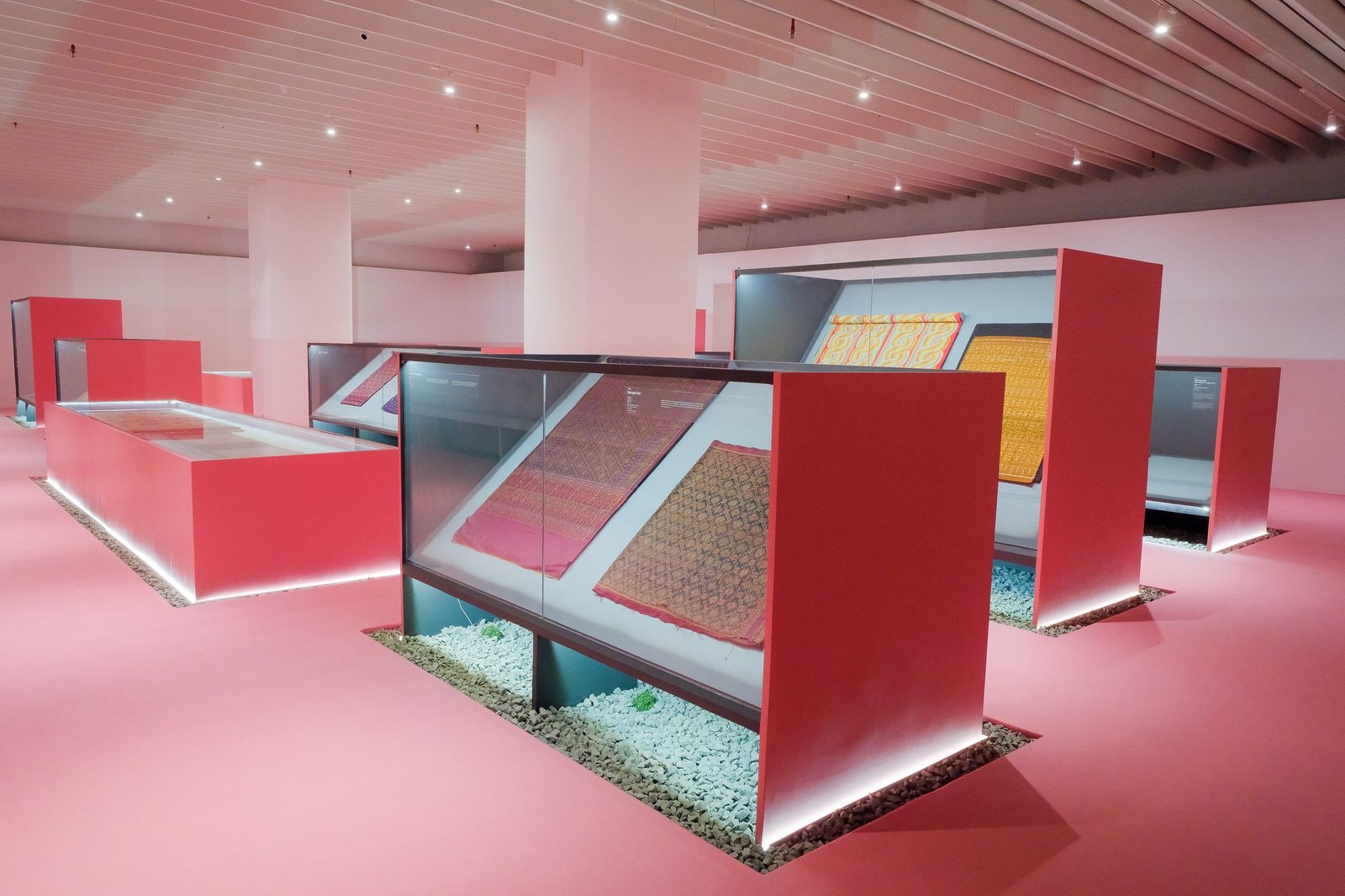
Waves of Weave cultural exhibition, held on October 26 to January 8 2026 at the National Museum in Jakarta (Indonesia’s Ministry of Tourism)
On October 26, Jakarta Fashion Week (JFW) and its partners launched Waves of Weave, a cultural exhibition exploring Southeast Asia’s textile traditions and their role in shaping regional identities. Running from October 26 to to January 8 2027 at the National Museum in Jakarta, the exhibition is presented in collaboration with Indonesia’s Ministry of Tourism, the Indonesian Heritage Agency, Adhvan Media and ASA.
Featuring traditional textiles, known as wastra, from 10 Southeast Asian countries, the exhibition also highlights the kebaya, a traditional garment shared by five nations: Indonesia, Brunei Darussalam, Malaysia, Singapore and Thailand. Their joint recognition of kebaya by UNESCO in 2024 depicts the garment’s cultural significance and the knowledge, craftsmanship and customs associated with its continued use.
Visitors can explore historical and contemporary textiles through immersive displays showcasing regional weaving techniques, distinctive motifs, artisanal expertise and centuries of cultural exchange. The exhibition also presents garments and accessories belonging to Gusti Raden Ayu Siti Noeroel Kamaril Ngasarati Kusumawardhani, better known as Gusti Nurul, the celebrated ‘Flower of Mangkunegaran’. Her kebaya and batik ensembles illustrate how traditional dress expressed the identity, social position and personal style of Javanese noblewomen.
The initiative also seeks to connect heritage with contemporary life. Indonesian Tourism Minister Widiyanti Putri Wardhana said the initiative brings together diplomatic representatives, designers, heritage institutions, collectors and cultural communities, strengthening regional relationships through fashion. She also emphasised the importance of encouraging younger generations to engage with traditional textiles.
Beyond showcasing historic garments, Waves of Weave offers opportunities for people to understand the cultural knowledge embedded in everyday clothing. By introducing younger audiences to traditional craftsmanship and shared regional histories, the exhibition aims to support the preservation of textile-making skills, sustain appreciation for local artisans and keep cultural traditions relevant to future generations.
About The Author