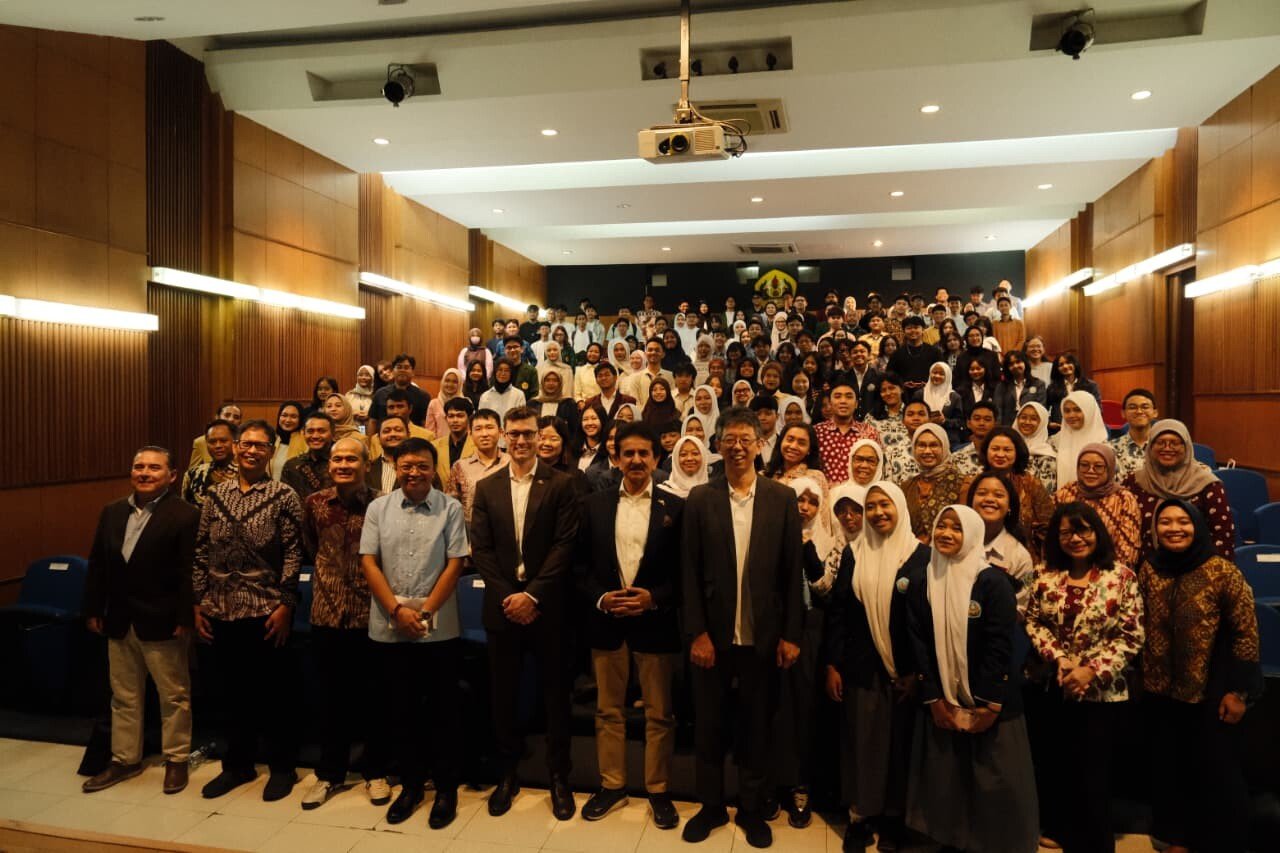
Participants during the ASEAN-ID Roadshow held in Bandung, Indonesia, on 31 July, bringing together students, officials and international representatives to discuss community resilience and disaster preparedness. (Ministry of Foreign Affairs of Republic of Indonesia)
On July 29, Indonesia called on ASEAN to shift its disaster management approach from disaster risk reduction towards long-term sustainable resilience, urging stronger international cooperation to better prepare the bloc for future crises.
During the 48th ASEAN Committee on Disaster Management (ACDM) and related meetings in Bandung, Director General for ASEAN Cooperation at Indonesia’s Ministry of Foreign Affairs Ina Krisnamurthi said broader international partnerships are essential to strengthening the region’s capacity to anticipate, prepare for and respond to disasters.
Held under the theme “From ASEAN to Global: Strengthening Community Preparedness and Leadership for Sustainable Resilience,” the meeting focused on improving the use of disaster risk data to support faster and more coordinated responses before emergencies escalate. Ina said cooperation between ASEAN and its dialogue partners should extend beyond emergency response to developing a shared framework for resilience.
As ACDM Chair for 2026, Indonesia said it would prioritise strengthening regional early warning systems, including the ASEAN Multi-Hazard Early Warning and Preparedness System (AMPD), while promoting sustainable investment to improve disaster preparedness and local response capacity.
Indonesia’s National Disaster Management Agency (BNPB) Principal Secretary Rustian said effective implementation of the 2026–2030 ASEAN Agreement on Disaster Management and Emergency Response (AADMER) Work Programme would be essential to ensuring resilience initiatives deliver practical benefits across the region, adding that community-based preparedness supports the ASEAN Community Vision 2045.
Supporting this agenda, Indonesia also organised the ASEAN-ID Roadshow in Bandung on July 31 to promote resilience at the grassroots level. The programme included youth discussions at Universitas Padjadjaran, a visit to Lebak Muncang Village to showcase community-based resilience initiatives as well as cultural activities highlighting local traditions and the creative economy. Representatives from ASEAN member states, dialogue partners, diplomatic missions and students participated.
Indonesia’s initiatives reflect its efforts to position long-term resilience as a key priority under its ACDM chairmanship. By combining regional policy discussions with community-based programmes, Jakarta is promoting a more preventive approach that links early warning systems, local preparedness and youth engagement with ASEAN’s broader resilience agenda.
About The Author