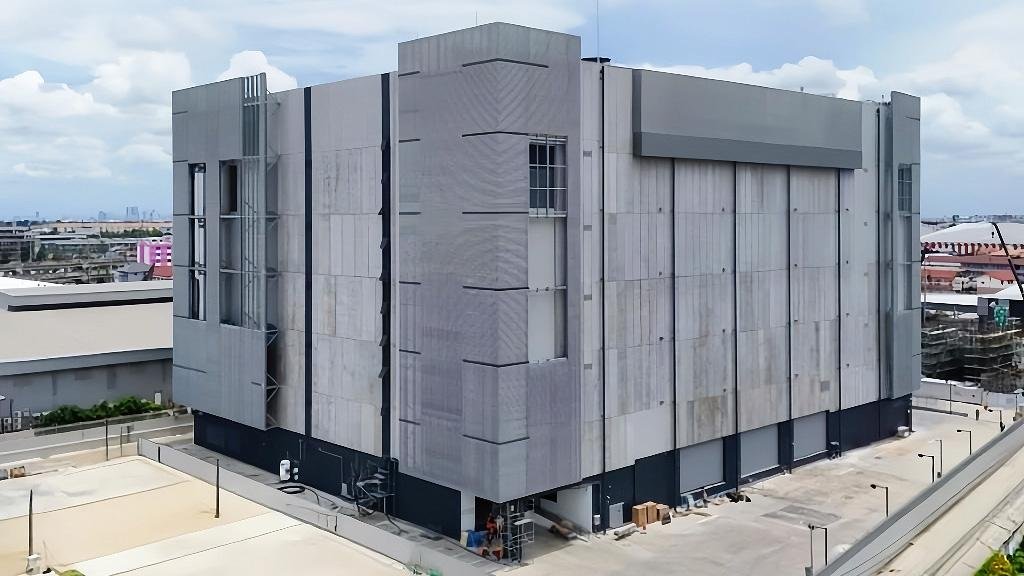
GSA Data Center, Thailand. (Asian Development Bank)
US Ambassador to ASEAN Kevin Kim detailed Washington’s plan through a virtual briefing on July 24, following Secretary of State Marco Rubio’s engagement at the 59th ASEAN Foreign Ministers’ Meeting (AMM) in Manila.
Ambassador Kim highlighted that “there’s a big emphasis on advancing technologies of the future in Southeast Asia, given the region’s interest in digital economy development, whether it’s in artificial intelligence (AI) or data centers and so forth.”
Notably, to anchor their high-tech cooperation, both sides forged a pact to establish the US-ASEAN AI SPARK. Under America’s Pax Silica, the initiative aims to bolster Southeast Asia’s digital transformation and economic growth, utilising US AI stack deployment complemented by financial and technical support.
Equally prominent on the negotiating table was regional energy securities. According to Ambassador Kim, the US is pledging 1.5 billion US dollar to “the buildout of energy security infrastructure across the Indo-Pacific,” claiming it as “the largest single project investment in the history of the Development Finance Corporation.”
He further elaborated that Washington will “work with Southeast Asia by providing access to the America LNG market development, the deployment of US grid technologies, as well as providing and working with ASEAN and Southeast Asia on small modular nuclear reactors as well”.
The statement signals Washington’s SMR ambition for the Indo-Pacific, aligned with Ambassador Kim’s description that, “given the energy demands of this region as well as within the US and throughout the world, SMRs will play a critical role in supplying energy in the future”.
What does this mean for businesses?
For a historically non-aligned bloc, ASEAN businesses will view this American rapprochement as a dual-edged sword. While it introduces critical capital liquidity and cutting-edge tech deployment, it undeniably pushes local commercial ecosystems into the crosshairs of a broader Washington-Beijing tech rivalry. However, with the US moving past purely transactional tariff threats to actively fund regional infrastructure, a massive playground is opening for private enterprise. Companies specialising in data centre construction, power grid modernisations and clean energy supply chains stand to capture significant windfalls from these newly minted US government-backed funding mechanisms.
Kala Advisory helps investors turn high-tech and energy openings like these into targeted, country-by-country entry plans across Southeast Asia. Visit kala-advisory.com.
About The Author