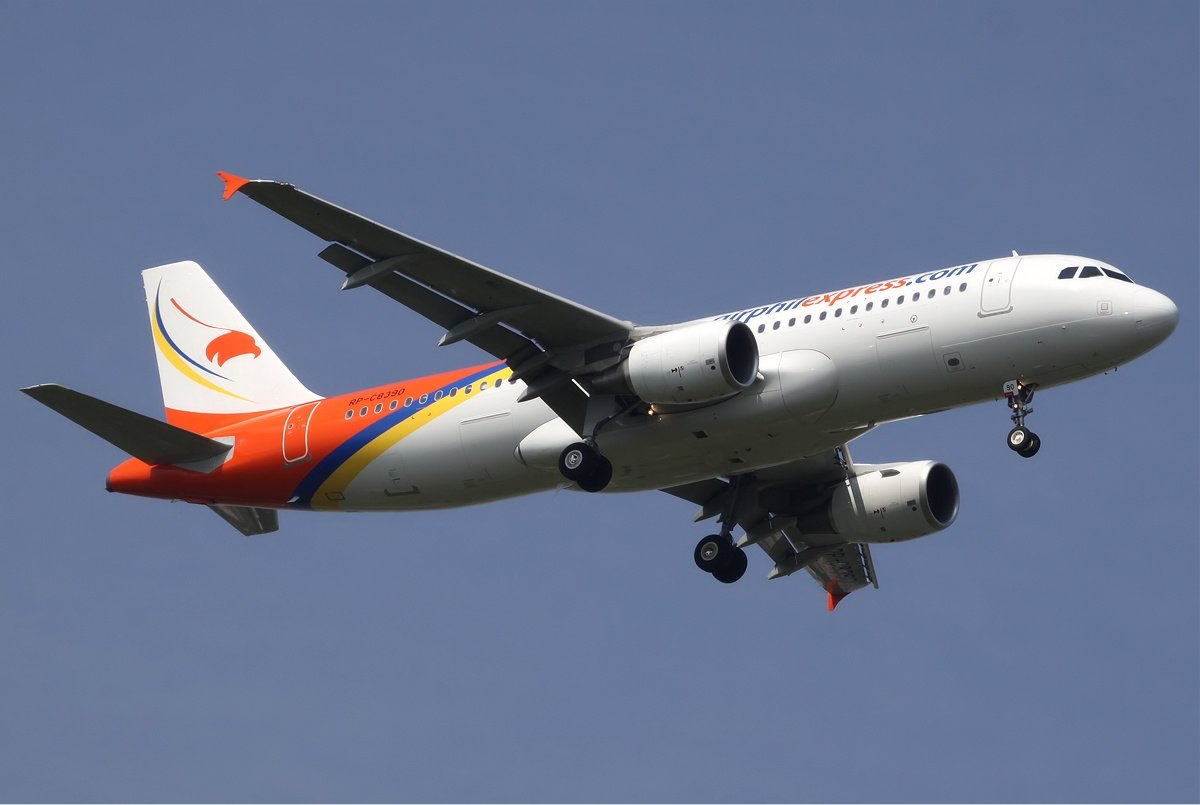
Airphil Express Airbus A320 in 2011. (Wikimedia/Paul Spijkers)
Air passengers in the Philippines will pay the lowest fuel surcharges in three months from July 1, after the country’s aviation regulator ordered a sharp reduction tied to easing global jet fuel prices.
The Civil Aeronautics Board (CAB), in an advisory dated 26 June, lowered the passenger fuel surcharge to Level 9 for the first half of July, down three notches from Level 12 in the second half of June. It is the second consecutive cut and the lowest level approved since fuel prices surged earlier this year amid conflict in the Middle East.
Under Level 9, airlines may add between 287-839 Philippine peso (4.68-13.69 US dollar) to domestic fares depending on distance, against 389-1,137 Philippine peso (13.69-18.55 US dollar) under Level 12. International surcharges fall to a range of 947.30-7,044.27 Philippine peso (15.45-114.9 US dollar), from 1,284.40-9,550.13 Philippine peso (20.94-155.7 US dollar). Carriers collecting the charge in foreign currencies must apply the CAB’s set exchange rate of 60.99 Philippine peso to the US dollar, with applications due before July 1.
The surcharge is a regulated fee that lets airlines recover costs from jet fuel price movements, separate from the base fare. Since April the CAB has reviewed it every 15 days rather than monthly, an interim measure intended to track volatile prices more closely.
The reduction follows a steady fall in global jet fuel costs. The International Air Transport Association recorded an average price of 119.17 US dollar per barrel as of June 19, down from 138.86 US dollar a week earlier, with prices in the Asia and Oceania region lower still at 115.72 US dollar. The easing came after the US and Iran reached a preliminary agreement in mid-June aimed at restoring shipping through the Strait of Hormuz, a chokepoint for a large share of the world’s oil. Renewed strikes in the region since then have kept the outlook uncertain.
The timing offers carriers a tool to support demand through a traditionally weak period. Cebu Pacific has signalled it is trimming third-quarter capacity and revenue expectations, citing a disciplined approach to managing softer demand and still-elevated fuel costs through the rainy season from July to September.
Whether lower surcharges translate into materially cheaper tickets depends on how carriers balance them against fuel hedging and seasonal capacity decisions, and on whether the fragile Middle East truce holds.
Fuel costs, currency swings, and regulatory shifts move fast across Southeast Asia’s aviation and logistics markets. Kala Advisory helps investors read these signals and time their decisions. Visit kala-advisory.com.
About The Author