
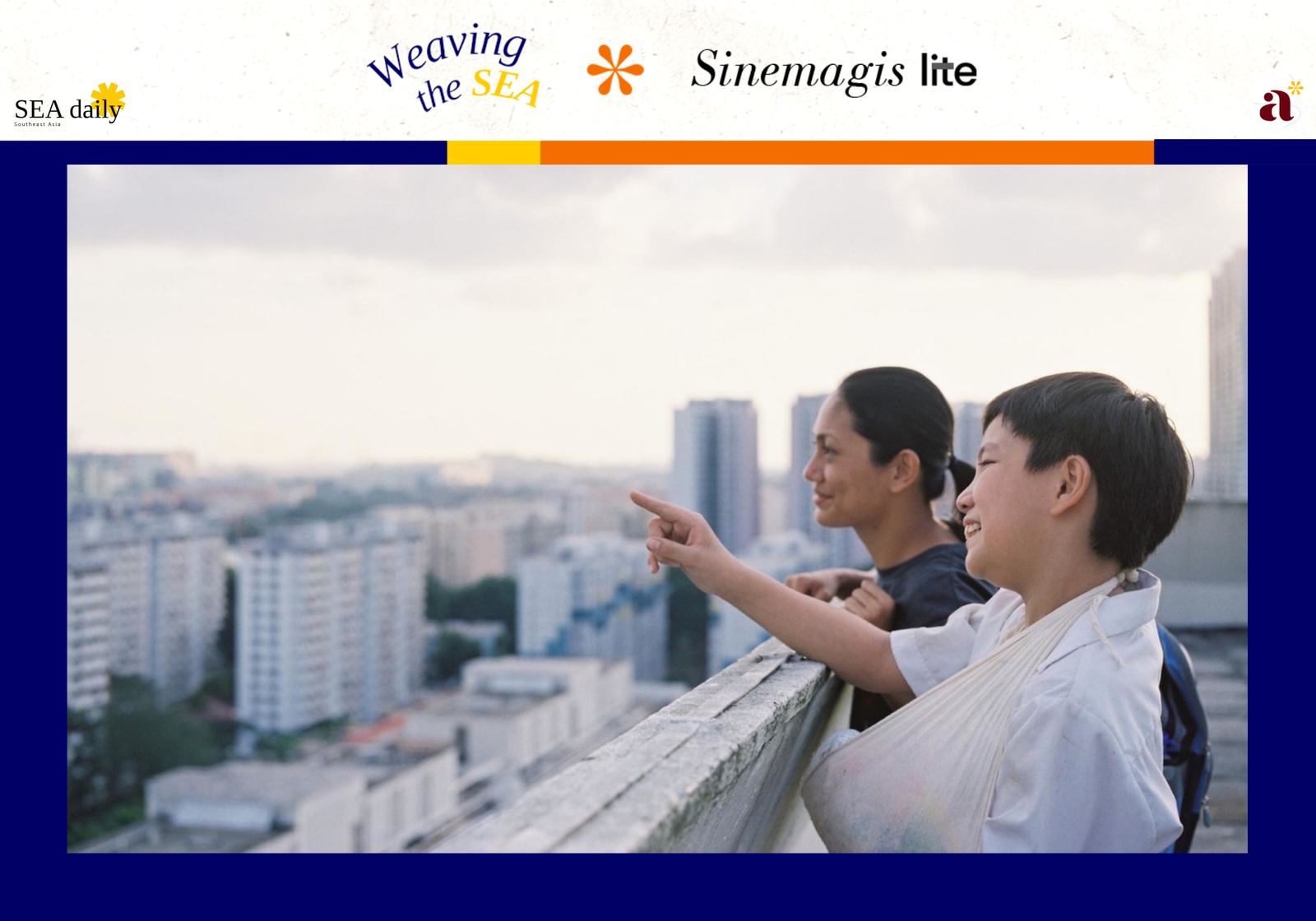
A clip from Ilo Ilo (Singapore Film Commission, Ngee Ann Polytechnic, Fisheye Pictures)
Ilo Ilo is a 2013 Singaporean drama film. It is written and directed by Anthony Chen. In this debut film, Chen explored the relationship between Teresa, a domestic worker; and Jiale, a 10 years old child cared for by Teresa. Ilo Ilo premiered in Cannes Film Festival 2013 and won Camera D’Or. The Award set a new record as the first Singaporean film to win a category in the festival.
The film revolved around the Lim family, who consisted of Teck, the father; Hwee Leng, the pregnant mother; and Jiale, a 10 years old boy who is always having problems in his school. The dynamics start when Teresa, a domestic worker migrant from the Philippines, arrives to work for the Lim family. When Terry (the nickname of Teresa) first arrived, Jiale didn’t like her because she sleeps in his bedroom. But, throughout the film, Jiale grows fond of Terry. Their relationship even makes Hwee Leng jealous because of her absence as a working mother.
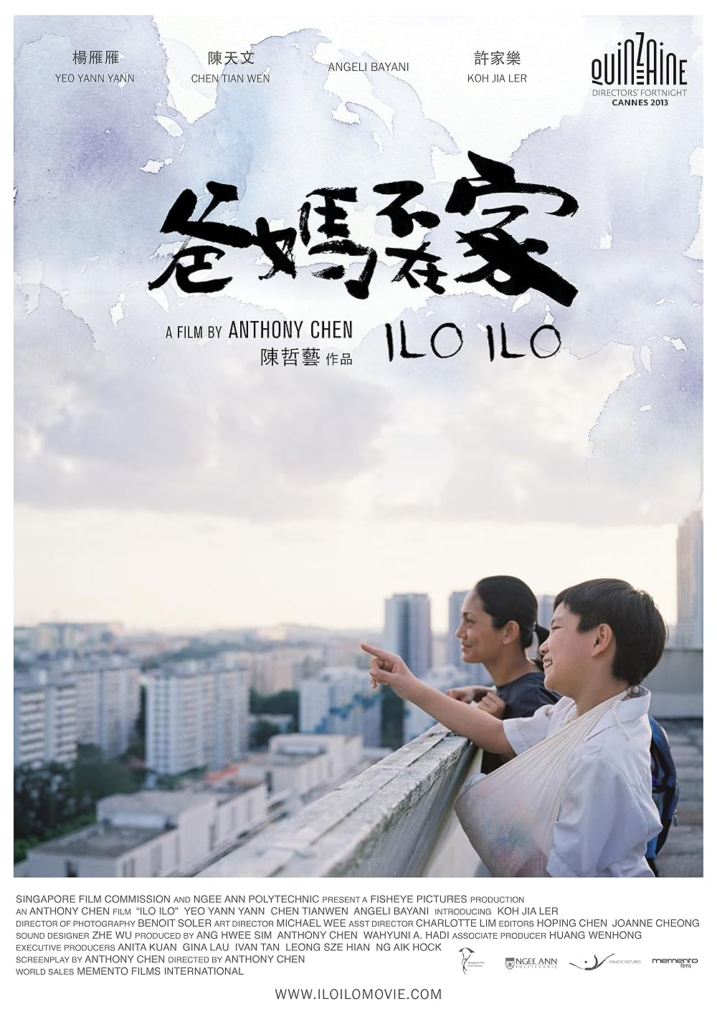
Official poster of Ilo Ilo (Singapore Film Commission, Ngee Ann Polytechnic, Fisheye Pictures)
Ilo Ilo offers a subtle yet powerful portrayal of migrant domestic labour in Southeast Asia. Through the story of Teresa, a Filipino domestic worker employed by a middle-class family in Singapore, the film reveals how everyday domestic life reflects broader regional economic inequalities. By focusing on the intimate relationship between Teresa and the family she serves, the film highlights the complex intersection of care, labour and structural inequality within contemporary labour migration.
Teresa’s presence in the household illustrates a common migration pattern in Southeast Asia, where women from economically vulnerable countries such as the Philippines migrate to wealthier states in search of employment. As a domestic worker, Teresa performs essential reproductive labour, including childcare and household maintenance, which enables the family to maintain their daily routines. Over time, she develops a close emotional bond with Jiale, the family’s young son, gradually becoming a maternal figure in his life. This emotional intimacy reflects the paradox often experienced by migrant domestic workers: while they become deeply involved in the private lives of their employers, they remain socially and economically marginal within the household.
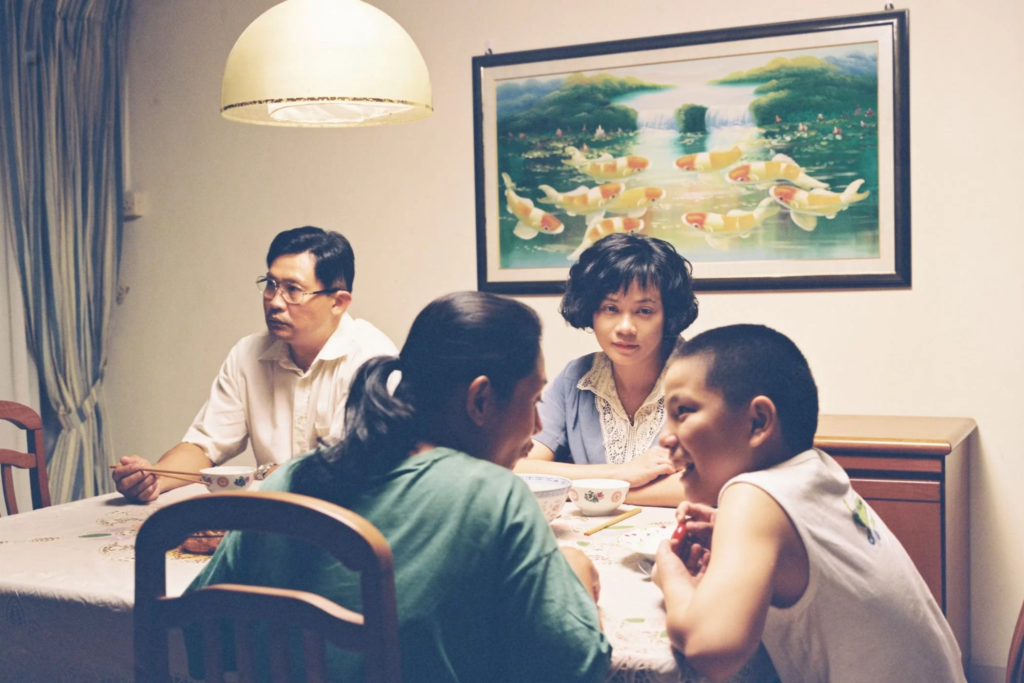
A clip from Ilo Ilo (Singapore Film Commission, Ngee Ann Polytechnic, Fisheye Pictures)
The film also emphasises the precarious position of migrant workers during times of economic instability. Set against the backdrop of the 1997 Asian Financial Crisis, it demonstrates how financial pressures within the family ultimately threaten Teresa’s employment. Despite the emotional bonds she forms with the child, her position remains conditional and easily dispensable because of the family’s financial uncertainty.
Ilo Ilo portrays the household as a microcosm of wider regional inequalities. Through Teresa’s experience, the film exposes how migrant domestic labour is shaped by economic disparity, emotional dependency and systemic vulnerability within Southeast Asia’s migration landscape.
About The Author




One thought on “The Bond between A Migrant Domestic Worker and A Kid in Singaporean Film Ilo Ilo”