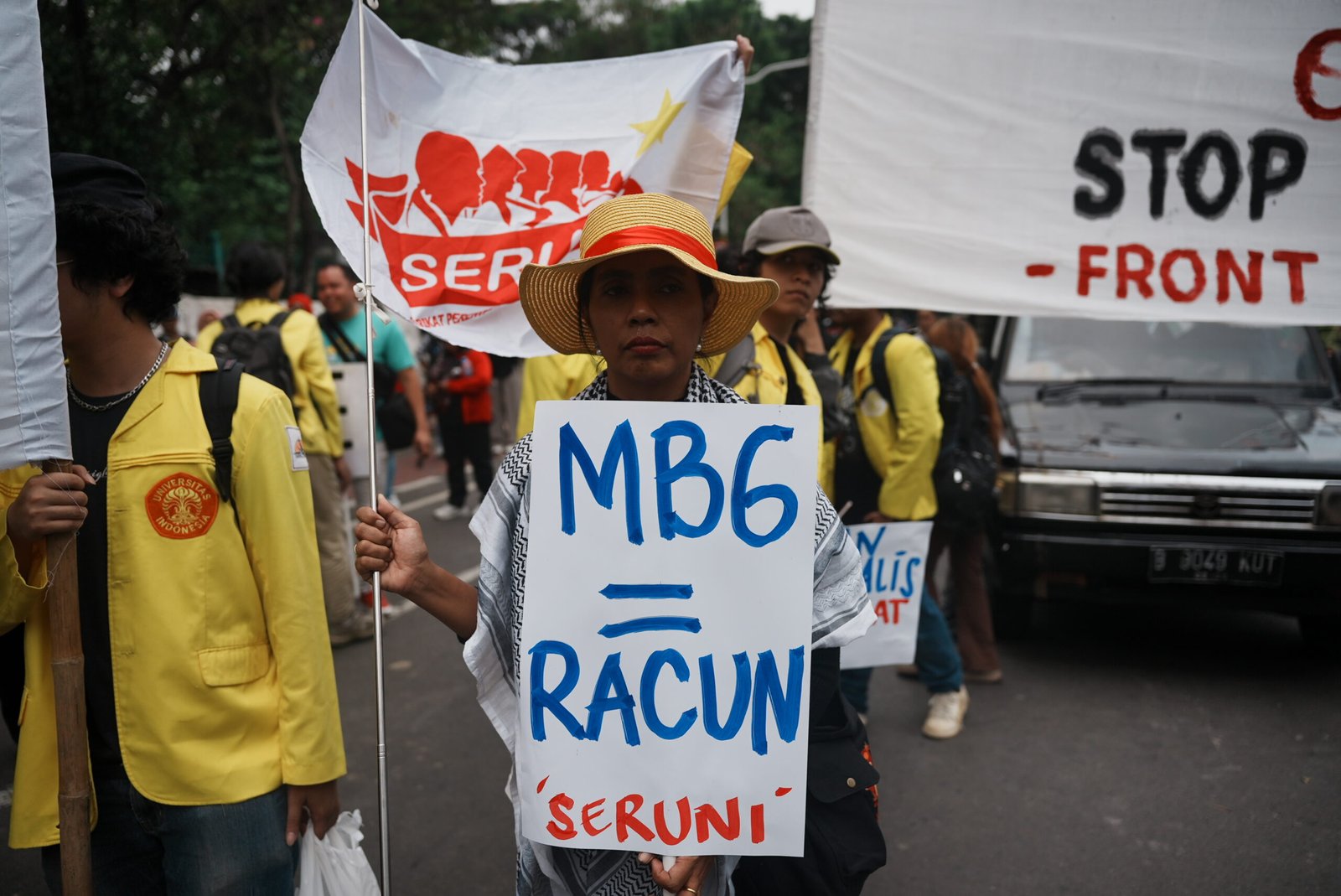
A woman holds a sign declaring the MBG program ‘poison,’ in reference to repeated food poisoning cases reported across Indonesia. (Wikimedia)
Students across Indonesia held a massive rally on June 12 to protest against Indonesian President Prabowo Subianto’s administration’s economic management and policy direction. Beyond the capital Jakarta, the wave of demonstrations rapidly spread to other major regional cities, such as Bogor, Bandung, Semarang, Kendari and Yogyakarta, signifying the wide public discontent.
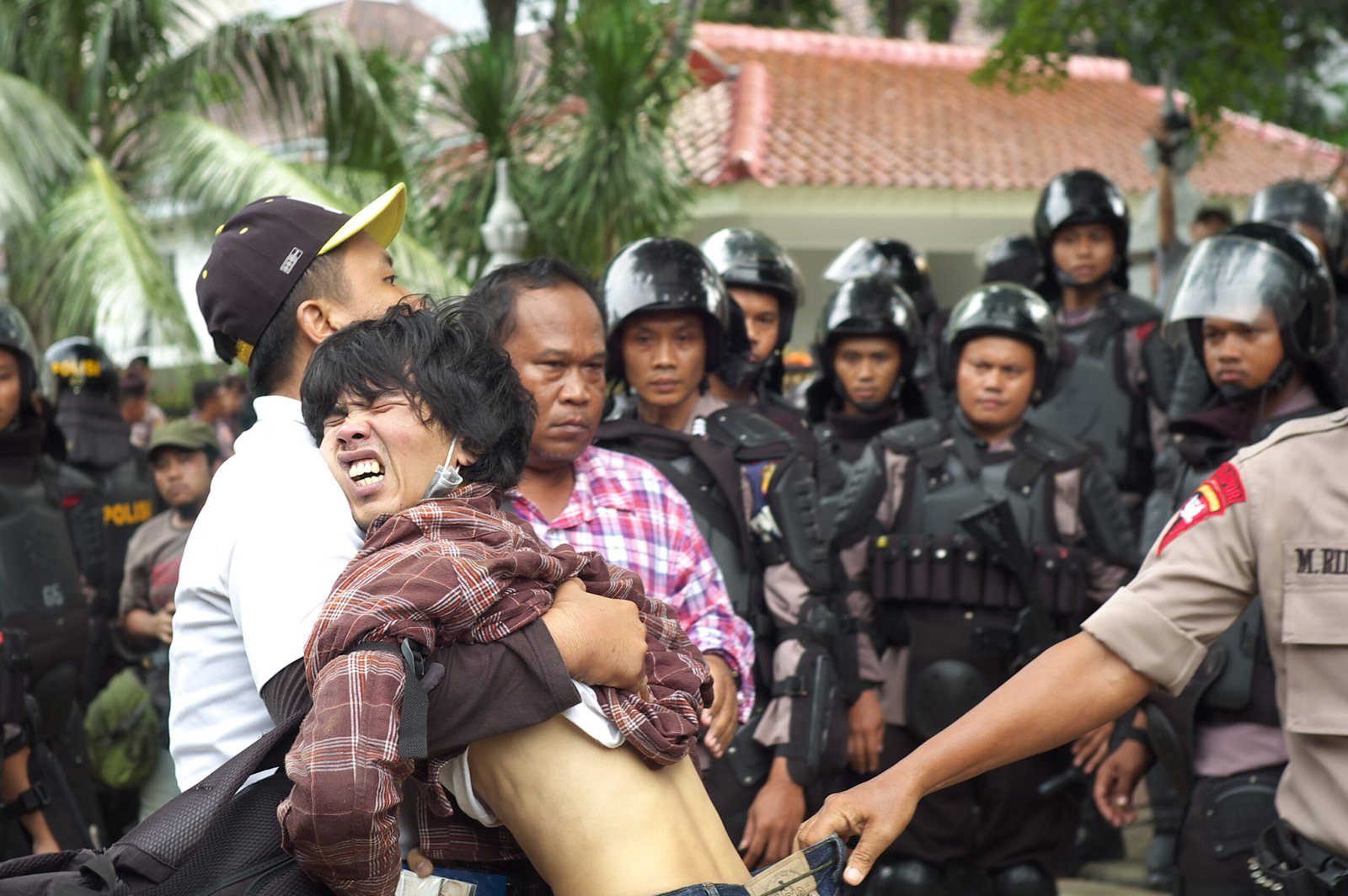
In Jakarta alone, 5,955 officers from the Indonesian National Police were deployed to guard the demonstration in front of the House of Representatives complex, and along Medan Merdeka Selatan street and Kwitang roads. In addition, 3,651 personnel from the police and 500 personnel from the Indonesian National Armed Forces were also on standby.
Rallying under the theme “#MenujuIndonesiaBangkrut” (Towards a Bankrupt Indonesia), the students argue that President Prabowo’s administration has failed to address the growing needs to resolve structural problems, namely the decline in the rupiah exchange rate, the collapse of fiscal capacity and the agenda of strengthening the security apparatus. Therefore, they echoed the “11+9 Demands” (eleven urgent and nine broader demands) spanning economic, social and political concerns.
The eleven urgent demands call for the rejection of fuel and staple food price increases; stabilisation of the rupiah exchange rate; termination of the Free Nutricious Meal (MBG) programme and the Merah Putih cooperatives, which are accused of being riddled with corruption, collusion and nepotism; an end of the wave of layoffs; revocation of the newly-issued National Police Law; rejection of the development of the military territorial battalions; addressing the state budget deficit while stopping seemingly wasteful spending on defence and security; increasing wages for teachers; rejecting the commercialisation of public schools, allocating education funds according to the constitutional mandate; ensuring transparency of the sovereign wealth fund Danantara; and a full evaluation and dismissal of several ministers responsible for economic stability;
Meanwhile, the nine general demands include: the rejection of evictions and land grabbing; rejection of national strategic projects (PSN) deemed to rob citizens of their living space; full support the Papuan people’s rights to self-determination and land ownership; halting the nationalisation od private universitiesand the increase in education costs; guaranteeing a scientific and democratic education; raising workers’ wages based on the Decent Living Needs; rejectig militarisation and violence against activists; demanding agrarian reform and strengthening national industry; as well as ensuring safety proper traffic engineering during demonstrations.
In response, the Government Communications Agency of the Republic of Indonesia (Bako Humas RI) assured that the administration insisted it is already acting on the protesters’ demands. Muhammad Qodari, head of Bako Humas RI, said, “Prabowo is a leader of the second phase of the Reformasi, because what he is doing now is reforming Indonesia’s economic structure. A structure that has benefited only the elite and allowed certain elites to run off with state funds. Prabowo is correcting that.”Vice President Gibran Rakabuming Raka took a more conciliatory approach, meeting with 15 demonstrators to attend an audience session at the Vice-Presidential Palace.
This momentum signifies public frustration due to the worsening domestic circumstances. With the Indonesian rupiah hitting 18,000 per US dollar, 32% price hike on fuel, rampant layoffs andbillions poured into the programmes that are considered wasteful (such as the MBGMerah Putih Cooperartives) public anger peaked due to the government’s inability to execute fair and consistent policies for its people.
These projects reflect the government’s failure to hear and respond to its citizens’ demands. In fact, the August 2025 massive demonstration echoed similar concerns, yet those concerns remain largely unaddressed.
About The Author