
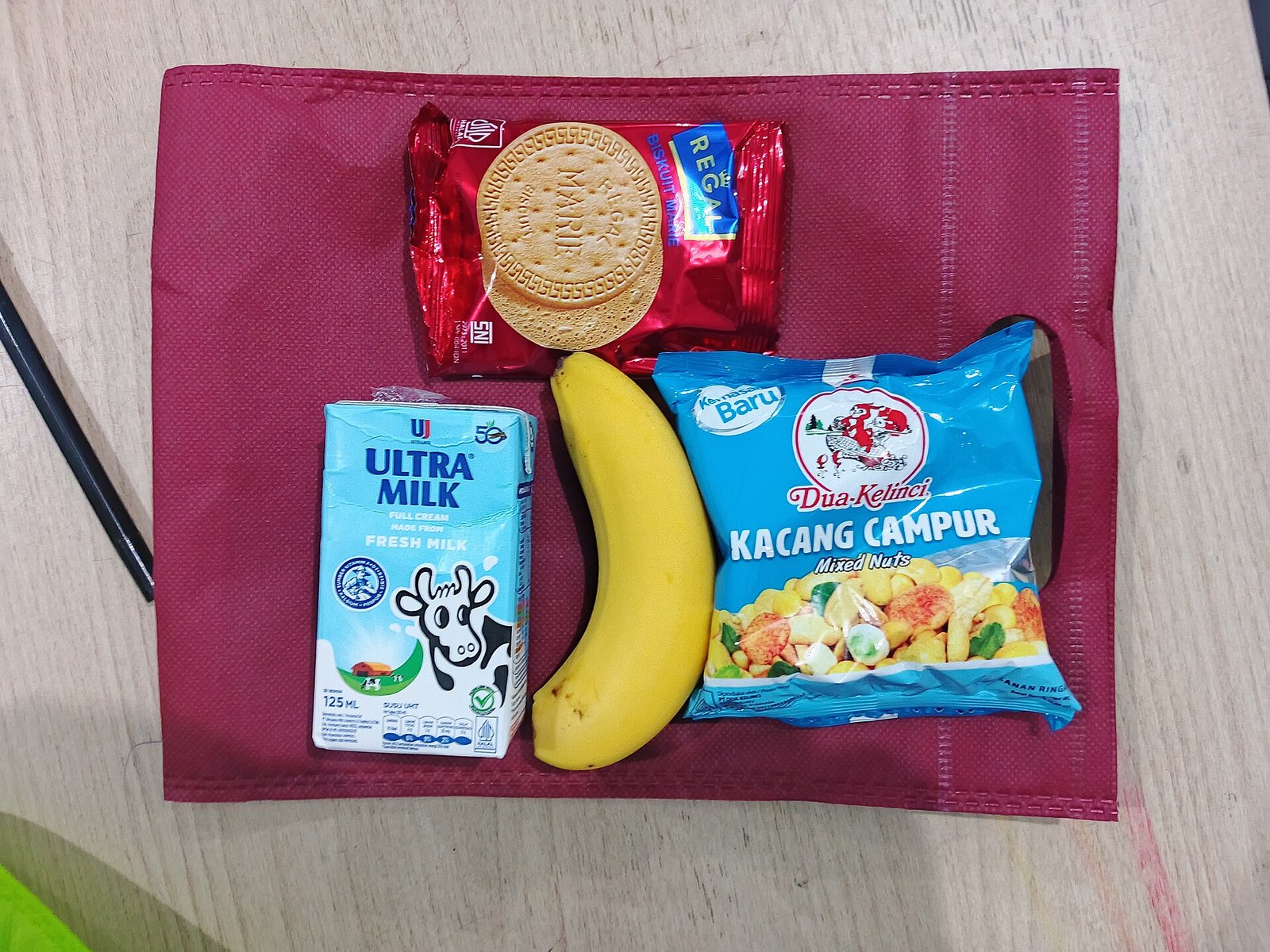
Free nutritious meal menu from a middle school in Yogyakarta, Indonesia. (Wikimedia)
On June 11, the Indonesian government announced it expects the Free Nutritious Meals (MBG) programme to require less funding than previously planned after reviewing its management and operations.
State Secretary Minister Prasetyo Hadi said the government is working with the Ministry of Finance and the National Nutrition Agency (BGN) to recalculate the programme’s needs. Although 268 trillion Indonesian rupiah (15 billion US dollars) has been allocated for 2026, officials believe the final budget could be lower.
The government is currently restructuring the programme, with the process expected to be completed next month.
To reduce costs and prevent waste, the BGN has started efficiency measures, including a temporary suspension on the construction of new kitchens and service centres. This austerity approach has been affirmed by the Deputy Minister for Finance, Juda Agung, on June 4, stating that MBG funding has been axed amid cost constraints. The state finance has been particularly pressured by increasing fuel subsidies as the conflict in the Middle East continues to block oil export from the region.
One of MBG’s main priorities is to ensure that people living in underdeveloped, frontier and remote areas could benefit from the programme sooner. The government also plans to increase beneficiaries among pregnant women, breastfeeding mothers and toddlers in the coming weeks.
Meanwhile, Coordinating Minister for Food Affairs Zulkifli Hasan said the number of Nutrition Fulfilment Service Units (SPPG), which prepare and distribute meals, has grown far beyond the original target. The government initially planned to establish 21,000 units, but the number has now reached 27,877.
About The Author

2 thoughts on “Indonesia’s free nutritious meal programme undergoes restructuring amid cost concerns”