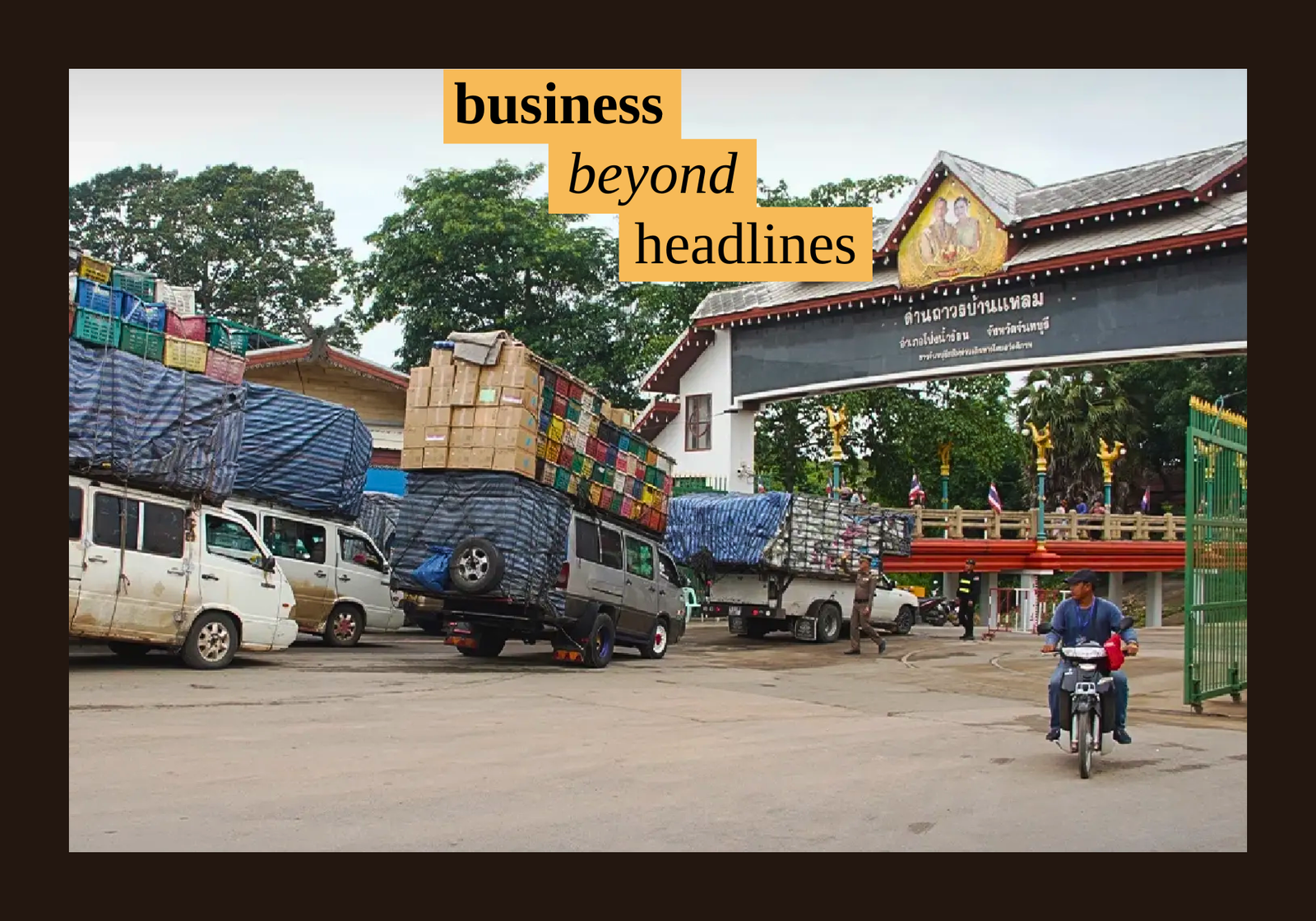
Trucks carrying Thai goods sit idle at Ban Laem market after Cambodian authorities closed the border amid Thai-Cambodian tensions in June 2025. (Facebook/Ban Laem Market)
A Ceasefire on Paper, A Conflict in Practice
On May 22, 2026, five rounds of small-arms fire were heard from Cambodian territory in Thailand’s Surin Province. The incident led to a diplomatic protest from Bangkok to Phnom Penh, with the former claiming violations of existing bilateral peace agreements. The following day, Commander-in-Chief of the Royal Thai Navy Admiral Pairoj Fuengchan, announced mobilisation of naval troops to Trat and Chantaburi Provinces in a multi-agency exercise.
The military posturing follows a sequence of escalatory political decisions. On May 5, Thailand’s cabinet formally cancelled the 2001 Memorandum of Understanding (or MoU 44), which regulates joint oil and gas development in the Gulf of Thailand’s Overlapping Claims Area, the last standing mechanism for bilateral economic cooperation between the two countries. On May 13, Thai Prime Minister (PM) Anutin Charnvirakulpublicly declared that “There will definitely be no reopening of the border”. Cambodia’s Senate President, Hun Sen, has since urged Phnom Penh to refuse to enter into bilateral maritime negotiations with Bangkok entirely.
These decisions are partially affected by Thailand’s most recent general election on February 8, when PM Anutin’s conservative Bhumjaithai’s Party unexpectedly won by a landslide, tripling its parliamentary seats to 194 and making Anutin the first Thai PM to be re-elected in two decades. The party’s campaign was built explicitly on nationalist rhetoric drawn from the border conflict, with Anutin describing Cambodia publicly as an “adversary” and the cancellation of MoU 44 as a flagship pledge, the latter of which has been delivered.
The tension stems from a series of border clashes between May and July 2025. A ceasefire was brokered by Malaysia on July 28, pushed through in part by US President Donald Trump’s threat of a 36% tariff on exports from both countries. However, the truce collapsed almost immediately, with fighting resuming in December. A second ceasefire was signed on December 27, by which point close to 150 people had been killed and hundreds of thousands displaced on both sides of the border. Land crossings have remained closed ever since and for businesses with exposure to mainland Southeast Asia, the more consequential question is not when they might reopen, but what the closure has permanently changed.
The Hidden Architecture of a Supply Chain Shock
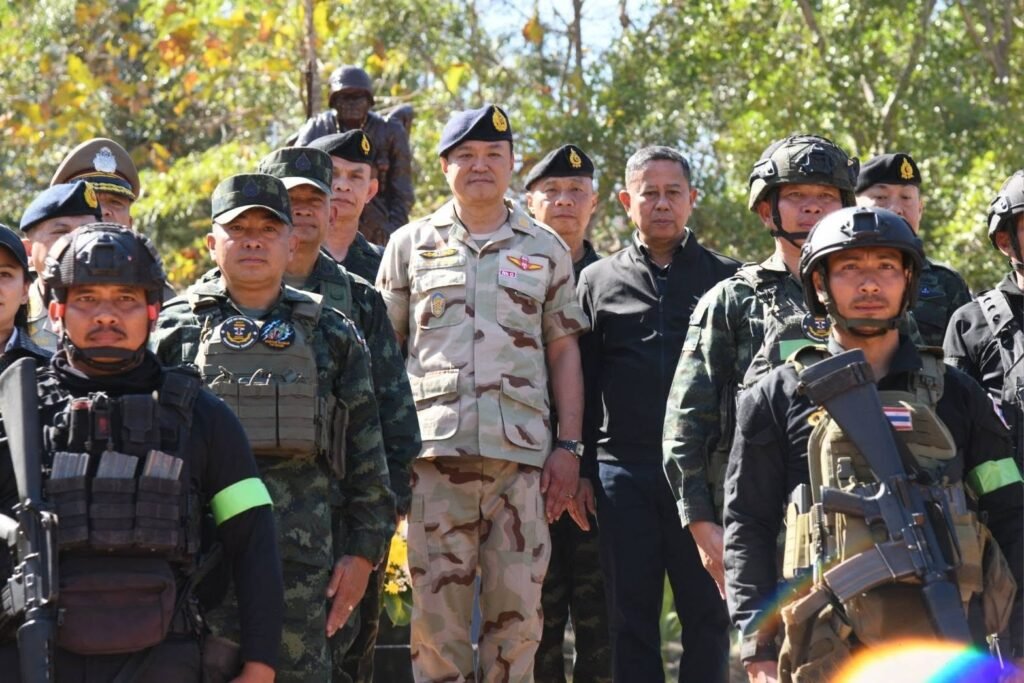
Thai PM Anutin Charnvirakul poses with Royal Thai Army troops during a visit to the contested border area near Ta Kwai Temple and Hill 350 in Surin province in December 2025. His February election win reflected popular backing for his nationalist line on Cambodia, a stance with serious implications for business. (Thai Ministry of the Interior)
The dominant framing of this conflict, as a bilateral territorial dispute between two mid-sized economies, understates what is actually at stake for the wider region. The fighting has exposed a structural fragility at the core of mainland Southeast Asia’s industrial model, built around having Thailand as the core manufacturing and logistics hub and Cambodia as a low-cost overflow (“Thailand Plus One” model). Companies including Japan’s Yazaki and Toyota Tsusho established factories in cross-border special economic zones, relying on seamless overland transport to move components between the two countries. This model broke when the border closed. Overland trade, which had averaged 1.2 billion US dollar per quarter in the two years before 2025, vanished entirely. Total bilateral trade across all transport modes fell from 1.9 billion US dollar in Q2 2025 to 0.9 billion US dollar in Q4 2025. Larger multinationals have partially rerouted via sea and air freight at significantly higher cost. Smaller firms have no such option. Some outsourcing operations are already considering relocating back to Thailand altogether, reversing years of offshoring decisions.
The economics of Cambodia as a manufacturing destination have deteriorated independently of the logistics disruption. Production costs rose two to three times during the conflict, driven by transport bottlenecks and labour shortages. The Cambodian government raised the minimum daily wage from 30,500 riel (7,61 US dollar) to 36,680 riel (9,15 US dollar) to attract workers back, narrowing the country’s labour-cost advantage over Thailand to roughly 20%. That arbitrage, once the central rationale for the Thailand Plus One model, is now marginal. Meanwhile, Cambodia’s preferential tariff access to Western markets has eroded independently: the EU withdrew the generalised scheme of preferences (GSP) in 2020, stripping out the trade incentive that had made cross-border outsourcing commercially attractive in the first place.
Analysis of the conflict’s labour impact has focused almost entirely on Cambodia. The picture on the Thai side is now demanding equal attention. On May 22, Thailand’s Joint Standing Committee on Commerce, Industry and Banking (comprising the Thai Chamber of Commerce, the Federation of Thai Industries and the Thai Bankers’ Association) held an emergency briefing warning that the migrant labour shortfall had reached crisis level. Cambodian workers in Thailand have collapsed from approximately 550,000 before the conflict to around 194,000 today, a drop of nearly 65%. These workers were concentrated in agriculture and manufacturing, which are Thailand’s most labour-intensive export sectors. With a Cabinet-approved relief package still pending and the Labour Ministry’s e-Work Permit system afflicted by persistent technical failures, businesses, particularly SMEs, are being told to identify contingency arrangements, explore new source countries and audit their workforce dependencies.
The Cambodian side of the ledger is no less stark. In 2024, 1.2 million Cambodian workers in Thailand sent nearly 2 billion US dollar in remittances, equivalent to 5.6% of Cambodia’s gross domestic product (GDP). Approximately 900,000 workers returned to Cambodia during the hostilities, but only around 190,000 jobs were available to absorb them. Compounding this issue is the reality of microfinance vulnerability. Approximately 71% of these returning migrant households carry active microcredit loans, with an average household debt size exceeding 4,280 US dollars. This debt was contracted under the assumption of a steady, reliable stream of income sent home in Thai baht. The resulting unemployment and microcredit crisis among returnees has suppressed domestic consumption and placed severe strain on household balance sheets, a drag on Cambodia’s economic recovery that will persist long after any formal normalisation of diplomatic relations.
Yet, of all the structural vulnerabilities exposed by the conflict, Cambodia’s energy dependency is the least discussed and arguably the most operationally dangerous. Cambodia imports approximately 90% of its diesel and 80% of its gasoline from Thailand. When the border closed, fuel stopped moving and factories shut down because they ran out of fuel. This transmission mechanism is fast and near-total, with no short-term domestic fix. It sits entirely outside standard political risk frameworks, which tend to model conflict disruption through trade and investment channels. For any company operating manufacturing capacity in Cambodia, this dependency should be assessed as a standalone operational variable.
The deepest problem for investors and businesses seeking to calibrate their exposure is not the current ceasefire’s fragility, but that the political incentives driving the conflict have been institutionally rewarded and locked in. Former PM Paetongtarn Shinawatra was removed in part because her remarks on the conflict were deemed too conciliatory by the military and the Constitutional Court, demonstrating the political cost of moderation. Conversely, the February election represents a direct support for Anutin’s nationalist strategy. The cancellation of MoU 44, removing the 26,000-square-kilometre Overlapping Claims Area from any bilateral cooperation framework, was delivered precisely because it was an electoral mandate. Cambodia has responded in kind, with foreign ministry protests on April 8 and April 24, a Senate president publicly blocking bilateral maritime talks and a national commemoration framing the conflict as an act of Thai aggression.
Beneath the bilateral framing, the conflict has exposed a deeper geopolitical fault line. The Thai-Cambodian border functions as a proxy battleground between competing external economic powers. Japanese corporations have long anchored Thailand’s automotive and electronics sectors, relying on stable cross-border operations to maintain their regional supply chain dominance. On the Cambodian side, Chinese state-backed capital has deeply penetrated the economy through large-scale infrastructure financing and accumulated political leverage in Phnom Penh. As the conflict chokes Japanese-dominated supply lines in Thailand and progressively isolates Cambodia from its ASEAN neighbours, Phnom Penh is being pushed deeper into Beijing’s economic orbit, consolidating a structural advantage Beijing already held before the first shot was fired.
The practical consequences for capital are already visible. Political risk insurance premiums for manufacturing assets in border zones have risen sharply since the gridlocks began, and the geographic efficiency advantage that mainland Southeast Asia held over rival manufacturing destinations is dissolving, replaced by the reality of structural unpredictability. With ASEAN’s chairmanship now held by the Philippines, which is focusing primarily on South China Sea tensions and Code of Conduct negotiations, and with formal dispute resolution mechanisms still entirely unused, the structural conditions for renewed conflict therefore remain intact.
Planning for the Next Escalation
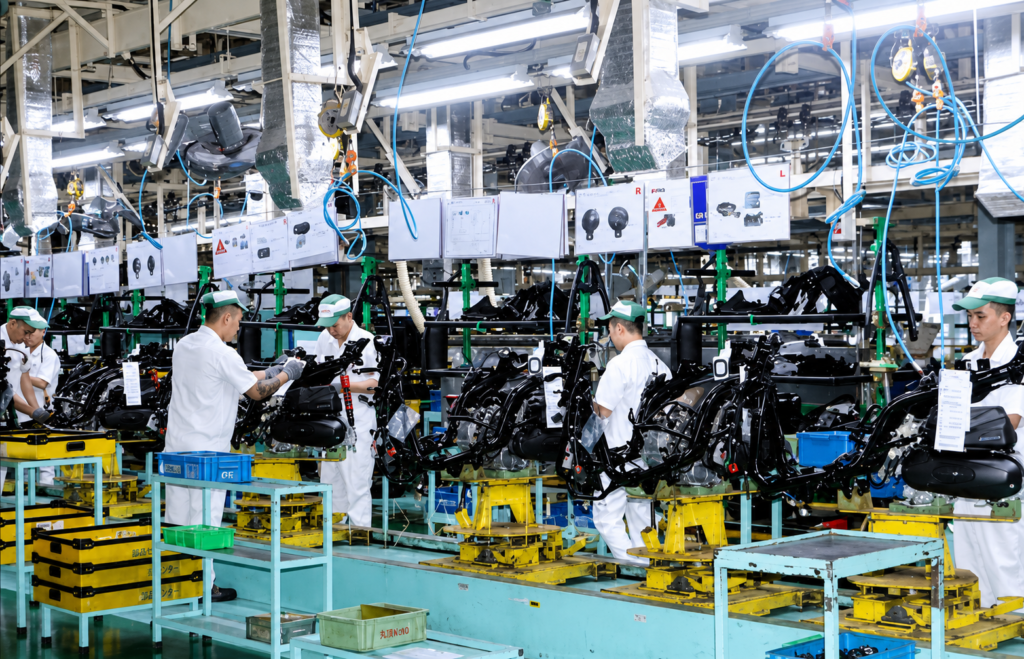
Honda Vietnam’s production line at Dong Van II Industrial Park. With Thai-Cambodian supply chains still disrupted, Vietnam is emerging as an alternative for manufacturers in mainland Southeast Asia. (VNA)
Against that backdrop, four operational conclusions follow for businesses and investors with exposure to Southeast Asia.
Reprice re-escalation risk on an 18-month horizon
The December 27 ceasefire is a pause, not a settlement. Any investment or sourcing decision with mainland Southeast Asia exposure should include a credible re-escalation scenario, particularly for firms operating in border provinces or in supply chains that depend on Thai-Cambodian overland connectivity. The question is not whether to price this risk in, but how high to price it.
Assume obsolescence of the “Thailand Plus One” model
The model was eroding before 2025 as Cambodia’s GSP preferences were phased out. The conflict has broken it operationally. Firms that have not already modelled their Cambodia exposure against scenarios of sustained ceasefire with permanently elevated logistics costs and renewed escalation with immediate fuel and supply cutoffs should do so before the planning cycles of the second half of 2026 (H2) close. Vietnam and Indonesia offer comparable labour-cost profiles, more stable bilateral relationships and increasingly competitive logistics infrastructure. The diversification conversation that leading manufacturers have been deferring is now urgent. The stakes of inaction are rising. Thailand’s flagship thirty-thirty policy, targeting 30% of total automotive production to be electric vehicles by 2030, is structurally dependent on the stable subregional inputs that the conflict has shown to be fragile, meaning the disruption now threatens one of the region’s most strategically important industrial transitions.
Treat Cambodian energy dependency as a first-order operational risk
Standard country-risk frameworks will not surface the 90% diesel dependency on a hostile neighbour. Business continuity planning for Cambodia-based operations should explicitly model a fuel cut-off scenario, including how quickly operations would need to wind down, what inventory buffers exist and whether alternative supply routes via Vietnam or via sea freight are viable at scale.
Monitor Thai labour markets as a forward indicator
The JSCCIB’s May 22 warning is the first institutional signal that Thailand’s own economy is absorbing the shock at a systemic level. If Cabinet approval for a relief package is delayed and the e-Work Permit system remains dysfunctional, labour cost pressure and production delays in Thai agriculture and manufacturing will compound through H2 2026, creating second-order disruption for any supply chain sourcing from Thailand.
This kind of analysis is the work Kala Advisory does for European investors operating in Southeast Asia. We help companies see the risks that standard country-risk frameworks miss, from hidden energy dependencies to the political incentives that make a conflict likely to recur, and we map that exposure market by market across the region. For tailored intelligence on the risks covered here, visit kala-advisory.com.
About The Author