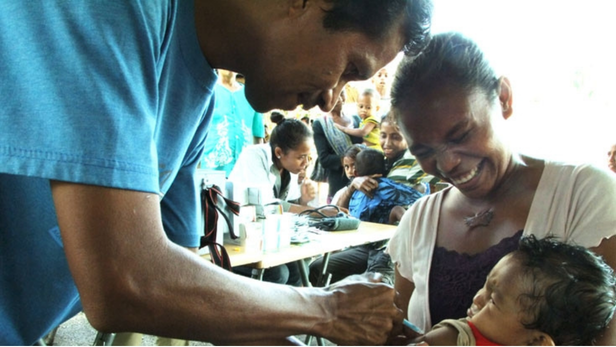
Timor-Leste’s healthcare improvements have been driven by better nutrition, wider access to healthcare, and the gradual strengthening of state institutions. (World Bank)
On May 20, Timor Leste’s President José Ramos-Horta highlighted major improvements in the country’s public healthcare sector since the restoration of its independence in 2002.
Addressing celebrations for the 24th anniversary of the restoration of independence, President Ramos-Horta said life expectancy in Timor-Leste had risen from under 60 years in 2000 to around 70 years in 2026. He attributed the progress to improved nutrition, wider healthcare access and the gradual strengthening of state institutions following decades of conflict and instability.
The Southeast Asian nation, one of the world’s youngest countries, has spent much of the past two decades rebuilding its healthcare system after the destruction that followed the 1999 independence referendum. The country had no Timorese doctors in 1974 and only 19 doctors at the time of independence in 2002.
Today, Timor-Leste has 1,025 doctors, including 113 specialists, as well as 1,774 nurses and 915 midwives, according to figures cited by the president. The national health network now includes 6 hospitals, 76 community health centres and 345 health posts across the country.
He also pointed to the elimination of several infectious diseases, including polio, measles, rubella as well as maternal and neonatal tetanus. He further referenced the World Health Organisation’s recognition of Timor-Leste as malaria-free in 2024, describing it as a milestone for the country’s public health sector.
The country’s healthcare infrastructure has expanded in recent years with the introduction of intensive care units, emergency care training programmes and the country’s first oxygen production facility.
Despite these gains, the president acknowledged that healthcare coverage remained uneven, particularly in rural communities, where access to quality medical services continues to lag behind urban areas.
About The Author