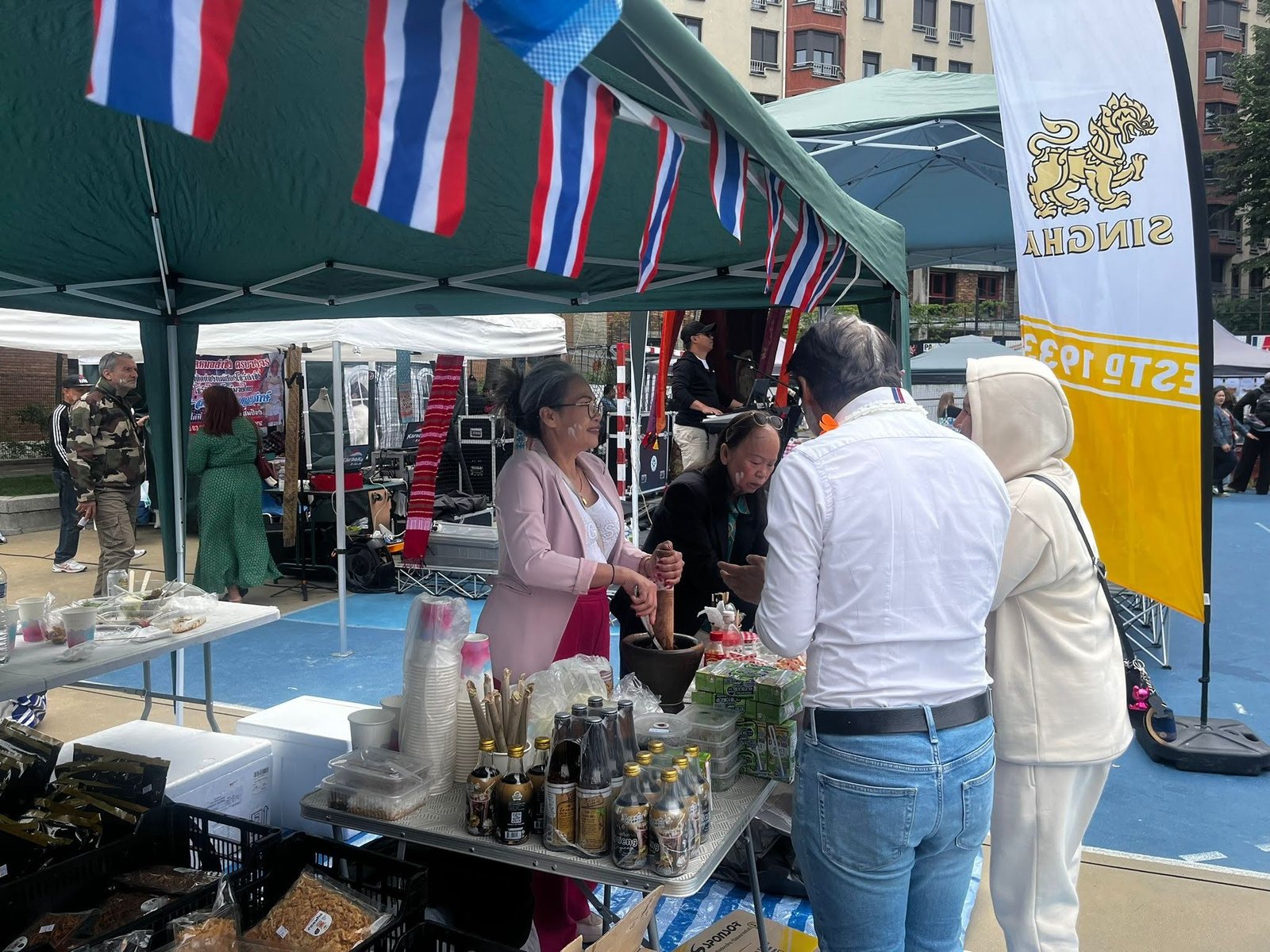
A stall selling Thai traditional food during the Fête populaire du Nouvel An lao/thaï organised in Paris on May 17, 2026. (SEA Daily/Amanda Laticia)
On May 17, several hundred members of Paris’s Lao and Thai communities gathered at the TEP Agnès Tirop sports ground in the city’s 10th arrondissement for the Fête populaire du Nouvel An lao/thaï, or the Lao-Thai New Year community festival, a one-day festival organised by the association Khao Niao Solidarité, which is the Lao diaspora association in France.
Held a month after the traditional April observances of Songkran and Pi Mai Lao, the free public event, now in its fourth edition, drew around thirty stallholders offering Thai and Lao street food alongside crafts, books and produce from a tropical market. A central stage hosted a continuous programme of traditional dance, a costume parade, folk performances and a Muay Thai demonstration delivered by the Striking Team Audonien, before closing with an open-air folk ball that drew participants of all ages onto the basketball court that served as a dance floor.
Throughout the afternoon, attendees took turns gently smearing one another’s cheeks with white paste, a practice familiar to anyone who has spent mid-April in Vientiane or Chiang Mai. The paste, traditionally made from a chalk-like limestone known in Thai as din sor pong, is a blessing rather than a prank. It is a gesture of purification and goodwill, and one of the few visible cues that distinguishes the festival from any other community gathering in the French capital. Fittingly for a festival that marks the coming of Southeast Asia’s rainy season, the day was a wet one. Organisers later joked that planting lemongrass upside-down at the foot of a tree (a traditional gesture meant to keep the rain away) had done nothing to help, leaving the crowd “soaked, rinsed, but happy.”
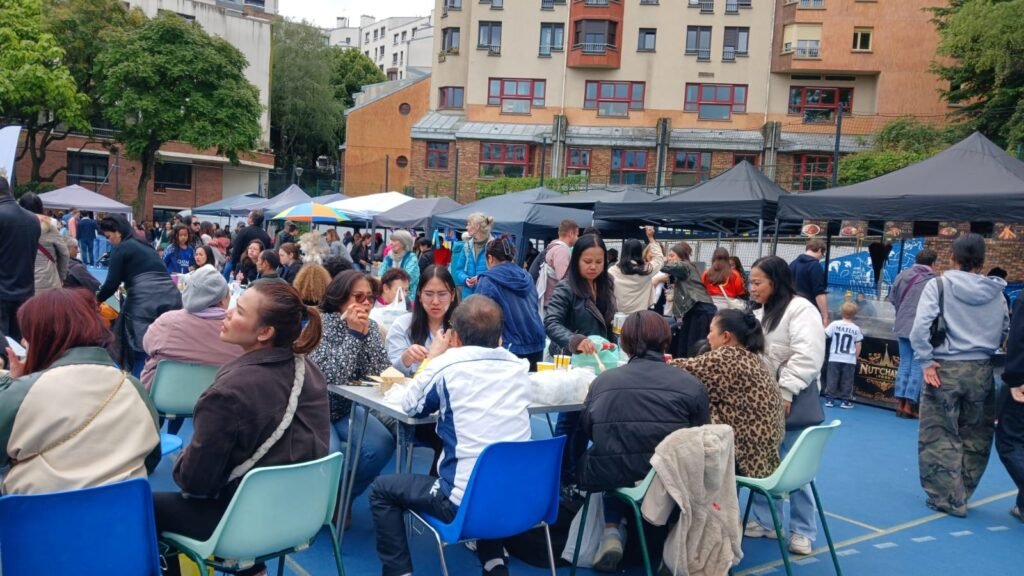
Visitors enjoying Thai and Lao food during the Fête populaire du Nouvel An lao/thaï organised in Paris on May 17, 2026. (SEA Daily/Protasius Isyudanto)
The April new year is shared, in slightly different forms, across mainland Southeast Asia. In Thailand it is celebrated as Songkran, in Laos as Pi Mai Lao, and in Cambodia and Myanmar under their own names. They all draw from the same lunisolar tradition marking the sun’s astrological passage and the end of the dry season. The water-throwing for which the festival is best known internationally comes from a much quieter ritual of pouring scented water over Buddha images and the hands of elders, as a request for blessing and a symbolic washing away of the previous year’s misfortune. Powder, dance and shared meals are the social extensions of that older practice.
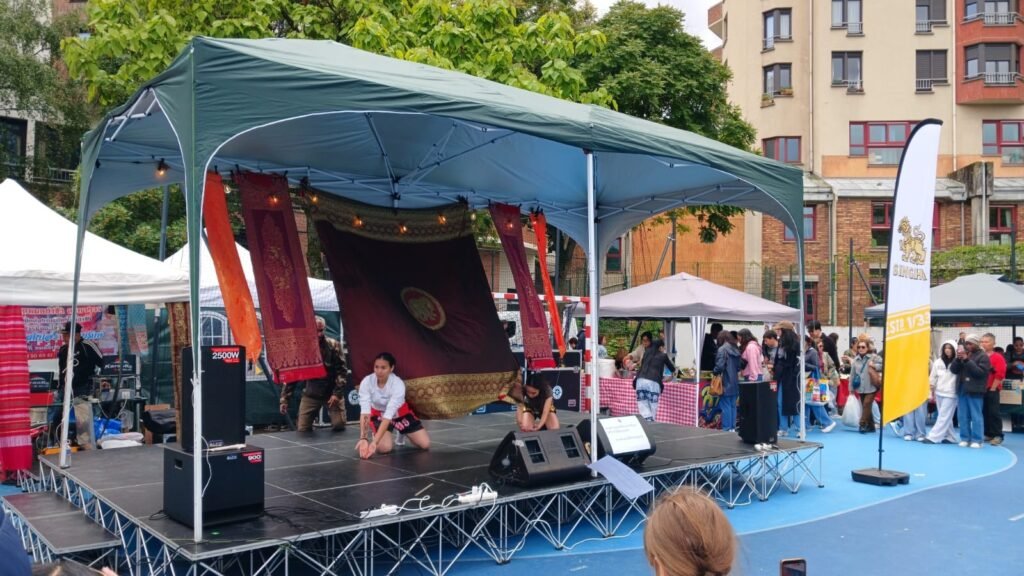
A dance performance during the Fête populaire du Nouvel An lao/thaï organised in Paris on May 17, 2026. (SEA Daily/Protasius Isyudanto)
For diaspora communities, the festival also functions as something less ceremonial and more practical. It is a rare day in the calendar when the language, food and music of home occupy a public space in the host country. Paris is home to one of Europe’s larger Lao and Thai populations, the former shaped substantially by the post-1975 exodus that followed the end of the kingdom’s monarchy, the latter by more recent labour and family migration.
Khao Niao Solidarité, founded in Paris, takes its name from the Lao term for sticky rice, the everyday staple that more than any other dish anchors Lao and northeastern Thai cuisine. The association’s stated mission includes organising cultural and culinary events that connect the Franco-Lao and Franco-Thai communities with their French neighbours, as well as channelling proceeds towards humanitarian work in Laos and Thailand. This year, the funds raised will go towards solidarity operations in Laos, through a partnership with the association La Toupie. Earlier this year, the association also collaborated with the government of Paris’ 10th arrondissement on a cultural programme exploring food, climate and life in tropical Southeast Asia.
About The Author