On the sidelines of a fireside chat in Paris on January 19, SEA Daily spoke with two of Thailand’s leading progressive figures, Pita Limjaroenrat and Kunthida Rungruengkiat, about the country’s economy, politics, and international relations.
Pita or “Tim”, as he is widely known in Thailand, was the former leader of the Move Forward Party, which was dissolved in 2024 after its pledge to amend Thailand’s lese-majeste law was interpreted by authorities as an attempt to overthrow the government. Pita, often referred to as the “almost Prime Minister,” had won the largest number of seats in the 2023 elections but was blocked from forming a government by junta-appointed senators. He now serves as adviser to the Progressive Movement, a political group working alongside the People’s Party.
Kunthida, or “Juice”, which is her Thai nickname, was previously Deputy Leader of the Future Forward Party, Move Forward’s predecessor, which was disbanded in 2020 over allegations of election law violations concerning campaign donations. An expert in education and linguistics, she is currently director of the Progressive Movement Foundation.
Both politicians embody Thailand’s reformist movement. The People’s Party, which they advocate for, is leading polls ahead of the February 2026 general elections and stands as the main opposition party. Its platform focuses on anti-corruption measures, judicial reform, and rewriting the constitution drafted after the military junta took power in 2014. These pledges have not resonated with older generations, who view the monarchy and the military as stabilising forces.
Yet, the party’s message resonates with younger Thais. The audience at the Paris fireside chat was overwhelmingly young, reflecting the growing engagement of youth with issues of political reform, democratic accountability, and social change—which both Pita and Kunthida advocate.
A Faltering Regional Powerhouse

The urgency for change, for them, is highlighted by the nation’s economic performance. Peaking at 13% year-on-year (y-o-y) gross domestic product (GDP) growth in 1988, Thai economic expansion has only declined ever since. After 2019, it has struggled to surpass the 2% growth mark, with the Bank of Thailand projecting just 1.6% growth in 2026. As a comparison, regional peers such as Vietnam and Indonesia recorded GDP growth of 8% and 5% in 2025, respectively. If trends continue, Thailand risks becoming a stagnant economy—a concerning prospect for a country that was once a regional powerhouse. According to Pita, the bleak future is illustrated by the fact that Thailand was ASEAN’s largest producer of automobiles in 2019—an industry quickly replaced by electric vehicles (EVs), whose manufacture is concentrated in China and increasingly in Indonesia, Malaysia, and Vietnam.
For both Pita and Kunthida, a series of reforms across the country’s economy—and adjacent sectors—are indispensable, particularly in areas of corruption, workforce quality, and technology. Foreign investors are most deterred by widespread corruption in Thailand’s bureaucracy, with the country’s corruption perceptions index (CPI) gradually declining from 38 out of 100 in 2014 to 34 in 2024, well beyond the global average of 43. Consequently, Pita argues that corruption must be the top priority, aligning with the People’s Party’s pledge to ramp up anti-corruption measures.
Beyond corruption eradication, Kunthida outlined the importance of educational reform to improve the quality of Thailand’s workforce which would, in turn, create a more efficient business environment. She noted that the national curriculum has not been updated in over a decade, exacerbating existing structural weaknesses. more than 10 years, which worsens the conditions aforementioned. Technological investment is equally critical. Thailand lacks the natural resources required to meet contemporary regional industrial demands, such as electric vehicles. Pita believes that by investing in technology, the country can offset these disadvantages, particularly given its second-highest median age in the region (40.1 years) and a relatively modest population of 70 million.
However, these measures represent long-term investments. Kunthida emphasised that they must be complemented by short-term stopgap solutions, though she did not elaborate on what these might look like.
New Approach to Politics

Before any economic reform could be carried out, a new political approach is needed. Thailand’s current constitution was drafted in 2017 by the National Council for Peace and Order (NCPO)—a government formed after the 2014 military coup led by General Prayut Chan-o-cha. The new constitution mandates the formation of a 250-member Senate (upper house) and a 500-member House of Representatives (lower house), where the NCPO will appoint a panel who will choose Senators. This means that the military government holds the final say in any political decision, as any draft bill would have to be approved by the NCPO-approved senators.
The arrangement was the greatest factor in Pita’s failure to be Prime Minister (PM) despite his party winning the most seats in the House of Representatives. Aspiring PMs have to secure majority support of the combined members of both houses and the Senate members didn’t endorse Pita’s candidacy. Consequently, for Kunthida, rewriting this constitution is the first step towards any effective reform. Fortunately for her, a nation-wide referendum on constitutional change is scheduled on February 8—which is part of a deal made between the ruling conservative Bhumjathai Party and the People’s Party. According to Kunthida, the constitution needs to be rewritten to “bring power back to the people”, by reforming the legislative bodies.
Pita, on the other hand, argues that the most significant barriers to political change are the entrenched dynastic politics and the substantial financial cost. He explains that nepotism remains a common feature in Southeast Asian politics, mentioning the likes of PM Hun Manet in Cambodia, Vice President Gibran Rakabuming Raka in Indonesia, former PM Paetangtorn Shinawatra in Thailand, as well as President Ferdinand Marcos Jr. and Vice President Sara Duterte in the Philippines. Furthermore, according to the V-Dem, political corruption index in Southeast Asia has a mean value of 0.664, well beyond the global average of 0.552. This elevated level of corruption reflects the high financial barriers to political participation, as elected officials may resort to corrupt practices to recoup campaign and patronage costs. Without delving into specific policy measures, Pita emphasises that both elite dynastic dominance and financial barriers must be reduced to enable individuals with new ideas to enter politics. Only under these conditions, he argues, can meaningful political reform occur.
Facing an Uncertain Future
These novel and flexible approaches to politics are essential for navigating an increasingly uncertain geopolitical landscape. During the fireside chat, recent issues including Russo-Ukrainian war, Israeli-Palestinian conflict, and the US operations in Venezuela were part of the discussion, feeding into the narrative that—according to both politicians—the global order has undergone a significant change. For Pita, we are heading towards a world where “might makes right” and where states have their own interest on the forefront, putting into question the role of the region’s Association of Southeast Asian Nations (ASEAN).
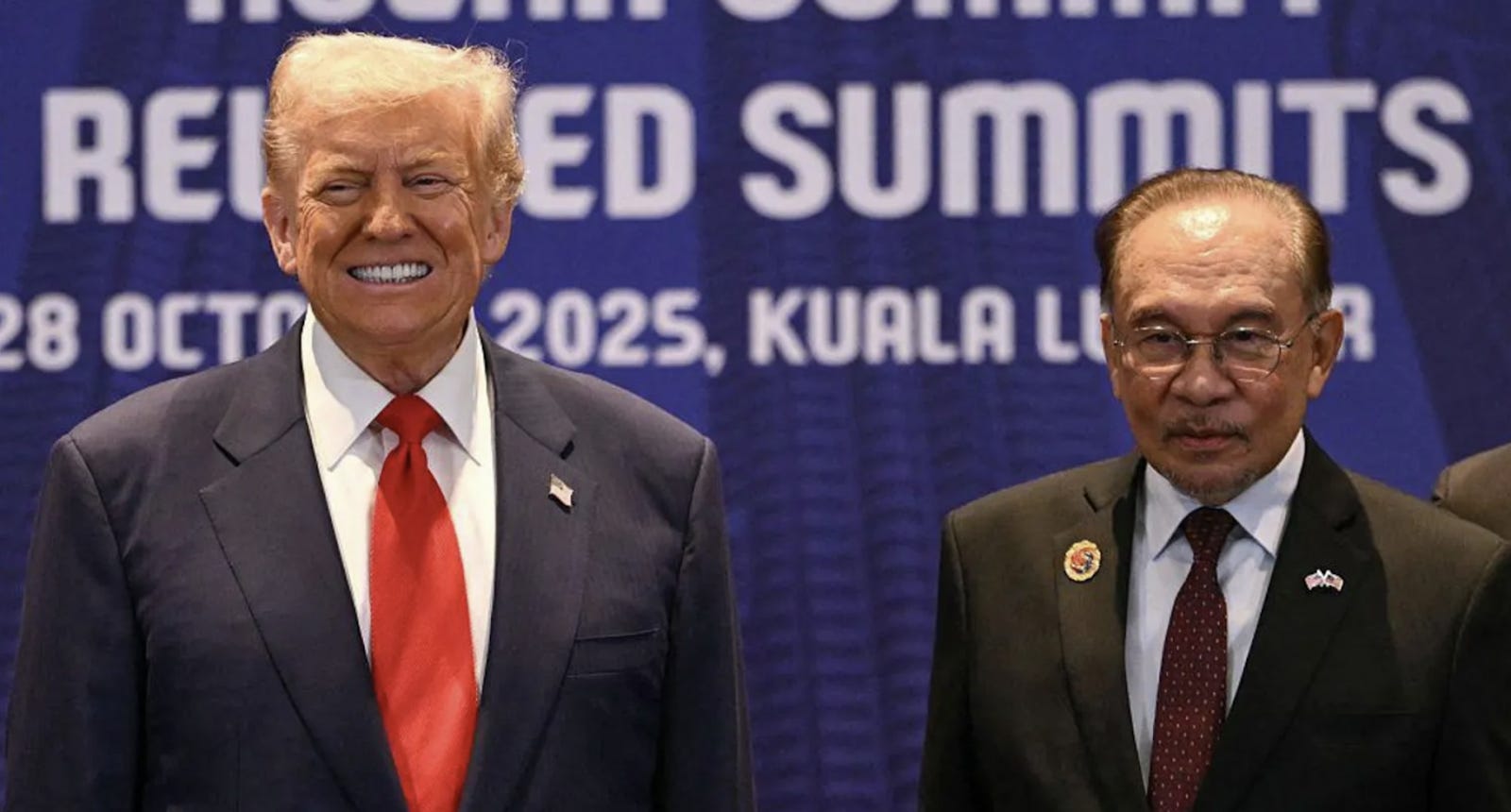
ASEAN states must unify their vision to effectively confront an increasingly unstable world, as none possesses the resources to do so alone. Pita argues that achieving this requires the bloc to boost its relevancy, credibility, and centrality. Promoting an ASEAN identity is essential for increasing its relevance among the region’s populations. Greater public engagement would, in turn, elevate the bloc’s visibility and influence, allowing it to play a more prominent role in international projects and decision-making, thereby securing a meaningful position in the new global order. Pita notes that this is already partially evident, citing the attendance of world leaders—isuch as US President Donald Trump, Japanese PM Sanae Takaichi, and South Korean President Lee Jae-myung—at the 2025 ASEAN Summit in Kuala Lumpur. Once ASEAN attains a sufficient level of relevancy and credibility, it can assume a central role in regional decision-making, establishing itself as a power in its own right. According to Kunthida, realising this also requires flexibility. ASEAN must rethink its approaches—including the principle of non-interference—so that it can act with greater moral authority and implement effective change both within and beyond its borders.

About The Author