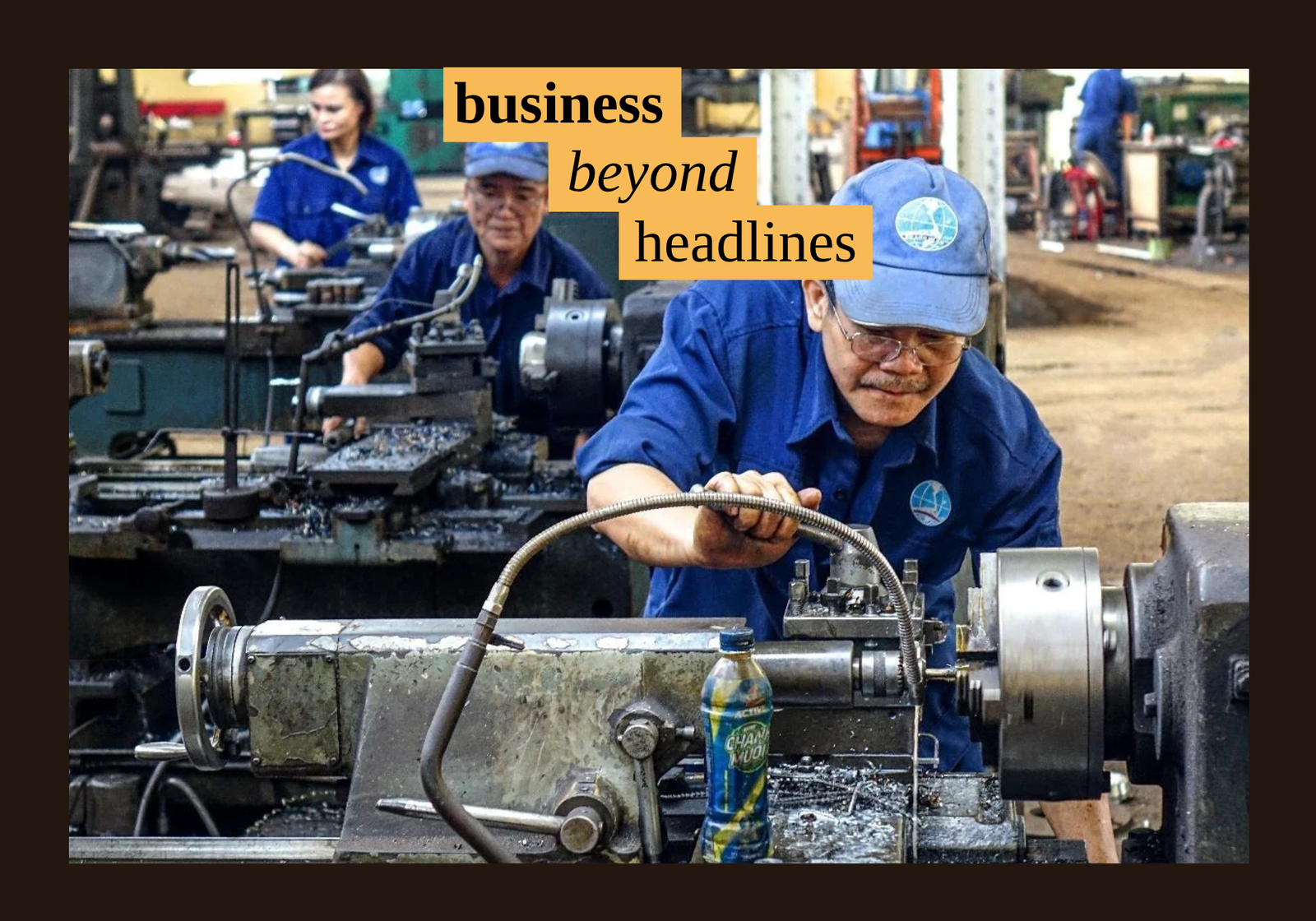
Workers operate lathes in a busy industrial workshop in Vietnam. (pexels.com)
Record Factory Orders Meet Renewed Tariff Threats
Earlier this week, S&P Global reported that the ASEAN Manufacturing Purchasing Managers’ Index (PMI) rose to 53.1 in October 2026, up from 52.1 in September. The improvement reflected accelerating production and new demand, with incoming orders expanding at the fastest rate in the survey’s history. Indonesia’s manufacturing PMI also climbed to 54.0, its highest reading since March 2024. These figures point to renewed manufacturing momentum across the region.
Yet this manufacturing recovery is unfolding amid mounting geopolitical uncertainty. US President Donald Trump is scheduled to attend the 49th ASEAN Summit in Manila later this month. At the same time, Washington has intensified trade scrutiny through new Section 301 measures. On July 23, the Office of the United States Trade Representative (USTR) announced additional duties on imports from 60 economies following investigations into their failure to prohibit and effectively enforce restrictions on goods produced through forced labour. The additional duties are 10% for certain economies, including Indonesia, Malaysia and Cambodia, and 12.5% for other investigated economies, subject to product-specific exemptions.
A separate US measure, Executive Order 14326 of July 31, 2025, provides for an additional 40% tariff on goods determined by US Customs and Border Protection to have been transhipped to evade applicable duties. This is not an automatic penalty on every product routed through a third country; it requires a determination of duty evasion.
Across boardrooms and investor fora, Southeast Asia is routinely celebrated as a principal beneficiary of ‘China Plus One’ supply chain diversification. Caught between Washington and Beijing, ASEAN member states have pursued strategic multi-alignment, participating in broad regional agreements such as the Regional Comprehensive Economic Partnership (RCEP) while maintaining bilateral trade and investment relationships with competing powers.
However, these celebratory macroeconomic narratives obscure a critical question rarely addressed in mainstream business commentary: which social classes and ecosystems are actually bearing the costs of this geopolitical turbulence?
Uneven Vulnerabilities, Labour Precarity and Ecological Exhaustion
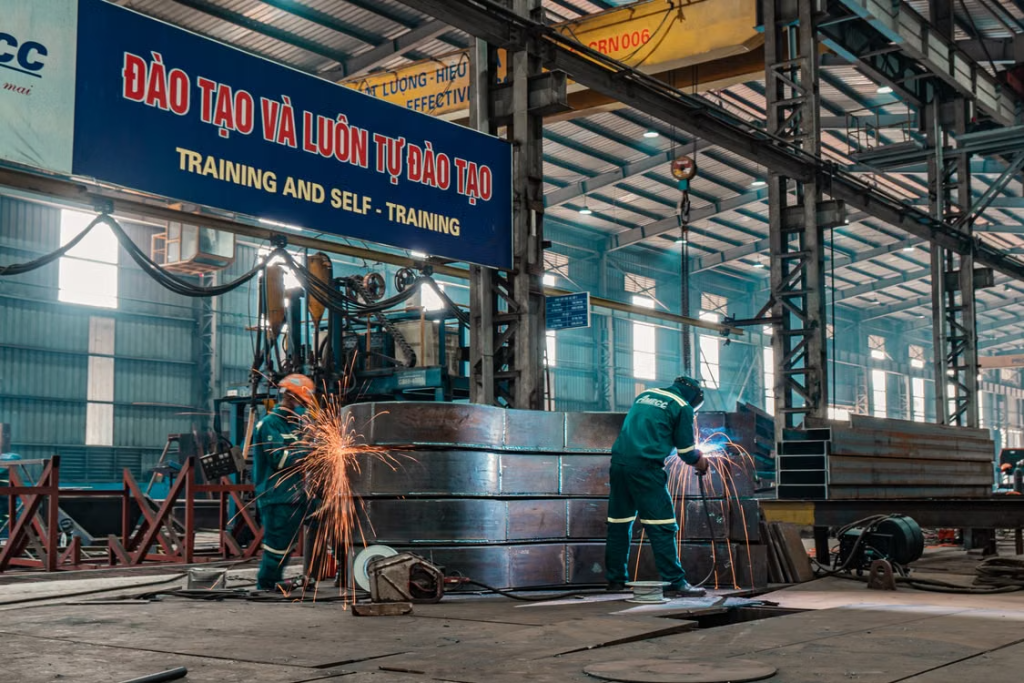
Metal workers in Vietnam. (pexels.com)
Southeast Asia does not face a uniform set of trade and supply chain risks. The region could be divided into four distinct economic archetypes: Singapore as a hyper-global hub; Vietnam, Malaysia, Thailand and Cambodia as export-led manufacturing pivots; Indonesia and the Philippines as domestic-market anchors; and Brunei and Laos as commodity-anchored economies. The index measures trade dependence and global supply chain dependence, rather than the full range of geopolitical, social and ecological vulnerabilities. Myanmar, notably, is not included in its country classification.
Mapping exposure at the state level, however, tells only part of the story. Viewed through the lenses of critical international political economy and political ecology, the real shock absorbers of Southeast Asia’s geopolitical balancing act are its working classes and natural environments. Industrial relocation does not automatically translate into decent employment, technological upgrading or equitable development. Instead, the region risks becoming a site of a dual ‘race to the bottom’, in which mobile capital seeks competitive advantages through pressure on labour costs and the externalisation of environmental costs.
This argument requires a closer examination of how value is created, distributed and controlled across regional production networks. The ASEAN Investment Report 2025 shows that both foreign and domestic value added in regional global value chains have increased. Between 2015–2018 and 2020–2022, foreign value added grew by 43%, while domestic value added increased by 24%. This expansion confirms Southeast Asia’s deeper integration into global production, but it does not establish that the benefits are distributed equally among workers, domestic firms and foreign investors. The distinction between participating in a value chain and controlling its most profitable activities remains fundamental. Three pivotal economies illustrate these tensions.
First, Vietnam’s case demonstrates investment growth and the skills challenge. As a leading destination for ‘China Plus One’ manufacturing, Vietnam attracted 34.65 billion US dollar in total registered inward foreign direct investment (FDI) in the first half of 2026. This figure includes new project registrations, additional capital in existing projects, and foreign equity contributions and acquisitions. It should not be confused with actual disbursed investment, which reached 13.03 billion US dollar over the same period.
Vietnam’s labour force reached 53.8 million in the second quarter of 2026. Yet only 29.7% of employed workers held diplomas or certificates during the first half of the year. The average monthly income per employee was approximately 9 million Vietnamese dong (350 US dollar). These figures point to a structural challenge where attracting investment at scale does not automatically generate the skills, technological capabilities or bargaining power necessary for workers to capture a greater share of the value produced.

Buildings in Vietnam. (adventureviet.com)
Labour conditions also require closer scrutiny. Working hours, low wages and allowances, occupational health and safety, weak trade union representation and inadequate labour inspection were some of the identified problems in Vietnam’s electronic sectors. Although this research predates the current investment cycle, it provides an important institutional baseline against which the social consequences of subsequent industrial expansion should be assessed.
The central issue is therefore not simply whether Vietnam attracts more factories, but whether industrial upgrading generates more secure employment, stronger domestic technological capabilities and a greater domestic share of value added.
The second case is Malaysia, illustrating an economy in the quest of semiconductor upgrading in the face of migrant labour vulnerability. Malaysia occupies an important position in global electrical and electronics (E&E) production, particularly in semiconductor assembly, testing and packaging. Bank Negara Malaysia reports that the E&E industry accounted for approximately 40 per cent of the country’s gross exports in 2024, supported 614,051 jobs and generated an average monthly wage of 4,019 Malaysian ringgit (986 US dollar), above the manufacturing-sector average of 3,448 Malaysian ringgit (846 US dollar).
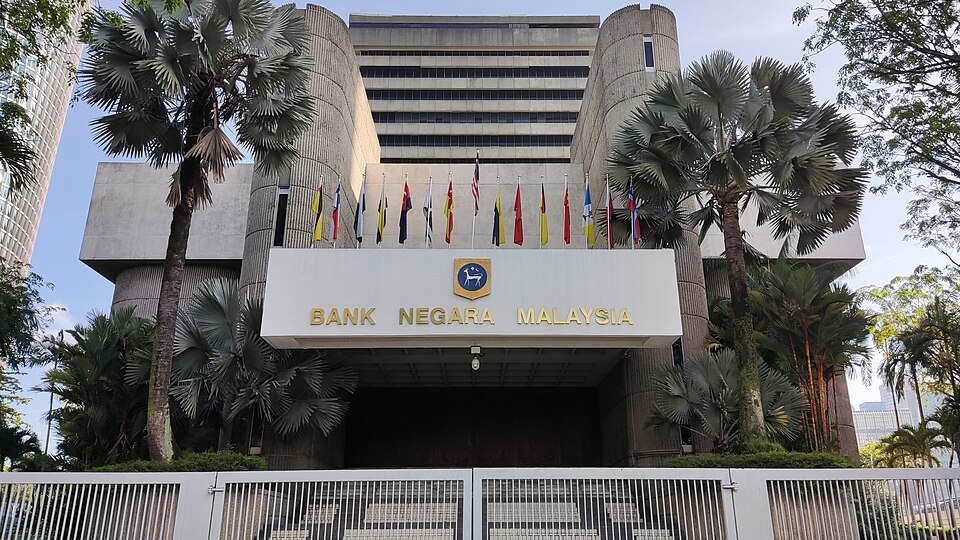
Bank Negara Malaysia (BNM) is the Malaysian Central Bank, established on 26 January 1959 as the Central Bank of Malaya (Bank Negara Tanah Melayu). (Wikimedia)
Malaysia also accounted for approximately 13% of global outsourced semiconductor assembly and testing activity. However, Bank Negara Malaysia identifies persistent weaknesses in the development of domestic intangible capital, research and development, and domestic value added embedded in E&E exports. Its analysis highlights the importance of moving towards higher-value activities, including integrated circuit design, advanced packaging and technology development.
The National Semiconductor Strategy seeks to address this structural challenge by developing 60,000 highly skilled engineers by 2030. By the third quarter of 2026, 22,849 talents had been trained through relevant programmes. Nevertheless, the government has acknowledged the need to improve workforce placement and retention, as well as ensure that training translates into the technological capabilities required by the industry.
At the same time, Malaysia aims to reduce foreign workers to 10% of its total workforce by 2030. This target raises questions about the future of migrant employment as firms accelerate automation and restructure production.
The vulnerabilities of migrant workers cannot be dismissed as an incidental problem. An ILO study published in March 2025 specifically examines forced labour and child labour risks in Malaysia’s electronics and electrical sector. The US Department of State’s 2025 Trafficking in Persons Report also documents recruitment-fee debt, passport retention and other coercive practices affecting migrant workers in several Malaysian industries, including electronics manufacturing.
These findings do not imply that all migrant workers or semiconductor firms are implicated in exploitation. They demonstrate, however, that technological upgrading must be accompanied by enforceable labour protections, fair recruitment practices and effective access to collective representation.
Indonesia would be the third case. The country demonstrates green extractivism, unequal value capture and ecological sacrifice.Indonesia has become central to global nickel production and electric vehicle (EV) battery supply chains through its mineral downstreaming policies. Yet the expansion of domestic processing raises a fundamental question: does greater production and processing within national borders necessarily mean greater domestic control over economic value?
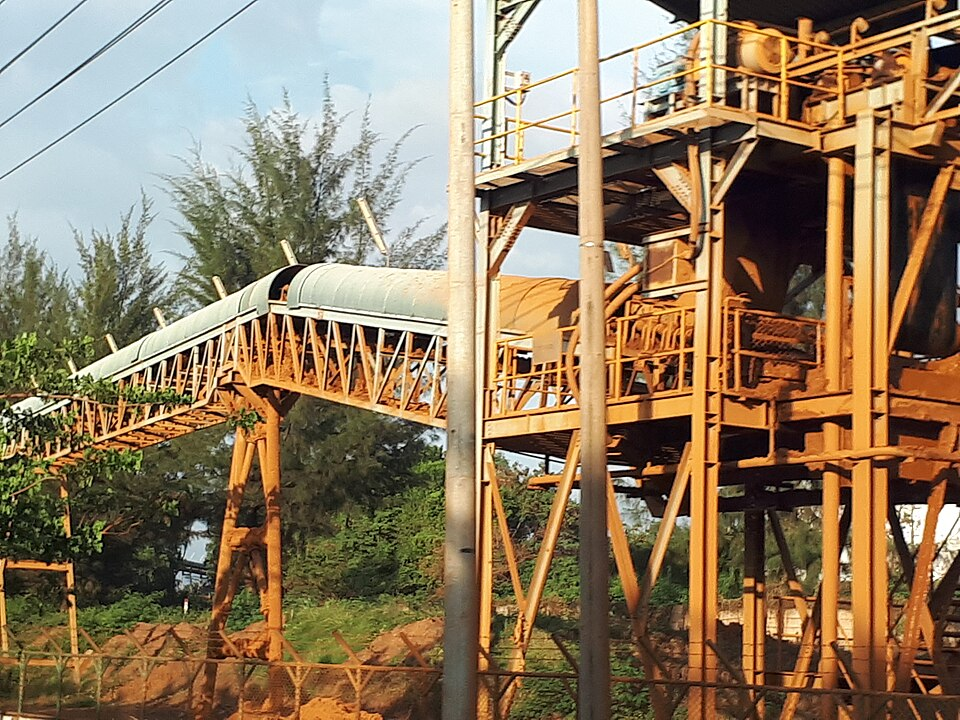
A part of a nickel processing plant in Kolaka, South East Sulawesi Province. (commons.wikimedia.org)
The OECD’s 2026 analysis of nickel supply chains provides an important answer. Indonesia accounted for nearly 65% of global nickel production in 2025 and 43% of processing. However, domestic Indonesian companies controlled less than 10% of nickel production, compared with approximately 40% controlled by companies with Chinese majority ownership. Lower-grade nickel intermediates are also frequently shipped to China, where a substantial share of battery-grade nickel sulphate production takes place.
These figures reveal the distinction between territorial production, industrial processing and ownership of productive assets. Indonesia may dominate the geographical location of nickel extraction and processing without exercising equivalent control over capital, technology and the wider value chain.
The ecological costs are equally significant. Indonesia’s operational captive coal capacity reached 19.3 gigawatts. Between July 2024 and July 2025, captive coal accounted for more than 80%of new coal capacity additions, with expansion concentrated in nickel-producing industrial hubs. This is a striking contradiction for an industry whose products are marketed as essential to the global energy transition.
The environmental footprint extends beyond carbon emissions. Indonesia has approximately 920,000 hectares of nickel mining concessions, of which around 66% remain forested. Forest clearance in 2023 was twice the level recorded in 2020. The study also documents pollution affecting water quality, reduced fish stocks, pressure on agricultural livelihoods and threats to Indigenous communities.
The labour costs are equally alarming, with an estimated 104 workplace accidents at Indonesian nickel smelters between 2019 and 2025, resulting in 107 deaths. Inadequate investment in safety equipment and infrastructure, low baseline salaries, overtime demands and worker fatigue were identified among the factors contributing to these incidents. It also highlights weaknesses in labour relations and the transparency of industrial governance.
Indonesia’s nickel industry therefore illustrates the central contradiction of green extractivism: the production of materials essential to decarbonisation can reproduce carbon-intensive industrial systems, unequal ownership structures and serious social and environmental harm.
Across these three economies, the evidence does not support the simplistic claim that foreign investment invariably produces poor-quality jobs or that domestic firms necessarily capture more value. Foreign-owned firms in Southeast Asia have been found to pay an average wage premium of 33.7% compared with domestic firms, although outcomes vary substantially across countries and sectors. Foreign investment can therefore improve wages and training opportunities while simultaneously leaving strategic control, intellectual property and higher-value activities concentrated elsewhere.
The issue is not foreign ownership alone. It is the institutional and political-economic conditions under which investment operates: who controls production, who owns technology, how domestic suppliers participate, how workers bargain over wages and conditions, and who bears the environmental costs.
This dynamic exposes a profound structural contradiction at the heart of Southeast Asian capitalism. Economies such as Indonesia and the Philippines depend on domestic consumption to cushion external trade shocks. Yet a development model that relies on suppressing labour costs can undermine the purchasing power of the very workers expected to sustain domestic demand. Meanwhile, ecological degradation weakens agrarian and coastal livelihoods that function as essential social safety nets during economic downturns.
A Strategic Imperative for Business Leaders
Port of Singapore. (Singaporean Ministry of Trade)
Looking ahead, geopolitical fragmentation and increasingly demanding supply chain due diligence regimes, ranging from US rules-of-origin enforcement to European carbon border adjustment requirements, will continue to reshape the operating environment for businesses in Southeast Asia.
For multinational corporations, regional suppliers and institutional investors, treating labour deregulation and weak environmental enforcement as competitive advantages is no longer merely an ethical problem. It creates material commercial risks, including supply chain disruption, legal exposure, tariff penalties and reputational damage.
Building durable and resilient operations across ASEAN requires moving beyond short-term regulatory arbitrage towards three concrete practices.
First, internalise compliance costs rather than transferring risks to workers. Multinational buyers and tier-one suppliers must stop using tariff volatility and cost pressures as justifications for precarious subcontracting. Companies should prioritise direct employment, predictable multi-year contracts where appropriate, living wages adjusted to local economic conditions, effective occupational health and safety protections, and recognition of independent trade unions.
Decent work should be treated as an integral component of production resilience rather than an additional cost to be minimised.
Second, embed binding socio-ecological due diligence throughout supply chains. Corporations sourcing electronics, textiles and critical minerals from Southeast Asia must extend their oversight beyond first-tier suppliers. Transparent supply chain traceability should identify forced labour risks, exploitative recruitment practices, unsafe workplaces, deforestation, water pollution and violations of community and Indigenous rights.
Due diligence must also include accessible grievance mechanisms, meaningful stakeholder participation and effective remediation. Auditing without accountability does little to change the underlying distribution of risks and responsibilities.
Third, decarbonise industrial supply chains and invest in meaningful technology transfer. Foreign investors and industrial estate operators should accelerate the transition away from captive coal-fired power, support additional renewable energy capacity and establish credible power purchase agreements. Equally important, investment agreements and industrial partnerships should strengthen local research and development, engineering capabilities, supplier development and domestic technological ownership.
Technology transfer should not be reduced to training programmes or the relocation of production equipment. It must expand the capacity of domestic enterprises, universities and workers to participate in higher-value activities and shape the future direction of industrial development.
In the end, Southeast Asia’s long-term commercial potential cannot rest on exhausted ecosystems and insecure livelihoods. Nor can regional prosperity be measured solely through export growth, investment commitments, manufacturing output or the number of factories established.
The more fundamental question is whether integration into global production networks strengthens the capacity of Southeast Asian societies to control their economic futures.
The next phase of regional industrial development must therefore be judged by more than its ability to attract mobile capital. It must also be assessed through the quality of employment it creates, the technological capabilities it develops, the domestic value it retains and the ecological costs it prevents.
Companies that thrive in Southeast Asia’s next chapter will be those that recognise decent work, equitable value creation and ecological stewardship not as costs to be externalised, but as foundations of long-term supply chain resilience.
Ultimately, the question is not simply who benefits from Southeast Asia’s supply chain boom. It is who controls its productive assets, who captures its value, and who is left to pay its social and ecological costs.
About The Author