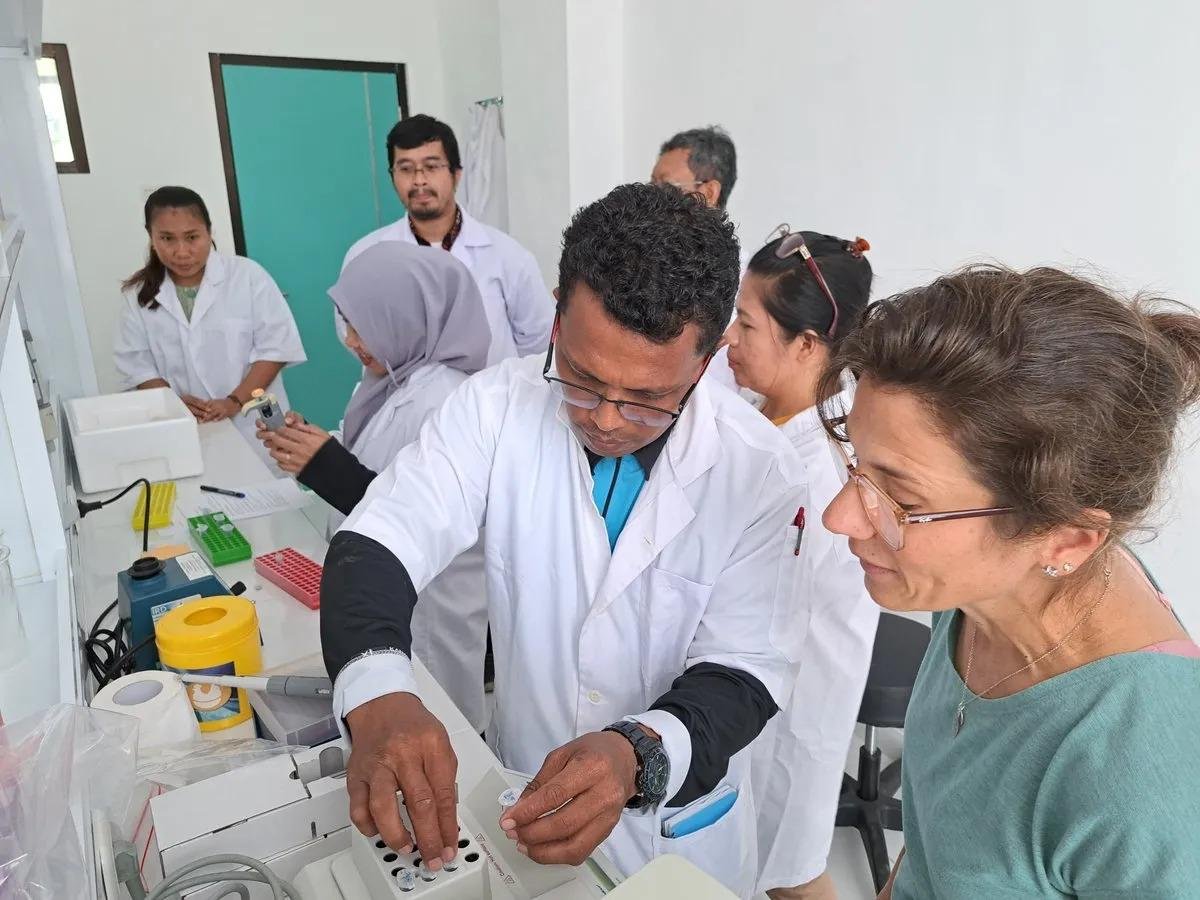
French and Indonesian researchers assess the SELAMAT marine biodiversity laboratory, a joint initiative supporting scientific cooperation and marine conservation in Indonesia. (IRD Indonesia)
From 26 to 30 October 2026, French and Indonesian researchers are assessing the progress of SELAMAT, a joint marine biodiversity research laboratory. Established through cooperation between France’s National Research Institute for Sustainable Development (IRD) and Indonesia’s National Research and Innovation Agency (BRIN), the initiative aims to strengthen scientific collaboration and address shared environmental challenges.
Launched in 2021, SELAMAT brings together around 80 scientists from both countries, alongside several research institutions and six Indonesian marine research stations. Its work centres on three interconnected coastal ecosystems: coral reefs, mangroves and seagrass meadows. Researchers examine marine biodiversity, monitor environmental changes and investigate the effects of human activities, while seeking ways to balance fisheries and aquaculture with conservation.
Over the past five years, the laboratory has developed an archipelago-wide marine biodiversity observation network, combining field research, molecular biology, digital training and collaboration with local communities. Its activities have also included scientific training in several Indonesian regions, covering techniques such as environmental DNA sampling.
The current evaluation will inform plans for a second phase covering 2027–2030. Proposed priorities include expanding research activities, developing local scientific expertise and improving the laboratory’s long-term sustainability and international profile.
The partnership forms part of wider French – Indonesian efforts to advance marine research. Cooperation has also involved Indonesia’s Ministry of Marine Affairs and Fisheries, with an emphasis on connecting scientific findings with policymaking.
Beyond research, both countries have supported marine conservation initiatives, including the designation of a 73,165-hectare whale shark conservation area in Saleh Bay, West Nusa Tenggara, in April 2026. The initiative highlights the role of scientific research and community participation in protecting Indonesia’s marine ecosystems.
About The Author