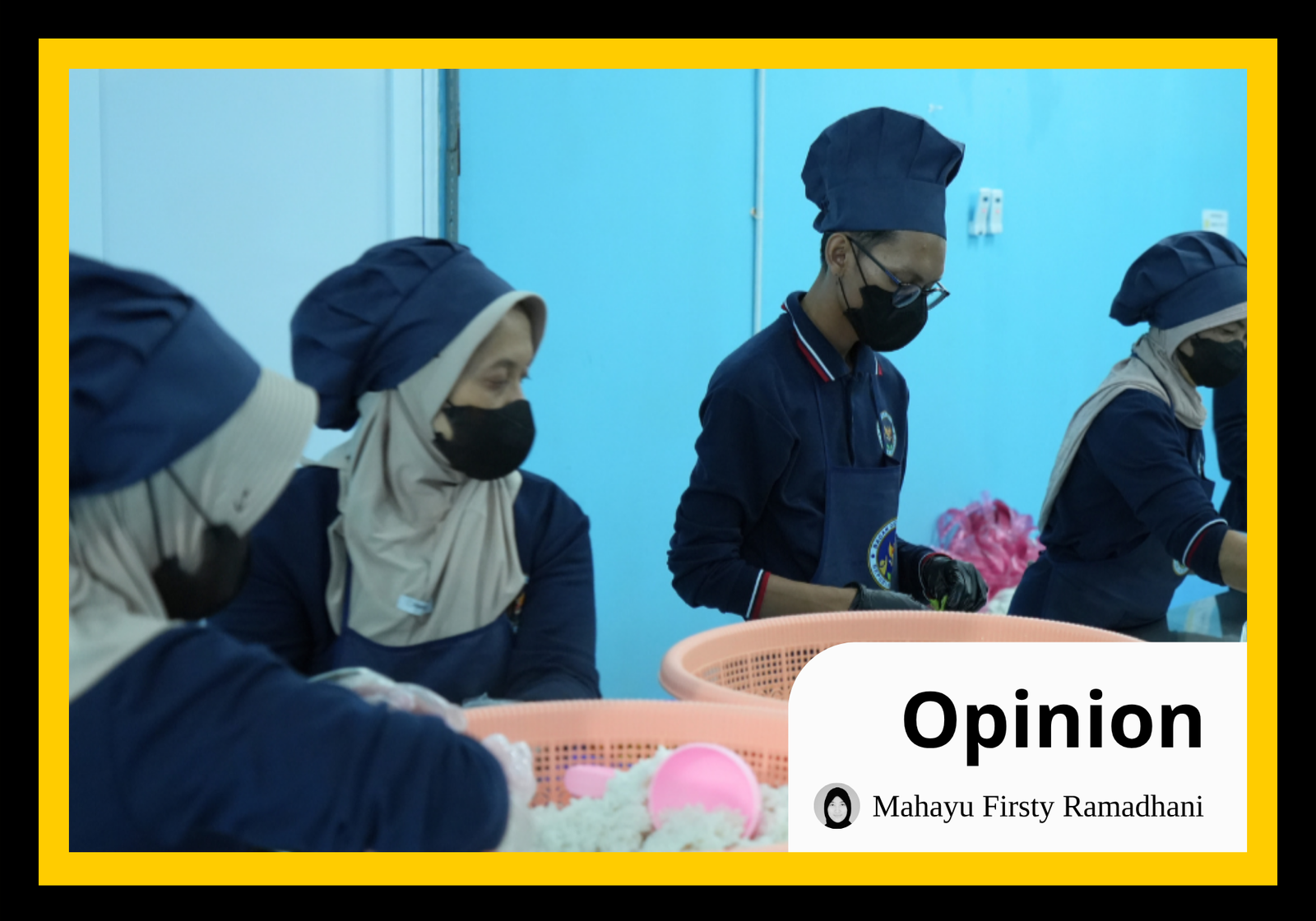
Nutrition Fulfillment Service Units (SPPG) employees prepare food for the free nutritious meal programme. (Indonesian National Nutrition Agency)
Mahayu Firsty Ramadhani is a nutritionist and food safety practitioner with experience in nutritional epidemiology and food regulatory compliance across Southeast Asia. The views expressed are her own and do not represent SEA Daily or that of another organisation.
Nutritional Assessment as the Foundation of Effective Public Health Nutrition Intervention
In epidemiology, effective population-level nutritional interventions begin with a step that cannot be skipped: measuring baseline nutritional status. Without this initial data, policymakers are left uncertain of who is deficient in what, how severe the condition is, and whether the intervention is reaching the right groups. Indonesia’s Free Nutritious Meals (or Makan Bergizi Gratis – MBG) programme, launched in January 2025 with an ambitious budget of Rp 335 trillion in 2026 regrettably bypassed this critical step.
The consequences are already visible. Between January 2025 and April 2026, more than 33,000 students reportedly experienced food poisoning linked to MBG meals, with 177 outbreaks across 127 districts and cities in 33 provinces. Meanwhile, the National Agency of Drug and Food Control (BPOM) was left with only 2.9 billion Indonesian rupiah (132,684 US dollar) to oversee a programme of enormous scale. Beyond day-to-day challenges, these figures highlight systemic flaws in the programme’s design.
Indonesia faces a persistent malnutrition crisis. The 2025 Indonesian Nutritional Status Survey (SSGI) estimates that 19.8% children suffer from stunting, placing the country among those with the highest global burden. At the same time, overnutrition is emerging as a parallel challenge with an estimated 8% of children under five and up to 20% of primary school-aged children classified as overweight or obese, illustrating a clear double burden of malnutrition. Taken together, however, these figures offer only a national-level overview rather than a diagnostic map. Designing targeted interventions requires more detailed insights, including anthropometric screening, identification of vulnerable populations and precise measurement of micronutrient deficiencies.
MBG’s Structural Vulnerability
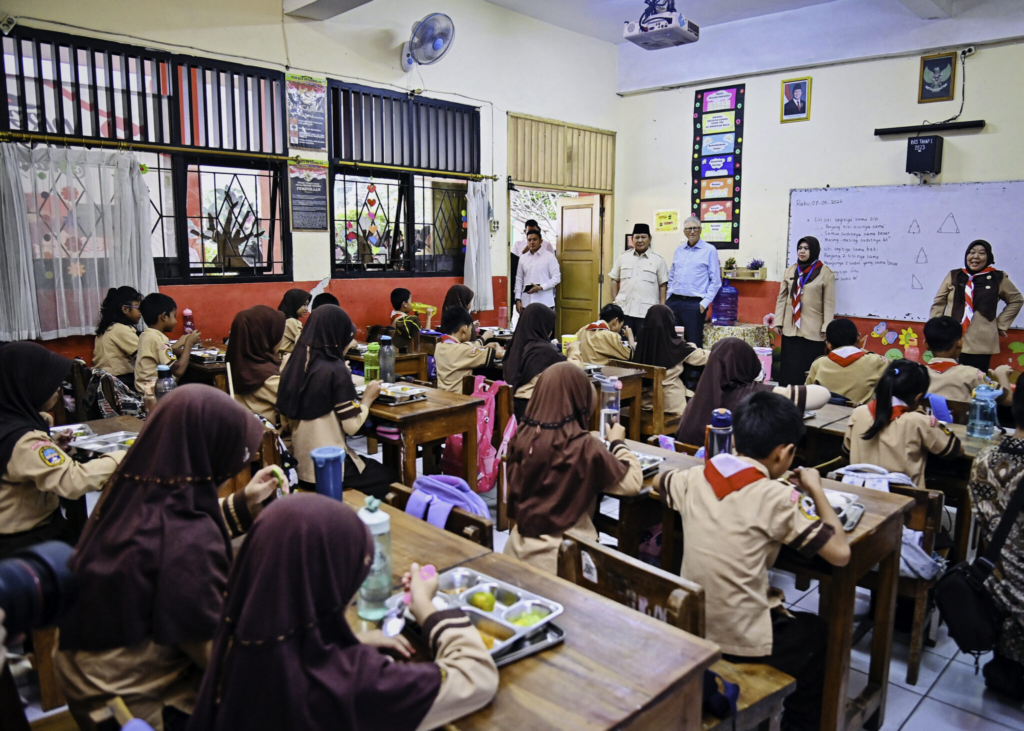
From an epidemiological standpoint, a national nutrition programme without baseline data is fundamentally flawed. Population-based interventions require the continuous, systematic collection, analysis, and interpretation of nutrition-related data to guide public health action. The lack of important data would make it impossible to calculate attributable risk reduction, that is, the extent to which improvements in nutritional outcomes can be directly credited to the programme rather than external factors.
Indonesia’s current trajectory raises concern. The government has only planned to expand nutritional surveys to school-aged children in 2026, meaning that for at least a full year, MBG has operated without a functional system to measure its impact. What may appear minor in practice has significant implications for the programme’s scientific rigour.
The absence of baseline data also compromises the nutritional relevance of the intervention. A standardised menu, applied uniformly across a diverse population, ignores the heterogeneity of nutritional needs. A child suffering from iron-deficiency anaemia in Indonesia’s relatively rural East Nusa Tenggara province requires a different intervention from an urban child in the capital Jakarta facing overweight or obesity. Without differentiation, the programme risks delivering excess calories to those who do not need them, while failing to address critical micronutrient deficiencies in those who do.
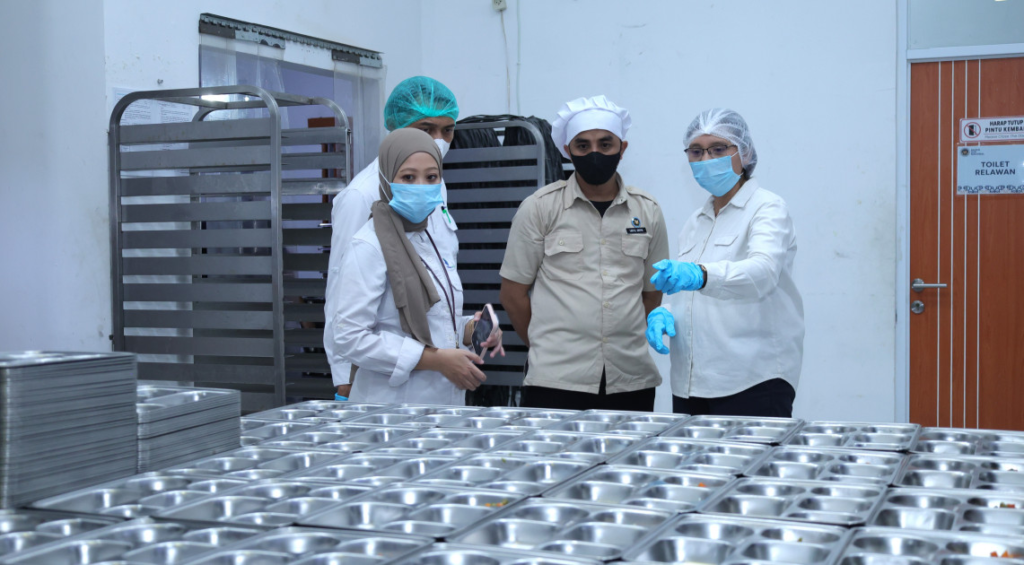
Equally concerning is the structural degradation of food safety surveillance capacity. BPOM, the body responsible for ensuring that meals reaching children are safe to eat, operated under a budget cut of approximately 41% from early 20255 directly compromised its core surveillance functions: field inspections, randomised sampling, and laboratory verification across the decentralised kitchen network. BPOM’s head confirmed to the parliament as recently as April 2026 that no pre-distribution sample testing of MBG meals had ever been conducted. A regulatory body cannot fulfil its mandate on goodwill alone.
Food safety systems such as Hazard Analysis Critical Control Points (HACCP) rely on rigorous identification and monitoring of risk points, from raw material sourcing to final distribution. Recognition of these critical points, however, constitutes only the first step in a functional food safety system. Without adequate resourcing for systematic verification identification alone carries no protective value for the population it is meant to serve. Reports indicate that many of the facilities linked to outbreaks had been operating for less than one month, suggesting insufficient preparation and oversight prior to programme rollout. This pattern of harm reflects not a failure of institutional capacity, but a failure of political prioritisation. Launching a programme at this scale without matching investment in surveillance and food safety makes adverse outcomes almost inevitable.
Toward a Scientifically Grounded Future for MBG
The government’s recent decision in April 2026 to refocus MBG on malnourished children reflects a shift in the right direction. However, without a scientifically grounded identification system, this prioritisation risks remaining rhetorical. Targeting requires standardised, personalised-level, and regularly updated data.
To restore the programme’s credibility and effectiveness, three urgent steps are required. First, a comprehensive baseline nutritional assessment for school-aged children must be conducted before further programme expansion. This should include anthropometric measurements, dietary intake assessments, and, where feasible, biomarker analysis for key micronutrient deficiencies such as iron, vitamin A and zinc. Leveraging existing primary healthcare infrastructure, particularly puskesmas, could enable rapid data collection at scale.
Second, the budget for food safety must be restored to a level that allows for risk-based inspections and routine monitoring. Food safety cannot be treated as merely an supplementary function, but it is core to programme success. Investment in laboratory capacity, field inspectors, and digital traceability systems will be essential to prevent further outbreaks.
Third, Indonesia must establish an integrated nutritional surveillance system capable of real-time monitoring. Linking school-level data with health service records would allow continuous evaluation of programme impact and more responsive intervention design. Advances in digital health platforms make such integration increasingly feasible, but only with sustained political commitment. Closer to home, Malaysia and Singapore illustrate how school-based nutrition efforts can be strengthened through coordinated systems and firm oversight. In Malaysia, the Rancangan Makanan Tambahan (RMT) programme is integrated with school health services, combining targeted feeding for low-income students with routine monitoring and inter-ministerial coordination. This enables early identification of undernourished children and more targeted intervention.
In Singapore, meanwhile, school meals are governed by strict nutritional standards under the Healthy Meals in Schools Programme, backed by regular audits and active enforcement from the Health Promotion Board and Ministry of Health. These examples underscore a shared principle, feeding is not treated as a standalone intervention but as part of a broader system. What made these programmes effective was not their size, but their design.
Indonesia has invested significantly in MBG, what remains insufficient is the discipline to guide it. Without it, programme effectiveness remains uncertain and risks multiply. In public health, success depends on aligning evidence, systems, and accountability. Only then can MBG move from ambition to outcome.
About The Author