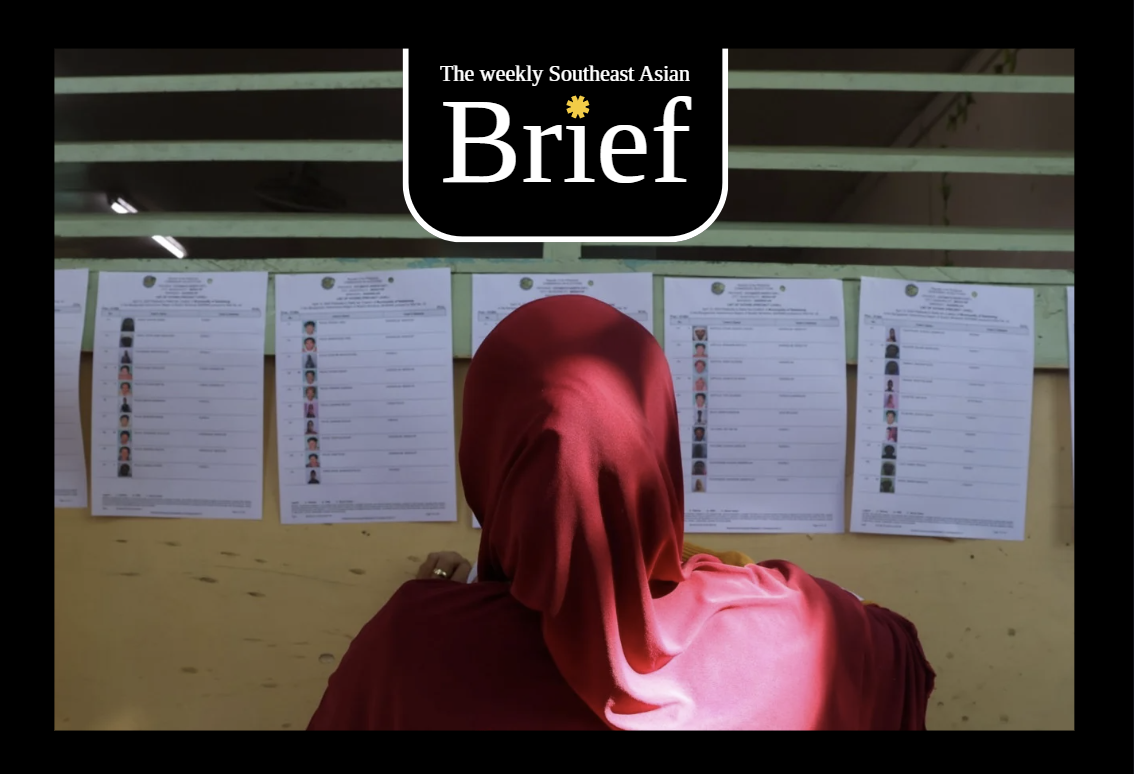
A young Bangsamoro voter checks the polling precinct’s voters’ list. Source: Bangsamoro Information Office (2026)
After decades of conflict, the Bangsamoro Autonomous Region in Muslim Mindanao (BARMM), in the Philippines’ southern region, held its first parliamentary elections on September 14, 2026. It marked the first electoral test of a historic 2014 peace agreement between Manila and the Moro Islamic Liberation Front that granted the region autonomy. The inaugural elections delivered a decisive voter mandate with 84.34% turnout representing more than 2 million of the 2.39 million registered voters who cast their ballots under heavy security. Yet, the results yielded a strict hung parliament with no single faction reaching the 41-seat majority required to govern independently, forcing the Bangsamoro to enter into coalition negotiations before the new parliament elects their first chief minister.

Result of the 2026 BARMM election as of September 15. (Parish Pastoral Council for Responsible Voting)
Officials formally proclaimed the newly elected members of the inaugural Bangsamoro Parliament shortly after midnight on Wednesday, September 16. In the 40 seats allocated through proportional representation, the Bangsamoro Federalist Party (BFP) secured a narrow plurality of 16 seats, with the United Bangsamoro Justice Party (UBJP) coming close behind with 15 seats, the BARMM Grand Coalition (BGC) winning eight seats and the Raayat Democratic Party gaining the remaining single seat. Of the 32 district representative seats, the BFP garnered 15 seats, UBJP won 9 seats, Serbisyong Inklusibo Alyansang Progresibo (SIAP) obtained 6, while the Progresibong Bangsamoro Party (PBP) and Al Ittihad-UKB secured one seat each. Eight sectoral seats complete the 80-seat parliament, representing women, youth, traditional leaders, the ulama (Islamic scholars), indigenous groups and settler communities.
This narrow distribution meant neither the BFP nor UBJP could govern alone and would need coalition partners to reach the majority required to elect a chief minister before the new legislature assumes office on October 30. The vote shifts the political landscape as the Moro Islamic Liberation Front (MILF)—the former armed separatist group that fought for Muslim self-rule in the southern Philippines and signed the 2014 peace agreement with Manila that led to the creation of BARMM—no longer stands as the sole representative of the Bangsamoro region, breaking its long-standing organisational monopoly. The unexpected ascent of the BFP points to a future where voters actively demand alternatives to MILF rule, paving the way for a more diverse regional governance focused on greater inclusion and fairer power distribution.
Inclusion remained limited in the electoral outcome. Women represent only 12.5% of the new parliament despite comprising half the electorate and playing active roles in election administration. Despite a 30% gender quota, women’s active participation as election officials, poll observers and campaign workers failed to translate into legislative power. Moving forward, the incoming legislature has the opportunity to strengthen candidate selection rules, including mandatory alternating lists and internal party discipline, to ensure women gain meaningful representation.
Notably, this neck-and-neck electoral race reflects a split within MILF itself. Both parties emerged from a severe internal rift within the MILF, the region’s dominant political broker that spearheaded the decades-long struggle for independence and self-rule. The fracture occurred when Philippine President Ferdinand Marcos Jr. appointed Abdulraof Macacua as interim chief minister in 2025 to manage the remaining transition, bypassing the preferences of the core MILF senior leadership, which was led by long-time chairman Ahod “Al Haj Murad” Ebrahim. This political intervention split the former revolutionary organisation into two competing camps: Ebrahim retained control of the official MILF political wing, the UBJP, while Macacua mobilised his faction under the newly formed BFP.
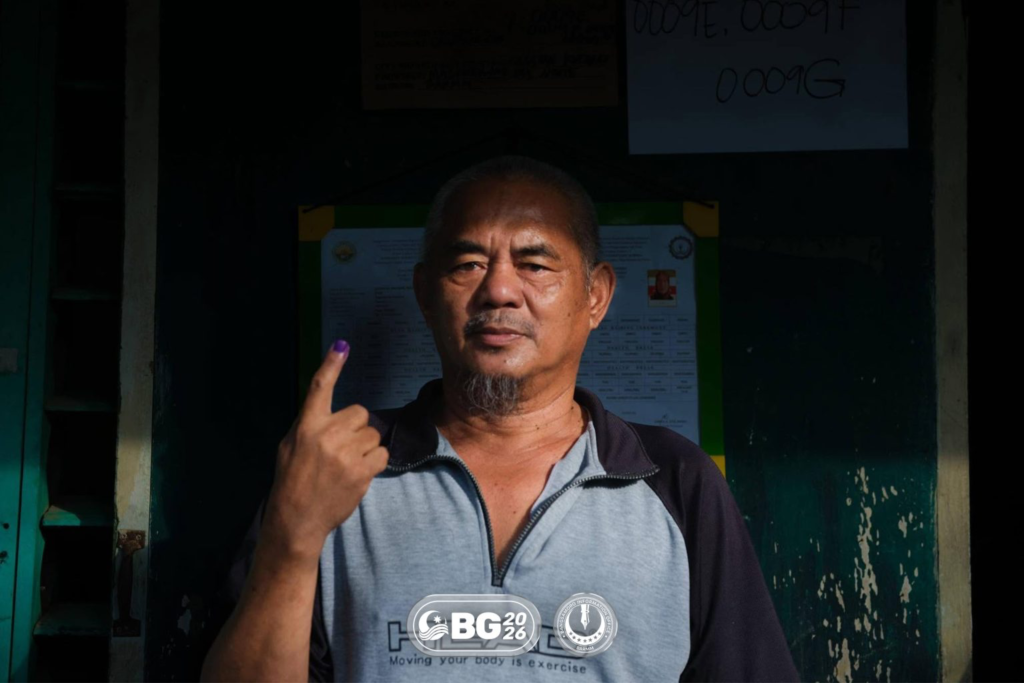
Former combatant Bapa Abulkhair votes in BARMM’s inaugural elections, a symbolic shift from armed struggle to democratic participation. Source: Bangsamoro Information Office (2026)
Authorities reported the elections remained overall peaceful, though sporadic violence occurred. On the eve of the BARMM elections, a clash between rival supporters outside the Datu Usman Mampen Elementary School polling center over queuing left three dead and several wounded. Shooting attacks and explosions erupted in Cotabato City, Basilan, and Maguindanao del Sur and at least 5 people in total were reportedly killed and 18 others wounded in election-related violence. The Philippine National Police Chief emphasised that security operations will remain heightened during the post-election period.
The election marks BARMM’s formal transition from interim to regular governance. Created under the 2019 Bangsamoro Organic Law, the region operated under an interim Bangsamoro Transition Authority (BTA) until elections could be held. During this period and several election postponements, the BTA laid the legislative groundwork, including drafting the Bangsamoro Electoral Code to govern the region’s voting processes. Miriam Coronel-Ferrer, who led 17 years of peace negotiations on behalf of the Philippine government, commended the parties for successfully transitioning to electoral competition and respecting democratic procedures. Elected representatives now have direct control over taxes, budgets, and public spending, allowing the Bangsamoro region to mobilize its own resources, tailor development policies to local needs, and directly drive its long-term economic growth.
Coalition negotiations will determine BARMM’s leadership before Parliament convenes in October. Two scenarios appear likely: a BFP-BGC alliance would sideline the MILF from executive power for the first time, reshaping long-standing regional governance. Alternatively, a UBJP-BGC coalition would preserve MILF institutional influence but force the organisation into uncomfortable compromises with traditional elites it historically opposed. Either outcome requires the winning coalition to bridge ideological divides and competing resource demands among former insurgents and marginalised communities. A prolonged coalition stalemate risks eroding public confidence in the new electoral system just as it begins to take public office.
The Bangsamoro coalition talks add a complex layer to Manila’s ongoing peace implementation agenda. Regional and national officials are scheduled for a high-level bilateral meeting in Kuala Lumpur on September 25 to finalise the weapons decommissioning timeline and manage the political normalisation track. Malaysia’s long-standing role as a third-party facilitator in the BARMM peace process showcases regional cooperation by proving how neighboring ASEAN countries can use diplomacy and institutional capacity-building to turn local conflict into shared economic stability. This special meeting is also a renewal of commitment from both the MILF and the Philippine Government meant to strengthen and sustain the gains of the peace process beyond the elections.
For decades, elections in the southern Philippines’ Muslim-majority region have been marred by rampant gun violence and dominant clan wars. Having such a high voter turnout despite isolated incidents shows that the region is ready to pivot toward a stable, democratic future. The challenge now is to ensure that electoral competition strengthens rather than destabilises the peace process, and more importantly that political pluralism can coexist with lasting peace.
About The Author