
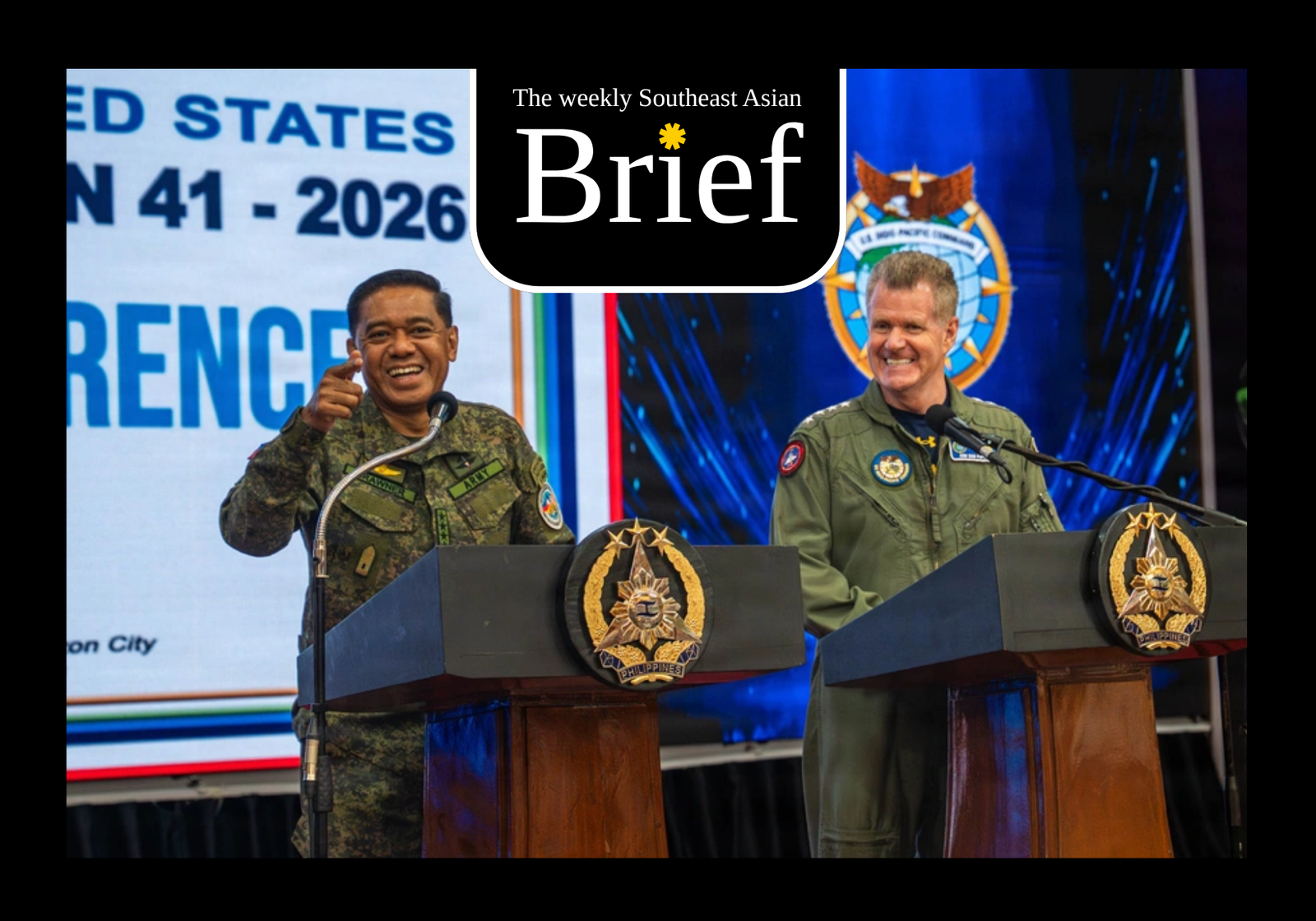
Philippine Army Gen. Romeo S. Brawner Jr., chief of staff of the Armed Forces of the Philippines, left, and U.S. Navy Adm. Samuel J. Paparo Jr., commander of US Indo-Pacific Command, speak at a press conference for the closing of Exercise Balikatan 2026, Camp General Emilio Aguinaldo, Philippines, May 8, 2026. (US Air Force)
On August 30, the Philippines and US marked the 75th anniversary of their Mutual Defence Treaty (MDT), reaffirming an alliance that has evolved from a Cold War security pact into an expanded defence partnership. The relationship now covers military exercises, operational coordination, capability development, maritime security and humanitarian assistance and disaster response, while increasingly coupling the Philippines with wider regional security networks.
Historically, the alliance has undergone several shifts since the end of the Cold War. The departure of US forces from the Philippines in the early 1990s reduced its operational role, but China’s growing presence in the South China Sea (SCS) subsequently renewed Philippine security concerns. Relations again weakened under former President Rodrigo Duterte, who pursued closer ties with China and questioned aspects of defence cooperation with the US. Continued maritime tensions, alongside clearer US commitments to the MDT, later contributed to a renewed focus on the alliance.
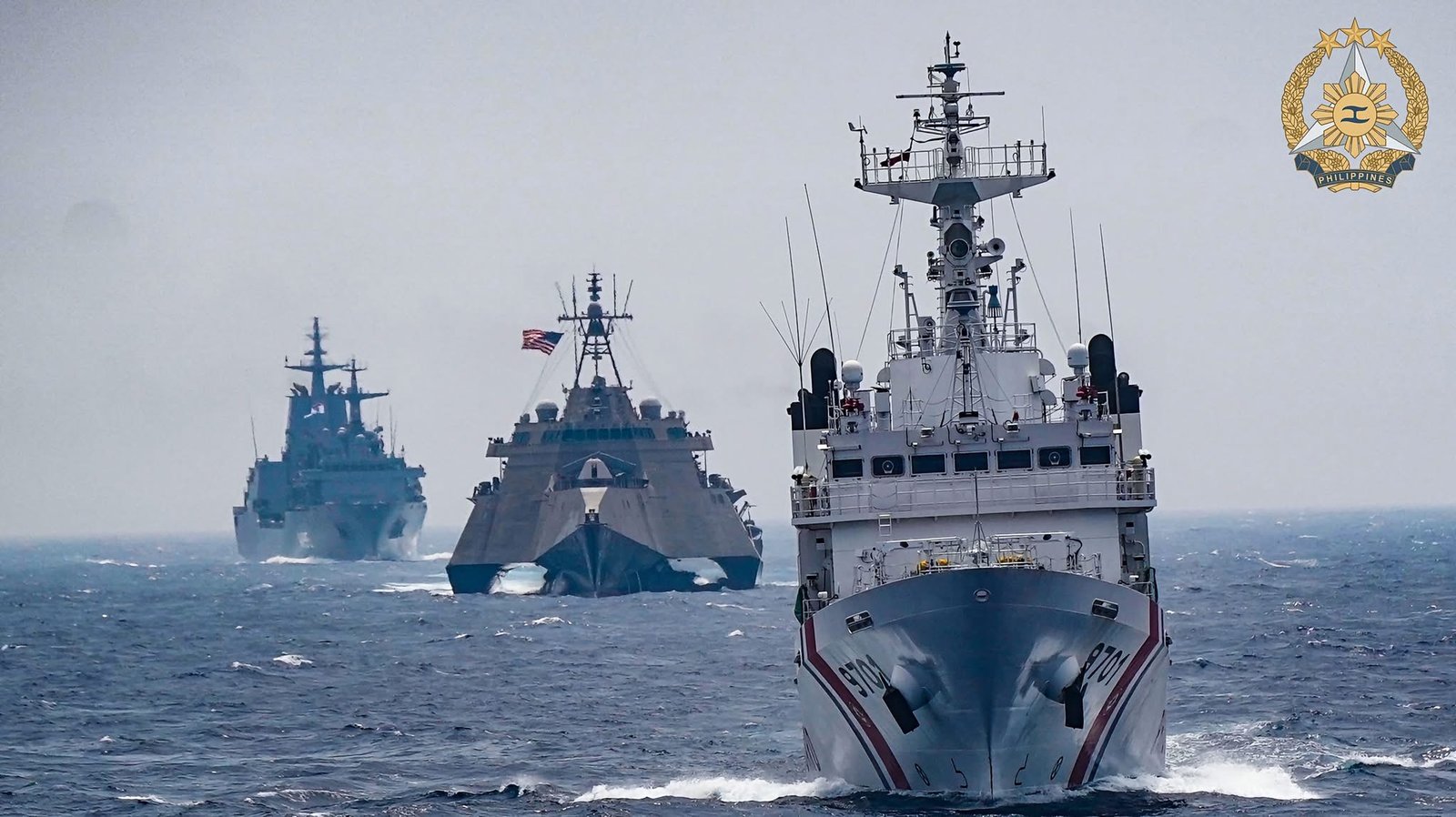
Since 2023, defence cooperation has expanded through the implementation of the Enhanced Defence Cooperation Agreement (EDCA), larger military exercises and increased operational coordination. RIMPAC 2026, the US-led multinational exercise, brought together 30 nations, more than 30,000 personnel, 30 surface ships, 5 submarines and more than 190 aircraft. The Philippines’ participation placed its forces alongside militaries from across the Indo-Pacific, illustrating how defence cooperation increasingly extends beyond bilateral arrangements.
A similar trend was evident in this year’s Balikatan exercise. Held from April to May, it involved about 17,000 personnel from the Philippines, US and multinational partners, including Australia and Japan. US Indo-Pacific Command described the exercise as part of the alliance’s continuing development towards broader multinational activities, reflecting the growing emphasis on interoperability and operational coordination.
This shift towards multinational arrangements is not unique to the Philippines. It reveals a broader pattern in Southeast Asian security cooperation, where overlapping bilateral, minilateral and ASEAN-led arrangements increasingly coexist. Indonesia’s Super Garuda Shield, for example, brought together the US and other participating countries, including Japan and Australia, while Indonesia maintained its non-aligned foreign-policy approach. The comparison highlights a broader regional challenge with how to expand defence partnerships and strategic options while keeping them connected to ASEAN’s regional architecture. A similar pattern is evident in Thailand’s Cobra Gold 2026 exercise, co-hosted by Thailand and the US and joined by around 30 nations and more than 8,000 troops, making it one of the largest multinational military exercises in the region. The comparison highlights a broader regional challenge with how to expand defence partnerships and strategic options while keeping them connected to ASEAN’s regional architecture.
For the Philippines, these efforts also complement the ongoing modernisation of the Armed Forces of the Philippines (AFP), allowing new capabilities to be tested and integrated through regular exercises and cooperation with regional partners. In the SCS, improved capabilities may contribute to deterrence and the ability to respond to maritime incidents. However, military cooperation alone cannot resolve competing maritime claims. Its contribution to regional stability will also depend on diplomatic engagement, confidence-building measures and mechanisms for managing disputes.
This is where ASEAN remains relevant. The ASEAN Defence Ministers’ Meeting (ADMM) and ADMM-Plus provide platforms for ASEAN states and dialogue partners to discuss regional security, build confidence and improve practical cooperation. Their areas of cooperation include maritime security, humanitarian assistance, counterterrorism and cybersecurity, involving dialogue partners such as Australia, China, Japan and the US.
The distinction between alliance-building and ASEAN-led cooperation is therefore important. The US-Philippines relationship is based on a formal defence treaty, while ASEAN mechanisms rely on consultation, consensus and cooperation among member states. These approaches can operate alongside one another. Bilateral and minilateral partnerships can strengthen military capabilities and interoperability, while ASEAN mechanisms can provide broader platforms for dialogue and regional confidence-building.
The Philippines’ role as ASEAN chair in 2026 gives Manila a particular opportunity to connect these threads. By knitting its expanding defence partnerships with ASEAN-led mechanisms, the Philippines can strengthen its own capabilities while supporting broader regional cooperation and maintaining ASEAN centrality.
Over the coming years, three developments could shape the regional security environment. First, US-Philippines cooperation could deepen through continued exercises, capability development and operational coordination. Second, greater defence cooperation with Japan and Australia could expand maritime security and humanitarian capabilities while broadening the Philippines’ network. Third, stronger coordination with ADMM, ADMM-Plus and other ASEAN mechanisms could connect these partnerships to wider regional cooperation.
These developments could improve deterrence in the SCS while strengthening Southeast Asian security cooperation. However, their effectiveness will depend on sustained diplomatic engagement and ASEAN-led dialogue. The central challenge for the Philippines is not simply whether its defence partnerships can strengthen deterrence, but whether they can do so without weakening ASEAN’s role in the region.
These questions are central to the upcoming CSIS Manila Strategy Forum 2026, taking place in Manila on September 9-10, 2026. Bringing together senior policymakers, diplomats and regional experts, the two-day forum will examine shifts in the international order, US-Philippine cooperation and the evolving network of regional alliances and partnerships.
The Forum provides an opportunity to consider how these security arrangements can adapt to emerging challenges while reinforcing regional stability and ASEAN centrality. As Southeast Asia’s defence partnerships become increasingly relevant, the discussions will offer an assessment of how partnerships could shape the region’s security architecture in the years ahead.

About The Author

One thought on “Southeast Asia’s Defence Partnerships Are Expanding Beyond Bilateral Alliances ”