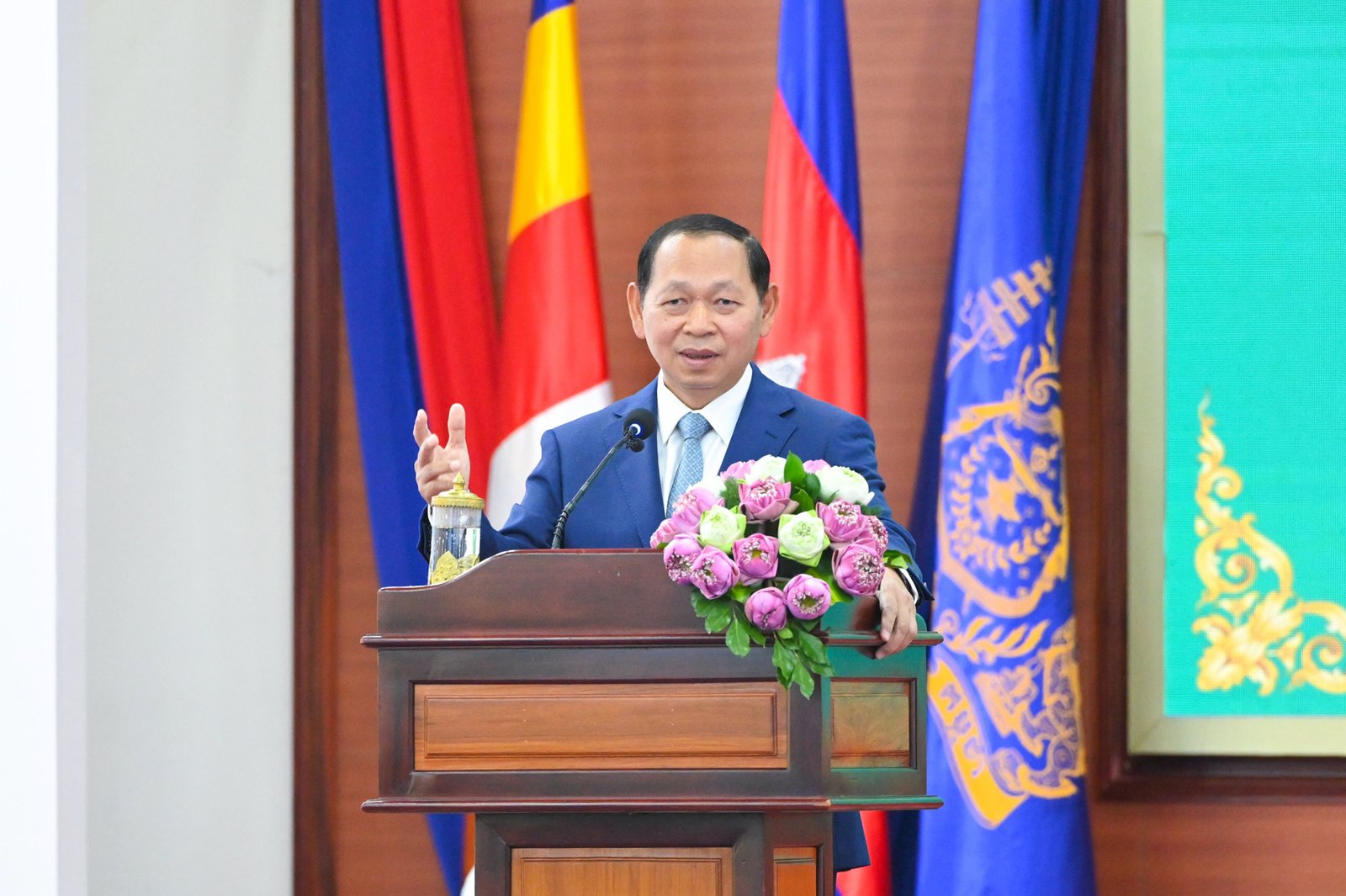
Cambodian Rural Development Minister Chhay Rithisen addresses stakeholders during the launch of the Rural Road Infrastructure Development Strategic Plan 2026–2033. (Ministry of Rural Development)
On August 17, Cambodia officially launched its Rural Road Infrastructure Development Strategic Plan 2026 to 2033, following months of consultation aimed at creating a long-term framework for improving rural connectivity, road quality and climate resilience.
The strategy was launched at the Ministry of Rural Development headquarters under the leadership of Cambodian Rural Development Minister Chhay Rithisen, with 374 participants from relevant ministries and institutions, development partners, technical advisers, contractors and officials from the ministry and rural development departments across all 25 capitals and provinces.
The plan builds on a consultation workshop held on May 19, when the ministry presented its draft strategy to government officials and stakeholders. Cambodian Director of the Department of Planning and Public Relations Pheng Sambo presented the draft, followed by discussions and recommendations from participants. Cambodian Minister Chhay Rithisen instructed the technical working group to incorporate the feedback to make the strategy more comprehensive and practical before its formal adoption.
At the launch, Cambodian Director General for Technical Affairs Chreay Pom outlined the development process, while Kong Pheun, Director of the Rural Road Infrastructure Development Department, presented the final strategy.
Cambodian Minister Chhay Rithisen said the strategy supports the Royal Government’s Pentagonal Strategy Phase 1 and the National Policy on Rural Development 2025 to 2035, particularly its emphasis on resilient infrastructure and transport connectivity.
The ministry aims to improve the quality and long-term maintenance of rural roads to connect communities with towns and cities, support economic and social activities and strengthen logistics. The approach is reflected in the principle that “(when) there is a road, there is hope”, with better connectivity expected to support rural household incomes and economic activity.
They have also adopted four principles for rural road development: benefit, quality, safety and cost effectiveness, with particular emphasis on roads that can withstand climate-related risks and remain accessible throughout the year.
The strategy moves Cambodia from individual rural road projects towards a more coordinated, long-term infrastructure framework. By linking road connectivity with climate resilience, logistics and rural economic integration, Cambodia is treating transport infrastructure as a pillar of national development and resilience. The consultation process also suggests an effort to improve policy implementation by incorporating technical and local stakeholder input into the country’s rural infrastructure planning.
About The Author