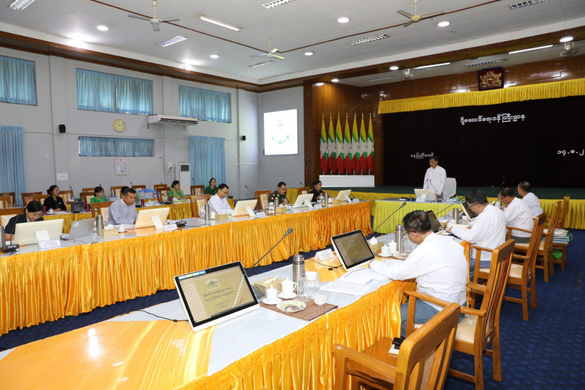
Myanmar Investment Commission (MIC) meeting in Naypyidaw on August 14, approving 14 new investment projects. (Global New Light of Myanmar)
Reportedly, registered capital inflows stream from two foreign enterprises valued at over 140 US million dollar in the industrial and manufacturing sectors, which was accompanied by twelve domestic pledges worth over 1.178 trillion Myanmar kyat (560 million US dollar) from across housing development, service and, most importantly, commercial electricity advancement.
The decision was made during the commission meeting held in Naypyidaw, chaired by Union Minister Mya Tun Oo.
According to MIC, these undertakings will be administered under the Myanmar Investment Law (MIL). Enacted in 2016, the MIL serves as the primary legal framework designed to streamline regulatory procedures and produce a conducive business climate for both domestic and international capitals. This commitment intends to curb bureaucratic hurdles, offer tax breaks, as well as guarantee government incentives and asset protection.
Crucially, in the first half of 2026, Myanmar secured steady capital injection in foreign investment, most notably from Singapore, China and Hong Kong Special Administrative Region (SAR). These inflows reinforce crucial foundational developing sectors, namely electricity (particularly grid stabilisation), oil and natural gas, as well as the industrial sector.
What does this mean for business?
The operational landscape remains highly fractured, as Myanmar’s economy sits roughly 30% smaller than its pre-2021 coup and pandemic trajectory. While the ruling military regime has ramped up efforts since 2025 to attract foreign direct investment (FDI) to gain international legitimacy, analysts note these aggressive concessions risk over-compromising regulatory standards to benefit state elites rather than broader economic prosperity. International firms looking to capitalise on these new incentives must heavily weigh these lucrative tax breaks against severe operational risks, civil instability, and strict international sanctions.
Kala Advisory helps investors transform volatile infrastructure openings like these into risk-managed, compliant market entry plans across Southeast Asia. Visit kala-advisory.com.
About The Author