
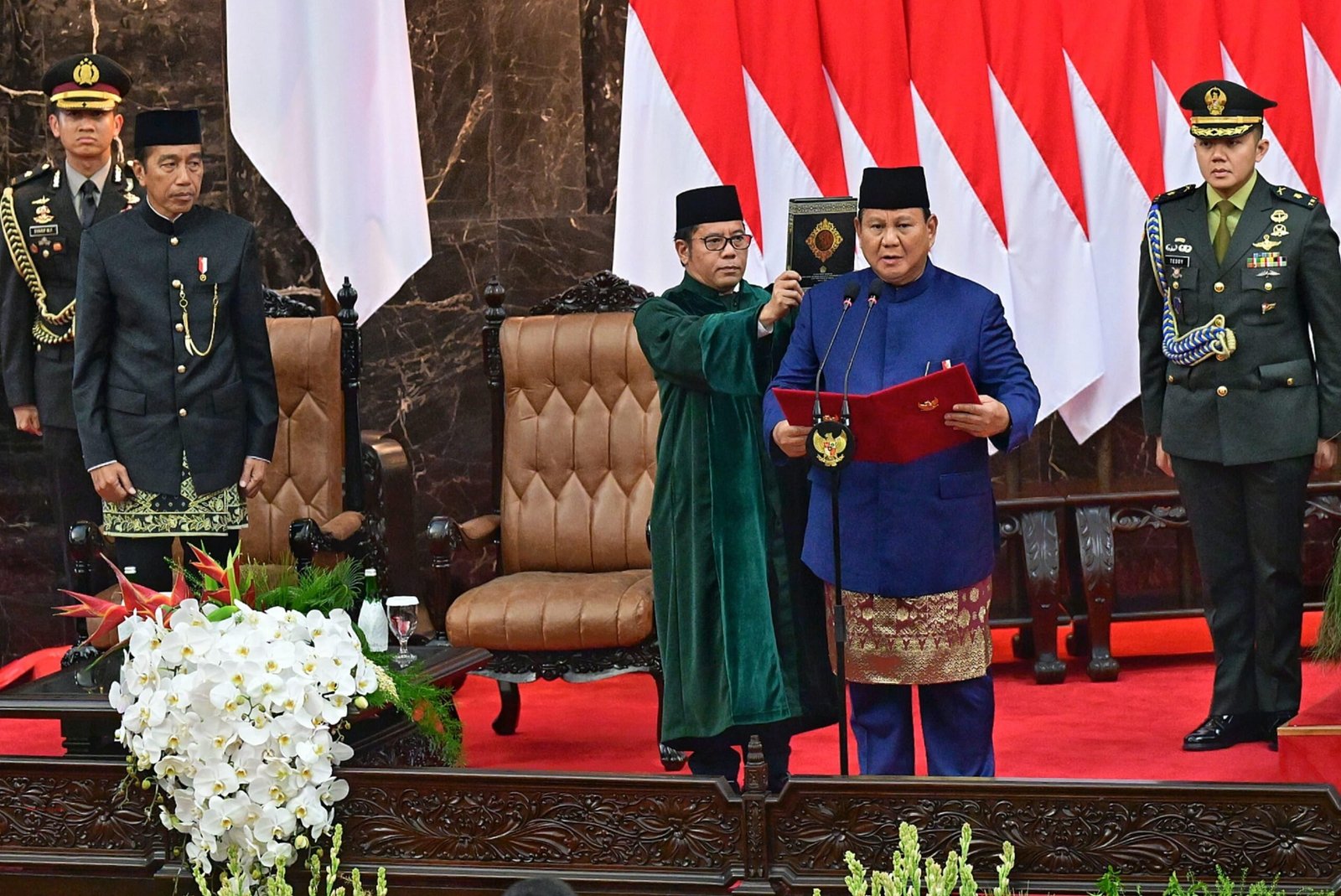
Indonesian President Prabowo Subianto takes the oath of office as President of the Republic of Indonesia. (Wikipedia)
On August 14, Indonesian President Prabowo Subianto delivered his second State of the Nation (SONA) address at the annual session of the People’s Consultative Assembly (MPR) and joint session of the House of Representatives (DPR) and Regional Representatives Council (DPD), outlining his administration’s achievements and priorities ahead of Indonesia’s 81st Independence Day.
The annual parliamentary address serves as a key platform for the president to report on government performance and set out national priorities. President Prabowo said his administration had introduced 121 “transformative policies” during its first 21 months in office, while acknowledging that not all of the country’s problems had been resolved. He highlighted economic growth of 5.61% in the first quarter and 5.45% in the first half of 2026, saying he was confident Indonesia could achieve 6% growth by the end of the year.
President Prabowo highlighted progress in food self-sufficiency, including staple commodities such as rice, corn, sugar and poultry products. He also pointed to efforts strengthening energy independence through the B50 biodiesel programme and said Indonesia had stopped importing diesel from July 1, generating reported savings of up to 170 trillion Indonesia rupiah.
The President also noted flagship domestic programmes, including free nutritious meals (MBG), Red-and-White village cooperatives, free basic health checks and Garuda Schools. He said around 10,000 village cooperatives were already operating, with a target of 30,000 by the end of 2026. The government has also pursued efforts against illegal mining and unauthorised land use while preparing to operationalise the sovereign wealth fund Danantara Sumber Daya Indonesia, a state-controlled entity intended to centralise overseas sales of strategic commodities.
The government’s priorities were further reflected in the proposed 2027 budget, which places emphasis on food, energy and water self-sufficiency, industrialisation, infrastructure, village development, poverty reduction and disaster resilience, alongside defence and security, digitalisation, law enforcement and economic diplomacy.
Against this backdrop, President Prabowo’s address frames economic resilience as an increasingly important component of Indonesia’s national security. Strengthening domestic food, energy and industrial capacity can reduce vulnerability to external shocks while giving Indonesia greater strategic autonomy. For ASEAN, a more economically resilient Indonesia could strengthen regional stability and crisis resilience, although Indonesia will need to balance its push for self-reliance with continued regional integration, trade and partnerships with major external powers.
About The Author

2 thoughts on “President Prabowo Outlines Second Year Agenda for a Self Resilient Indonesia”