
Philippine Energy Secretary Sharon Garin leads the department responsible for putting in place measures for the country’s nuclear energy program. (PNA)
Dr. Sky Mary Jane Mallari is a Multilateral Policy Analyst at the Organisation for Economic Co-operation and Development (OECD)-Nuclear Energy Agency (NEA). The views expressed are the author’s own and do not necessarily represent the views or official position of the OECD-Nuclear Energy Agency (NEA), the OECD, SEA Daily or any other organisation with which the author is affiliated.
When the Philippine Congress established the Philippine Atomic Energy Regulatory Authority (PhilATOM) in September 2025 through Republic Act No. 12305, much of the discussion centred on what it meant for the country’s nuclear ambitions. That is understandable. An independent regulator is indispensable for any country considering nuclear power. Yet viewing the legislation solely through the lens of nuclear energy risks overlooking its broader significance.
PhilATOM is not simply a new government agency. It is one of the Philippines’ most significant institution-building reforms in the energy sector in decades.
For years, the country’s energy debate has focused on technology: whether the Philippines should pursue nuclear power, accelerate renewable energy, expand natural gas or invest in emerging technologies such as hydrogen. Those choices remain important. Increasingly, however, they are no longer defining questions. The greater challenge is whether the country can build institutions capable of governing whichever technologies it ultimately adopts.
Technology determines what is technically possible. Governance determines what is politically feasible, institutionally sustainable and economically viable.
This distinction is becoming increasingly evident across the global energy transition. Public attention naturally gravitates towards visible infrastructure, solar farms, offshore wind, battery storage, transmission networks and advanced nuclear reactors. Yet the success of each of these investments depends on institutions that are rarely visible. Markets require predictable regulations. Investors seek policy stability. Citizens expect decisions that are transparent, technically sound and worthy of public trust.
This understanding is increasingly reflected across the work of major international organisations engaged in energy policy, development, and nuclear governance. The International Energy Agency (IEA) has consistently highlighted the importance of stable policy and regulatory frameworks in mobilising long-term investment in energy systems. The World Bank’s recent re-engagement in nuclear energy likewise reflects growing recognition that countries choosing to pursue nuclear power require strong institutional and regulatory capacity alongside investment and infrastructure. For countries considering nuclear power, the International Atomic Energy Agency’s (IAEA) Milestones framework recommends that governments establish the legal, regulatory and organisational infrastructure needed before introducing nuclear power. Complementing this work, the Organisation for Economic Co-operation and Development-Nuclear Energy Agency (OECD-NEA) has increasingly highlighted that effective regulation depends not only on technical expertise, but also on organisational leadership, transparency and public trust. Taken together, these perspectives point towards a common lesson: successful energy transitions depend not only on technological innovation, but also on the institutional and regulatory capacity needed to govern it.
Seen in this context, Republic Act No. 12305 is about more than nuclear governance. It reflects a broader recognition that the energy transition is fundamentally an institutional challenge. PhilATOM therefore represents more than the creation of a regulator. It is an investment in the state’s capacity to govern increasingly complex technologies in the public interest.
As Southeast Asia confronts rising electricity demand while pursuing decarbonisation and energy security, that lesson is becoming increasingly relevant. The technologies that shape tomorrow’s energy systems will continue to evolve. Whether they succeed will depend on the institutions responsible for governing them.
Institutions Before Infrastructure
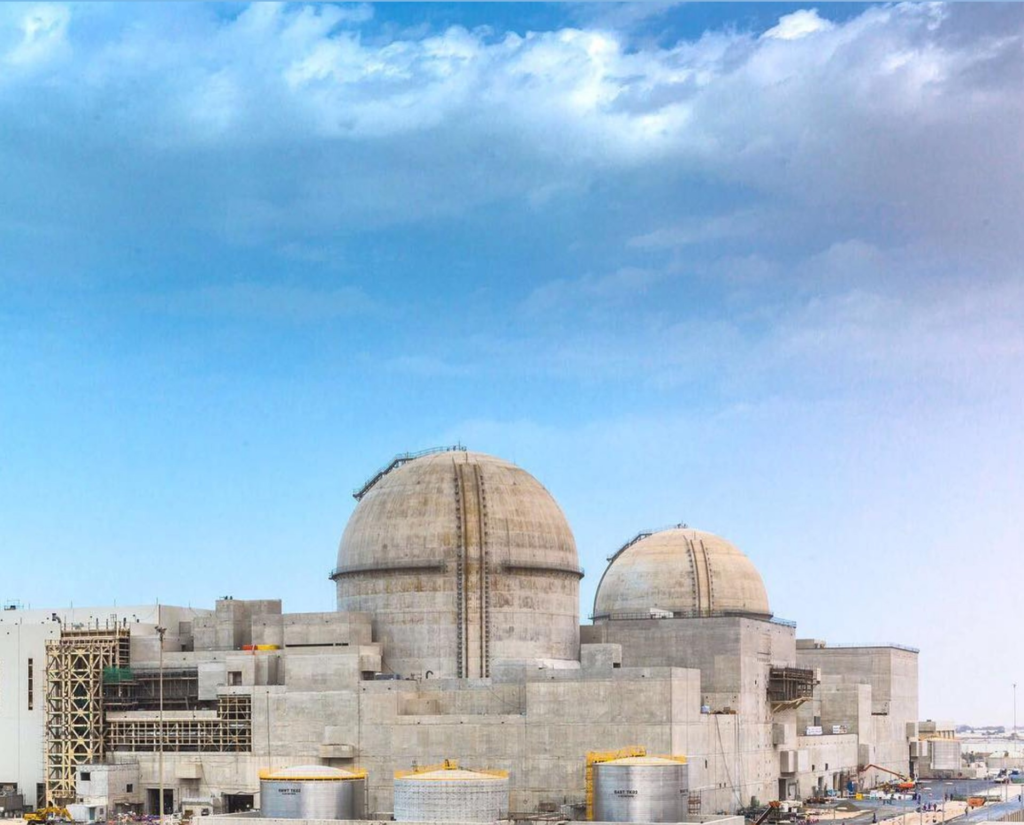
UAE’s Barakah Nuclear Power Plant started operation in 2020. It has since become the testament to the country’s position as a benchmark for newcomer nuclear programmes. (Wikimedia/Wikiemirati)
The Philippines is not the first country to learn that successful energy transitions depend on institutions as much as technology. Across the past two decades, countries introducing nuclear power have followed a remarkably similar trajectory. Their political systems differ. Their energy priorities differ. Yet the sequence has remained strikingly consistent: institution-building comes first.
The United Arab Emirates (UAE) provides perhaps the clearest example. When it announced its civilian nuclear programme in 2008, it did not begin with reactor construction. It first established a comprehensive legal framework, created the Federal Authority for Nuclear Regulation (FANR) as an independent regulator, committed itself to the highest international standards of safety, security and non-proliferation, and opened its programme to extensive international peer review. Only after these institutional foundations had been established did construction of the Barakah Nuclear Energy Plant begin.
The UAE has since become widely regarded as a benchmark for newcomer nuclear programmes—not because it built reactors quickly, but because it demonstrated that regulatory credibility cannot be improvised once construction is underway.
The same lesson can be observed elsewhere. Poland has prioritised strengthening its regulatory authority, modernising legislation and expanding international cooperation alongside preparations for its first nuclear power programme. Indonesia, while not yet committed to commercial nuclear deployment, has spent decades investing in regulatory expertise, research capability and human capital. Despite their different trajectories, both recognised that institutional readiness must precede infrastructure.
Their experiences point to a broader reality. Governments can purchase reactor technology. They can procure engineering expertise and mobilise project finance. They cannot purchase regulatory maturity.
Institutions capable of governing complex technologies cannot be imported or assembled overnight. They emerge through sustained investment in people, organisational learning and practical experience. This explains why international cooperation has become an essential feature of newcomer programmes. Countries increasingly draw upon the experience of organisations such as the IAEA, regional regulatory networks and the OECD-NEA, using peer reviews, technical exchanges and capacity-building initiatives to strengthen domestic institutions before major policy decisions are implemented.
International thinking has also evolved. For many years, discussions focused primarily on regulatory independence and technical competence. While these remain indispensable, growing attention is now being given to organisational leadership, transparency, stakeholder engagement and public trust. Together, they reflect a broader understanding that effective regulation depends not only on scientific expertise, but also on institutional credibility.
Although these lessons emerged from the nuclear sector, they apply far more broadly. Governments face similar governance challenges when regulating offshore wind, hydrogen, carbon capture, artificial intelligence (AI) and other rapidly evolving technologies. The technologies differ. The institutional questions do not.
From Nuclear Governance to State Capability

Senator Alan Peter Cayetano after the Second Reading of the PhilATOM Bill, with officials from the Department of Science and Technology and Philippine Nuclear Research Institute behind in support of the bill’s passage. (Senate of the Philippines)
PhilATOM should therefore be understood as more than the establishment of a nuclear regulator. It is an early test of the Philippine state’s ability to build an institution capable of governing an increasingly complex energy system.
That challenge extends well beyond nuclear power.
The country’s energy transition is unfolding at a time of profound technological change. Renewable energy is expanding rapidly. Electricity systems are becoming more decentralised and digitally interconnected. Battery storage is reshaping grid management, while hydrogen, carbon capture and AI are beginning to influence how energy systems are produced, managed and regulated.
These technologies differ in purpose and maturity, but they share one common requirement: they depend on institutions capable of making credible long-term decisions.
Without predictable regulation, investors delay capital. Without coherent policymaking, projects become vulnerable to political cycles. Without effective coordination across government, implementation slows. Without public trust, even technically sound projects can struggle to gain public acceptance.
This is why the energy transition is ultimately an institutional challenge.
For the Philippines, the significance of PhilATOM extends beyond whether nuclear energy eventually forms part of the country’s electricity mix. That decision will continue to depend on economics, technology and national priorities. The more immediate question is whether the country can build an institution capable of regulating complexity with independence, consistency and technical credibility.
The lesson from successful newcomer programmes is equally clear. Institutions of this kind are not created through legislation alone. They mature through practice, continuous learning, organisational development and sustained engagement with international peers. Their credibility derives not only from the powers granted by law, but also from the confidence they earn among governments, industry, investors and the public.
Seen in this broader context, PhilATOM represents something more significant than a new public authority. It reflects the Philippines’ ability to translate legislative ambition into lasting institutional capability. That may ultimately prove to be its most important contribution not only to nuclear governance, but to the country’s wider energy transition.
The Measure of Success
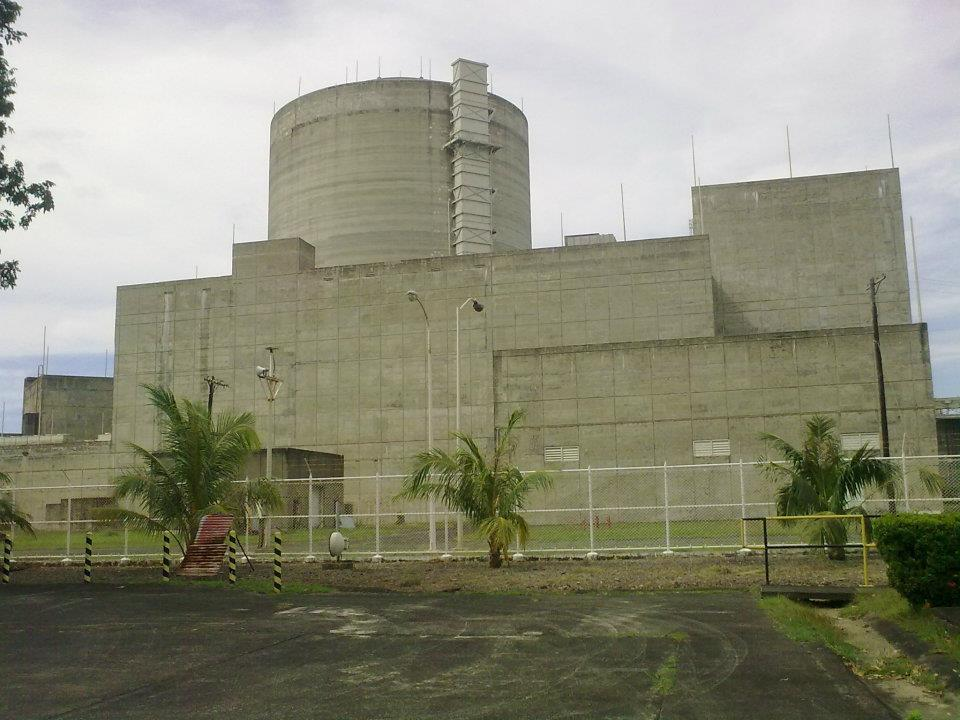
The Bataan Nuclear Power Plant in the Philippines, which was completed in 1986 but was never operationalised. The PhilATOM Bill might be the first step towards the country’s first operational nuclear power plant. (Wikimedia/Jiru27)
The passage of Republic Act No. 12305 answered one important question: whether the Philippines should establish an independent nuclear regulator. The more difficult questions now begin.
The success of PhilATOM will not be measured simply by the legislation that created it, but by the institution it becomes.
Over the coming years, its ability to recruit and retain specialised expertise, develop rigorous licensing and inspection processes and maintain independence from political and commercial pressures will determine its credibility. Equally important will be its ability to communicate decisions transparently and build public confidence through consistent, evidence-based regulation.
These are not merely administrative milestones. They are the foundations of an effective regulator.
The outcome will matter well beyond the nuclear sector. A regulator that demonstrates technical competence and institutional credibility can contribute to greater investor confidence, strengthen international cooperation and reinforce the broader governance environment needed for long-term infrastructure investment. Conversely, institutional weaknesses rarely remain confined to a single sector. They affect policy predictability, implementation capacity and confidence in government more broadly.
The Philippines is not alone in facing this challenge. Across Southeast Asia, governments are modernising their energy systems while balancing energy security, affordability and climate commitments. Their technology choices will differ, reflecting national circumstances and resource endowments. What they increasingly share is the need for public institutions capable of governing those choices over the long term.
Whether PhilATOM succeeds will therefore be judged not only as the performance of a new regulator, but as an indicator of the Philippines’ broader ability to translate legislative ambition into lasting institutional capability.
In the end, much of the debate surrounding Republic Act No. 12305 has focused on what it means for the Philippines’ nuclear ambitions. That is an important discussion, but it is unlikely to be the legislation’s lasting legacy.
Its greater significance lies in what it reveals about the country’s capacity to build institutions.
PhilATOM is more than a regulator. It is one of the Philippines’ most ambitious institution-building efforts in the energy sector in decades. Whether it succeeds will depend less on the legislation that created it than on the institution it becomes.
That is why Republic Act No. 12305 matters. Not simply because it created a regulator, but because it created an opportunity to build one. Whether the Philippines seizes that opportunity may ultimately shape not only the future of nuclear energy, but the success of its wider energy transition.
About The Author