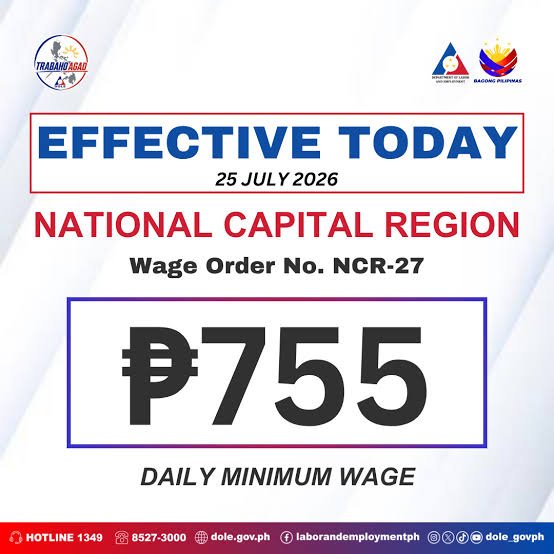
The announcement of the historic PHP 85 daily minimum wage increase for Metro Manila workers, the largest ever approved in the National Capital Region, effective July 25. (DOLE)
Issued by the Regional Tripartite Wages and Productivity Board under Wage Order No. NCR-27, this adjustment was the largest rise in Metro Manila, directly boosting the daily pay of over 1.1 million private sector workers.
For the non-agriculture sector, daily pay rises from PHP 695 to PHP 755, while the rate for agriculture and micro sectors (comprising retail shops with 15 or fewer employees and manufacturing companies with fewer than 10 workers) rose from PHP 658 to PHP 718.
According to DOLE Secretary Francis Tolentino, the wage hike is a deliberate initiative from the government to enhance domestic purchasing power, as the current economic climate is still compounded by inflation, particularly rising electricity costs stemming from recent global energy disruptions. He added that the effort aligns with the President’s directive to improve the quality of life for workers.
Additionally, to provide support for micro, small and medium enterprises (MSMEs) affected by the wage hike, Secretary Tolentino said that they may receive government financial assistance and apply for exemptions. Qualified businesses can file for an exemption with the Regional Tripartite Wages and Productivity Board within a 75-day period to legally delay paying the new minimum wage
DOLE has reminded employers that failure to comply with the mandated adjustments will result in legal penalties. Companies are also urged to correct any resulting wage distortions through collective bargaining agreements.
Reportedly, the remaining PHP25 increase will become effective on January 20, 2027.
What does this mean for businesses?
The wage hike in the Philippines’ political, economic, and cultural centre, as well as its most densely populated region, Metro Manila, creates structural and financial shifts for employers. To offset these new labour costs, many businesses, particularly in the retail and food services sectors, will likely raise the prices of their goods and services. While this shift aims to protect workers’ welfare, it may also alter corporate expenditure and is expected to drive up local inflation.
Kala Advisory helps investors turn opportunities arising from shifting wage structures and rising operational costs into targeted, country-by-country entry plans across Southeast Asia. For more information, visit kala-advisory.com
About The Author