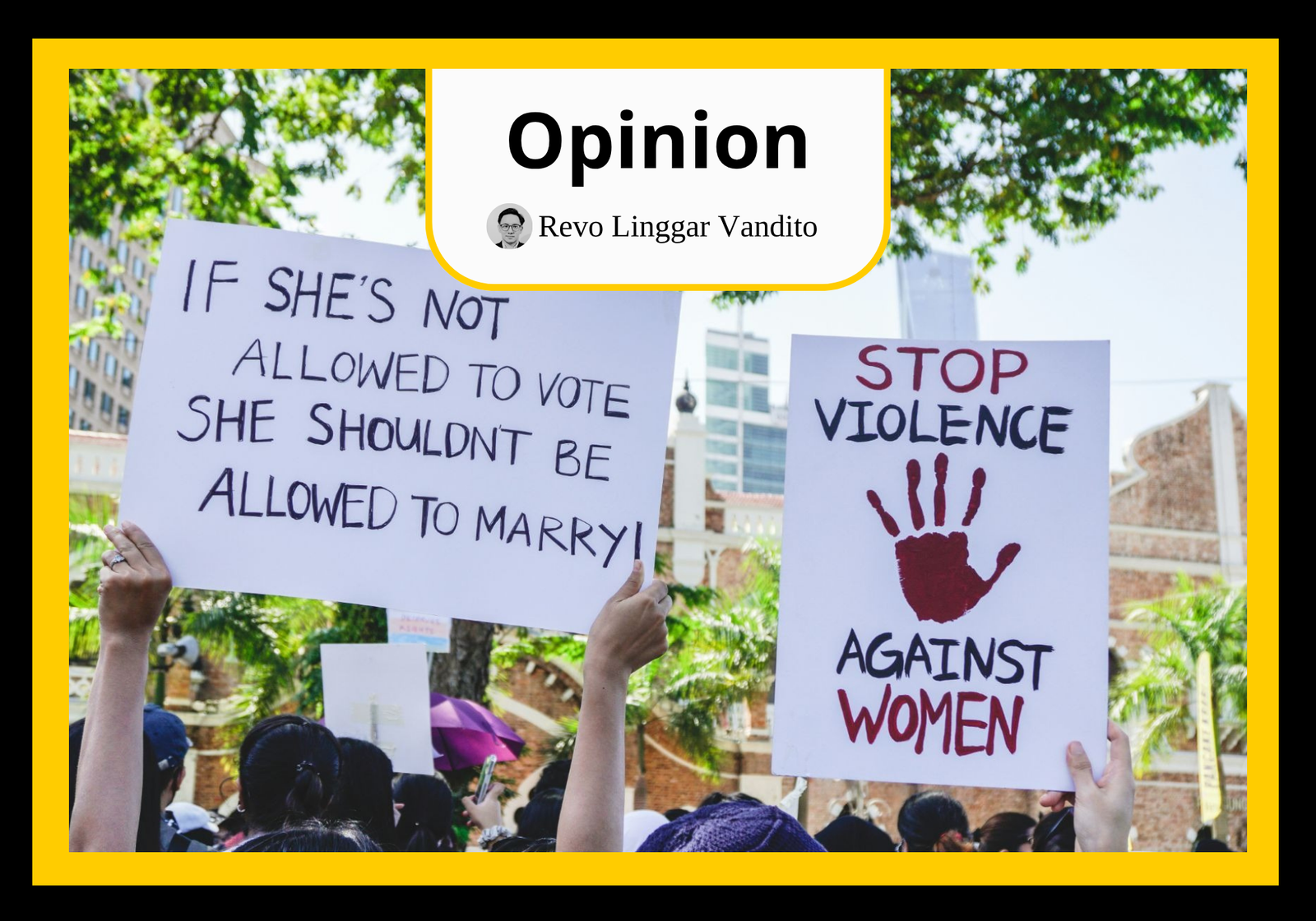
Protesters demand an end to violence against women, a struggle that extends into the political sphere, where women continue to face gendered barriers to participation. (Unsplash/Michelle Ding)
Revo Linggar Vandito is a research assistant at Center For Political Studies University of Indonesia. The views expressed are the author’s own and do not represent SEA Daily or that of another organisation.
Women’s representation in government is fundamental to achieving good governance and, to some extent, substantive democracy. The importance of women in politics stems from the hypothesis that shared identity leads women politicians to care more about women’s issues in policymaking than their male colleagues. Some studies support this hypothesis, showing that female member of parliaments (MPs) tend to prioritise issues related to women, such as abortion, domestic violence and rape.
In Southeast Asia, several countries have already promoted women’s representation through affirmative policies such as gender quotas and the zipper system, a candidate placement mechanism that mandates alternating male and female candidates on party lists (e.g., positions 1-2-3 alternating by gender), intended to prevent women from being disproportionately placed in low, less electable list positions. Indonesia, for instance, promotes women’s representation through a 30% gender quota and the zipper system, while Vietnam applies a 35% gender quota. However, gender quotas alone are insufficient to achieve substantive representation for women in parliament. While quotas succeed in boosting the numerical presence of women, numbers alone do not translate into meaningful political voice. Equally necessary is a fundamental shift in the political environment, one that is safer and more conducive to women’s participation, coupled with policies that explicitly guarantee not merely the quantity, but the quality of women’s representation.
The Silent Threat

An example of sexism and digital violence experienced by an Indonesian woman MP, Rahayu Saraswati Djojohadikusumo, with the comment roughly translates to “Females don’t have the right to opinion”. (Instagram/rahayusaraswati)
There is a quiet threat to women’s political representation that governments have consistently failed to address, which is violence against women in politics (VAWP). This form of violence carries no specific consequences for its perpetrators, largely because no specific regulation exists to govern it. VAWP can be defined as gender-based violence encompassing any act or threat of physical, sexual or psychological harm intended to prevent women from exercising or realising their political and human rights. It implies across several typologies such as physical, psychological, sexual, economic and semiotic violence. In this sense, VAWP functions as a silent killer of women’s presence in parliament. Even as quantitative and descriptive indicators show a gradual rise in women’s representation, this violence can erode that representation or blunt its substantive impact, as the pressure potential VAWP generates is itself a direct implication of the phenomenon.
As opposed to common assumption, violence against women in politics in Southeast Asia is not confined to countries with authoritarian regimes. It also thrives in hybrid and democratic systems alike. This suggests that VAWP does not discriminate by regime type, but rather flourishes across Southeast Asia in the absence of any preventive action from governments in the region.
Regardless of Regime Type
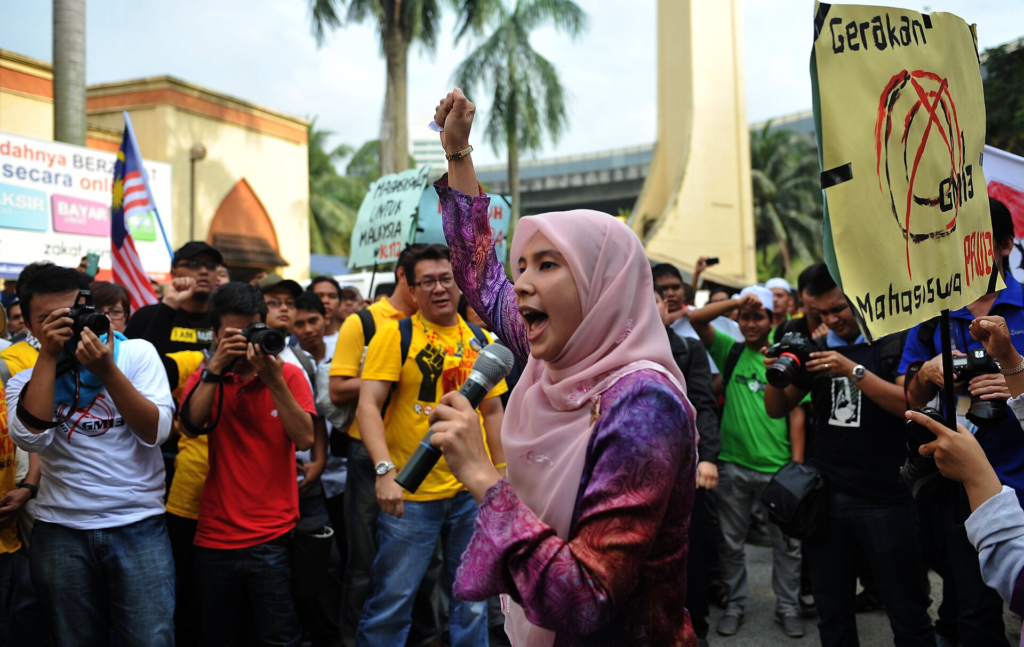
Malaysian woman politician, Nurul Izzah, who became a victim of sexual objectification, doxxing and threats, pictured here during an assembly in Kuala Lumpur in 2013. (Wikimedia/Firdaus Latif)
According to V-Dem’s typology of democracy, there are notable typological differences among Malaysia, Indonesia and Myanmar. V-Dem classifies Malaysia as an electoral democracy, Indonesia as an electoral autocracy and Myanmar as a closed autocracy
In an electoral democracy like Malaysia, VAWP flourishes primarily through psychological and sexual violence carried out in digital spaces. Rosmah Noor, the former first lady under former Prime Minister (PM) Najib Razak, has repeatedly been subjected to body-shaming and online attacks targeting her physical appearance, including an incident in which comedian Harith Iskander likened her to frightening figures from local mythology, such as the pontianak (kuntilanak) and pocong. Younger politicians have not been spared either: Nurul Izzah’s Facebook page became a site of combined sexual objectification, doxxing and direct, personal threats of violence, alongside inappropriate commentary on her choice of clothing.
Indonesia, as a hybrid regime, exhibits strikingly similar patterns. Women politicians frequently face sexist verbal attacks both on the campaign trail and while holding office. In 2019, Grace Natalie, then chairwoman of the Indonesian Solidarity Party (PSI) and an outspoken advocate for women’s issues, was met with intimidation and psychological violence through digital channels. Her case illustrates how gender-based violence against Indonesian women politicians often takes a hybrid form by combining disinformation with verbal sexual harassment, where digitally altered photos emphasising her sexuality are weaponised as tools of political delegitimisation while simultaneously attacking her personal morality in the public digital sphere. At the same time her colleagues from Indonesia Solidarity party face the same pattern when Tsamara Amany Alatas, who was doxed and had her photos edited into sexualized images, with hoaxes circulating related to her divorce A similar pattern emerged around Rahayu Saraswati Djojohadikusumo during her 2020 bid for deputy mayor of South Tangerang city, when an elite member of the Democratic Party posted a tweet objectifying her body.
Physical violence, by contrast, is the defining feature of VAWP in authoritarian states, most visibly through the abduction and imprisonment of women politicians. This pattern is apparent in Myanmar, as shown by the arrest of the high-profile pro-democracy politician Aung San Suu Kyi by the military junta under Min Aung Hlaing in early 2021. In the aftermath of the junta’s consolidation of power in 2021, physical violence targeting women escalated further, sometimes culminating in femicide, as seen in the killing of Daw Tin Tin Nu, a member of the pro-democracy party National League for Democracy (NLD), who was shot by the Pyu Saw Htee militia, a group affiliated with the junta.
In each of these cases, the attacks share a common underlying logic: they target the aspects of a woman politician’s life coded as private, sexual or domestic, such as her body, her marital status, her personal morality, rather than her political record or policy positions. This choice of target is not incidental. By redirecting scrutiny away from public political performance and onto domestic markers, these attacks implicitly reassert the boundary between the public sphere, where women’s presence is contested and the private sphere, where patriarchal norms suggest they belong.
A comparative reading of these three countries reveals a consistent pattern. A largely unconscious yet systematic effort rooted in patriarchal values that assume women belong in the domestic sphere, an assumption that translates into attempts to morally degrade women politicians whenever they enter political contestation. VAWP is thus a threat to women in politics regardless of whether the state in question is democratic, hybrid or authoritarian. What differs is only the context and form the violence takes: democratic and hybrid states tend to rely on digital technology to attack the psychological, sexual and economic dimensions of a woman’s political life, while authoritarian states are additionally prepared to attack women politicians physically when they threaten the interests of the ruling regime.
Lessons from Bolivia and Mexico
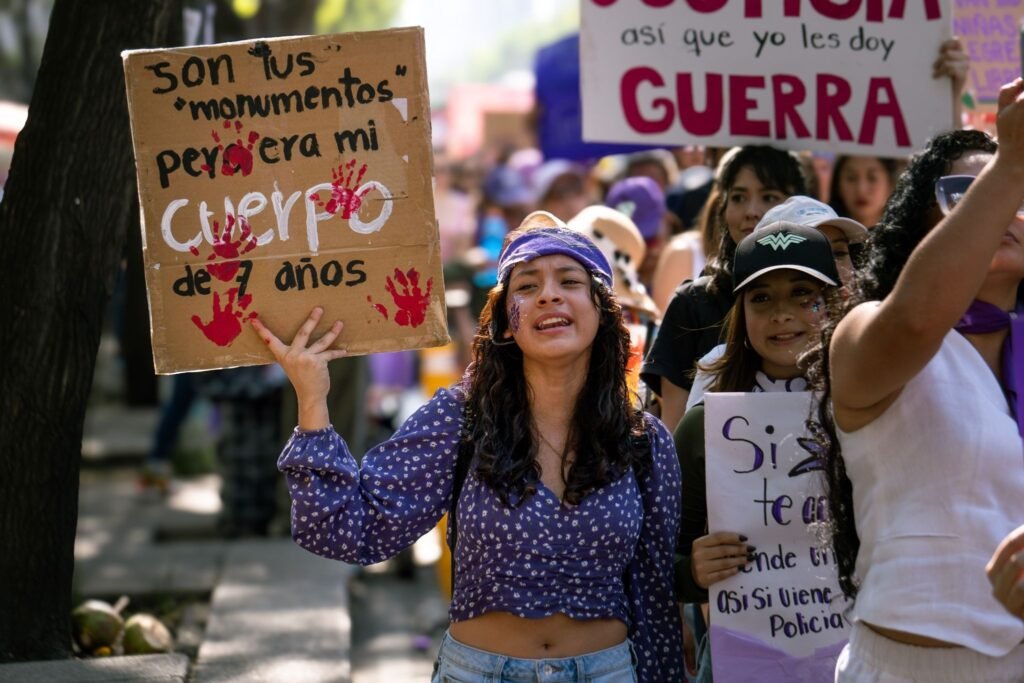
Demonstration against violence against women in Latin America. (Pexels/Diana Reyes)
Several Southeast Asian countries already have regulations addressing violence against women in general. Yet not a single ASEAN state, including any of the three examined above has enacted regulation that explicitly and specifically addresses its political dimension, whether through new legislation or explicit provisions within existing law. On a global level, Bolivia stands out as one of the most advanced countries in responding to VAWP and its Law 243 of 2012 offers instructive lessons for any future legislative effort to address this violence.
The first notable feature is the law’s broad definition of VAWP. Law 243 distinguishes between harassment (Article 7a, covering pressure, persecution, molestation and threats) and violence (Article 7b, covering physical, psychological, or sexual acts), further specifying 17 distinct behaviors under Article 8. This level of definitional detail narrows the room for interpretation left to judges, who have historically tended toward patriarchal readings of the law. The second notable feature is the law’s mechanisms for compelling political parties to take VAWP seriously, which include sanctions for submitting false gender data to the electoral commission (a method sometimes used to circumvent parity requirements), monitoring of forced resignations, heavier sanctions when the perpetrator is a party official and a requirement that parties maintain their own internal VAWP regulations.
Mexico’s approach is no less progressive, offering equally valuable lessons. Rather than building a standalone criminal justice system as Bolivia did, Mexico opted for institutional integration, mainstreaming a gender perspective into its existing electoral legal framework. Through an electoral protocol issued by the Electoral Tribunal (TEPJF) in 2017, later strengthened by legal reform in 2020, Mexico defines VAWP as any act that targets women specifically because they are women, produces a differential or disproportionate impact and aims to weaken or nullify their political-electoral rights, including when the woman in question already holds office. This approach gave rise to a dedicated investigative body, the Special Prosecutor’s Office for Electoral Crimes (FEPADE), which has proven considerably more effective at capturing cases than Bolivia’s mechanism. FEPADE received more than 200 reports between 2018-2019, formally opened 111 cases, and actively investigated roughly 11% of them—far outpacing Bolivia’s electoral authority, which pursued only about 6% of the cases documented by ACOBOL (The Association of Women Councilors and Mayors of Bolivia).
Drawing on the experiences of both countries, any future VAWP regulation should address four essential elements: first, a rigid and comprehensive definition of VAWP that leaves no room for judicial subjectivity; second, a strengthened commitment from political parties to actively counter VAWP; third, a reinforced role for existing electoral institutions in following up on VAWP cases, or the creation of a new institution specifically tasked with overseeing VAWP regulation; and fourth, build coherence across the broader body of law that supports and reinforces the core regulation.
Beyond Gender Quotas
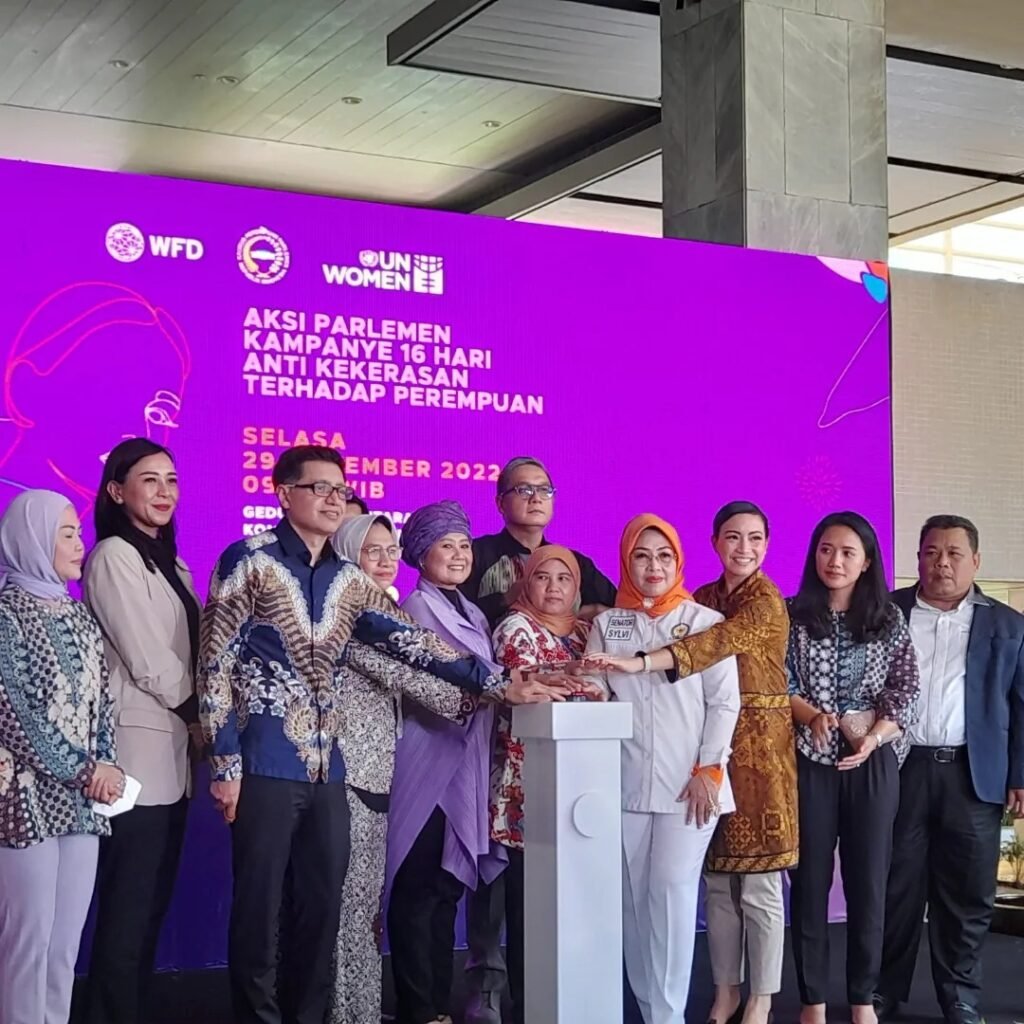
Indonesian Women’s Parliamentary Caucus in Parliamentary Action Commemorating the 16 Days of Activism Against Violence Against Women. (Instagram/@kpp.ri)
VAWP is not a side issue in Southeast Asia’s democratic story, it is a warning sign. Whether in Malaysia’s democracy, Indonesia’s hybrid system or Myanmar’s closed authoritarianism, the message sent to women in politics is the same: political space comes with a condition, and that condition is silence. Regime type may change the form of violence, a tweet, a doctored photo, a bullet, but it does not decide whether that violence happens at all.
This is why looking only at regime type has failed women in politics. Southeast Asian governments have focused on counting women in parliament while ignoring what pushes them back out. Gender quotas were never meant to be the finish line, they were meant to be a starting point for safer, more equal political participation. Without laws that clearly recognise VAWP as its own offense, quotas risk becoming just numbers that hide a deeper failure to protect women.
Bolivia and Mexico show this failure is not inevitable. Clear legal definitions, stronger accountability for political parties and dedicated enforcement bodies can turn VAWP from an invisible cost of women’s participation into a punishable violation of their rights. Southeast Asia does not need to start from zero, it needs the political will to adapt these lessons. Until that happens, the region’s progress for women in politics will stay fragile and reversible, resting on the unspoken expectation that women simply endure.
About The Author