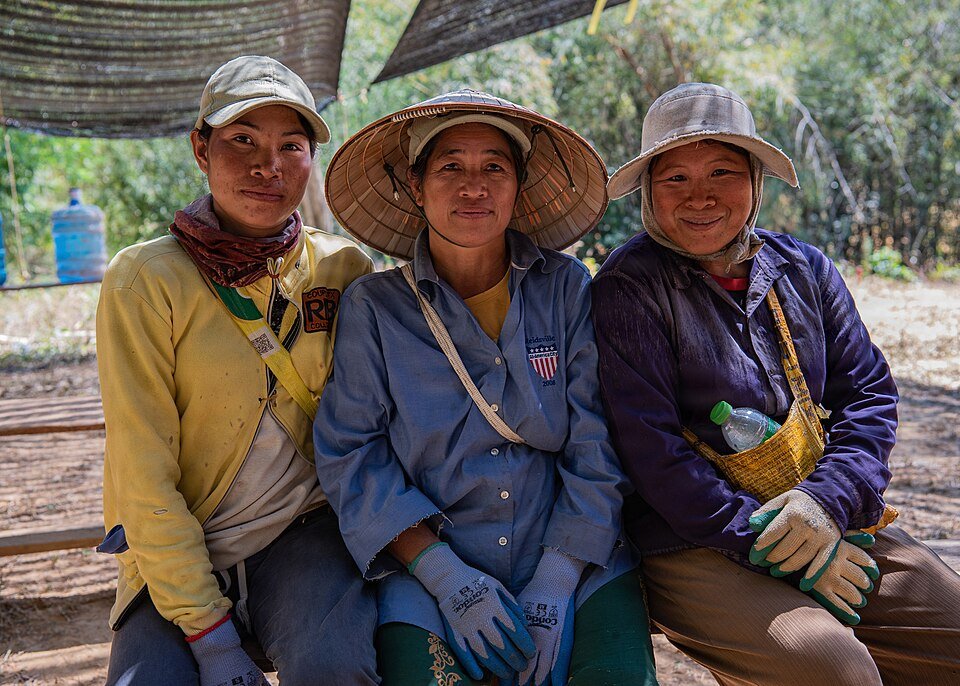
Local Lao workers. (Wikimedia)
Despite the government reporting a 5% growth rate for the first half of 2026 driven by services and tourism, structural vulnerabilities and massive public debt continue to strain the country’s outlook.
Khwima Nthara, World Bank Group Country Manager for Laos, noted that the country has “achieved something significant,” namely four years of reform that “have rebuilt currency reserves, stabilised the exchange rate and restored a degree of economic confidence, which has translated into economic resilience and more jobs”.
Nevertheless, the World Bank urged Laos to maintain structural overhauls for state-owned enterprises (SOEs) to resolve systemic issues. Currently, public debt servicing alone is projected to swallow 13% of GDP. This fundamental step must be executed to truly nurture the 4.2 billion US dollar international reserves recorded in March.
Moreover, public health is another pressing issue, as spending sits at just 4% of the national budget. This figure is well below regional averages that triggers high out-of-pocket medical costs for low-income families. The report recommends that the government elevate this allocation to 9% by 2030.
What does this mean for business?
The forecast signals a mixed landscape for commercial operators. On one hand, record-high foreign reserves and a stabilised exchange rate provide much-needed predictability for cross-border trade and foreign investments. On the other hand, the combination of high domestic fuel costs and constrained public spending means local consumer purchasing power will remain tight. Businesses should prepare for elevated operational overheads while targeting sectors backed by international investment or driven by tourism, which continue to anchor the country’s immediate growth.
Kala Advisory helps investors read recoveries like these, and the structural risks behind them, before committing capital in Southeast Asia. Visit kala-advisory.com.
About The Author