
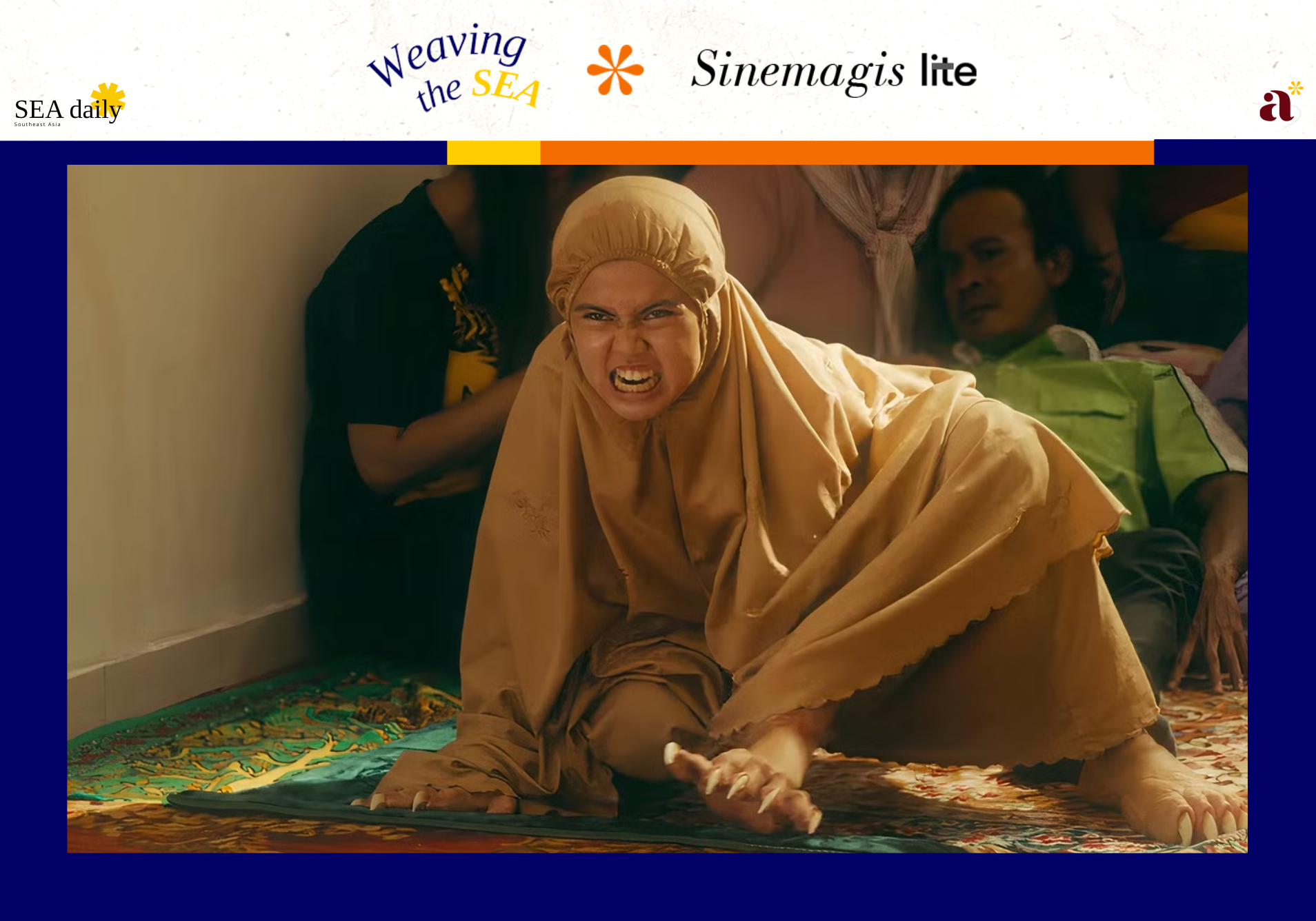
A clip from Tiger Stripes (Ghost Grrrl Pictures)
Tiger Stripes is a 2023 Malaysian body horror and coming-of-age picture. Directed by first-feature-director Amanda Nell Eu, the story revolves around an 11-years-old Zaffan who is faced with bodily change as she goes through puberty. The film received several accolades, most notably the 2023 Cannes’ Critics Week Grand Prize which made Amanda the first female Malaysian filmmaker to ever win the award. Tiger Stripes was also invited to the 29th Busan International Film Festival and served as the closing film for 2023 Jakarta Film Week.
Its accolades aren’t merely titles. Tiger Stripes absolutely deserves those recognitions for its bravery to challenge patriarchal lore through women’s puberty. Zaffan’s first period and bodily changes were depicted as a literal mutation into a Malay-folklore legend of weretiger (hala), which represents liminality and ‘others’. The mutation starts to go off as Zaffan faces growing shame and disgust from her closest ones and the local community.
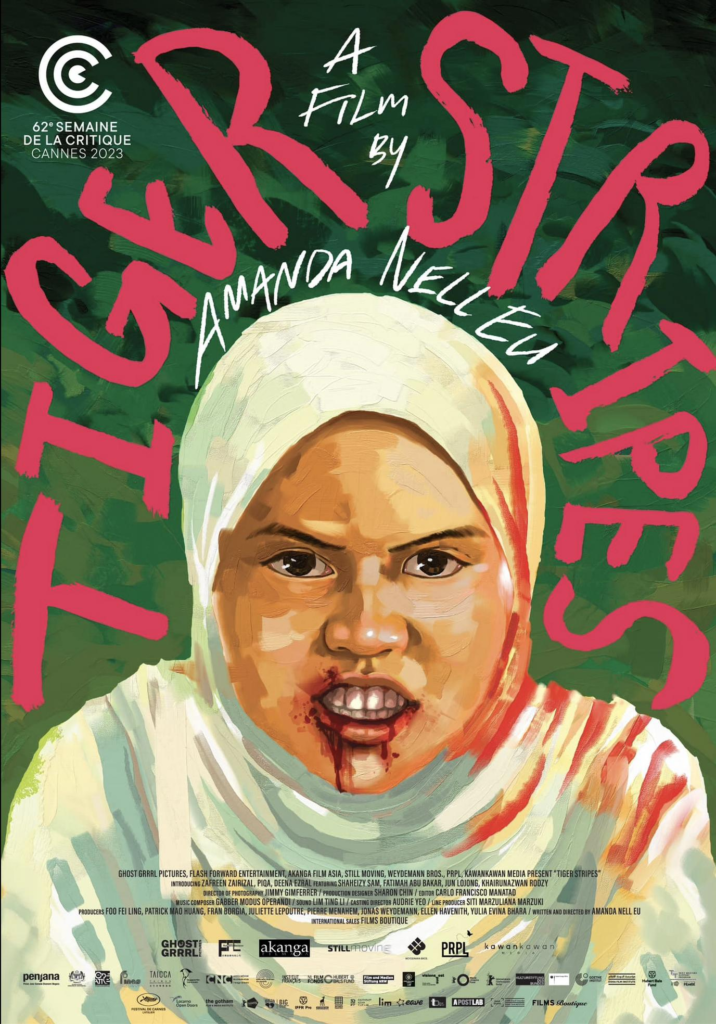
Official poster of Tiger Stripes (Ghost Grrrl Pictures)
Beyond its visceral body horror, Tiger Stripes operates as a sharp social critique of how society regulates young girls’ bodies through institutional pressure. The film exposes how puberty, particularly menstruation, is constructed as a source of shame, not only biologically but culturally. Her mother’s harsh judgment and her father’s disinterest mirror the domestic indifference many girls must navigate alone, while her school compounds this isolation through the cruelty of peers who bully and distance themselves the moment Zaffan begins to change. Both family and school function as enforcers of conformity, making it clear that deviation from “acceptable” femininity invites exclusion.
Zaffan’s transformation into hala can be interpreted as a manifestation of a young girl’s suppressed urge to rebel against these constructed norms. Family, school and even an ustaz (respected Islamic elder) become mechanisms of control, attempting to “fix” what is ultimately natural. This local community, built upon patriarchal idealism, sees it as an unknown territory, an ‘otherness’ waiting to be tame and dominate. By framing her transformation as something pathological or supernatural, these institutions reinforce fear rather than understanding. Folklore and superstition further amplify this dynamic, casting female bodily change as dangerous and monstrous, something to be contained or eradicated.
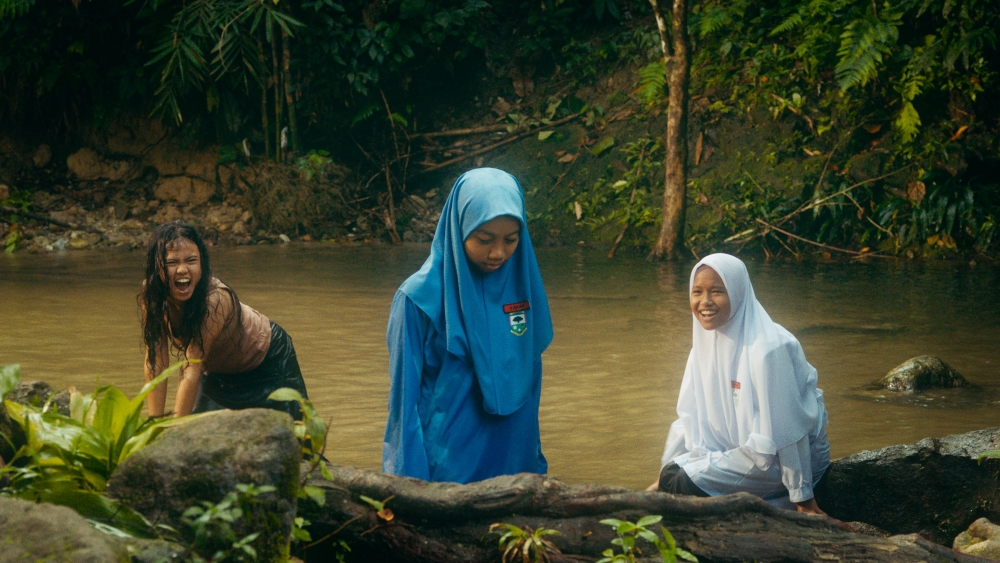
A clip from Tiger Stripes (Ghost Grrrl Pictures)
This transformation ultimately becomes a symbol of resistance. Zaffan eventually fights back, the beast sets loose and attacks her tormentor, pulling the minds out of the body that is frequently used to ‘cure’ women. Her refusal to be subdued challenges the structures that seek to silence her, transforming the “monster” into a figure of empowerment rather than deviance. This shift reframes the body not as something to be controlled, but as something to be reclaimed, positioning Tiger Stripes as a distinctly feminist work that advocates for autonomy, identity and the right to exist beyond imposed norms.
About The Author




One thought on “Female Otherness and Social Expectations in Malaysian Film Tiger Stripes”