
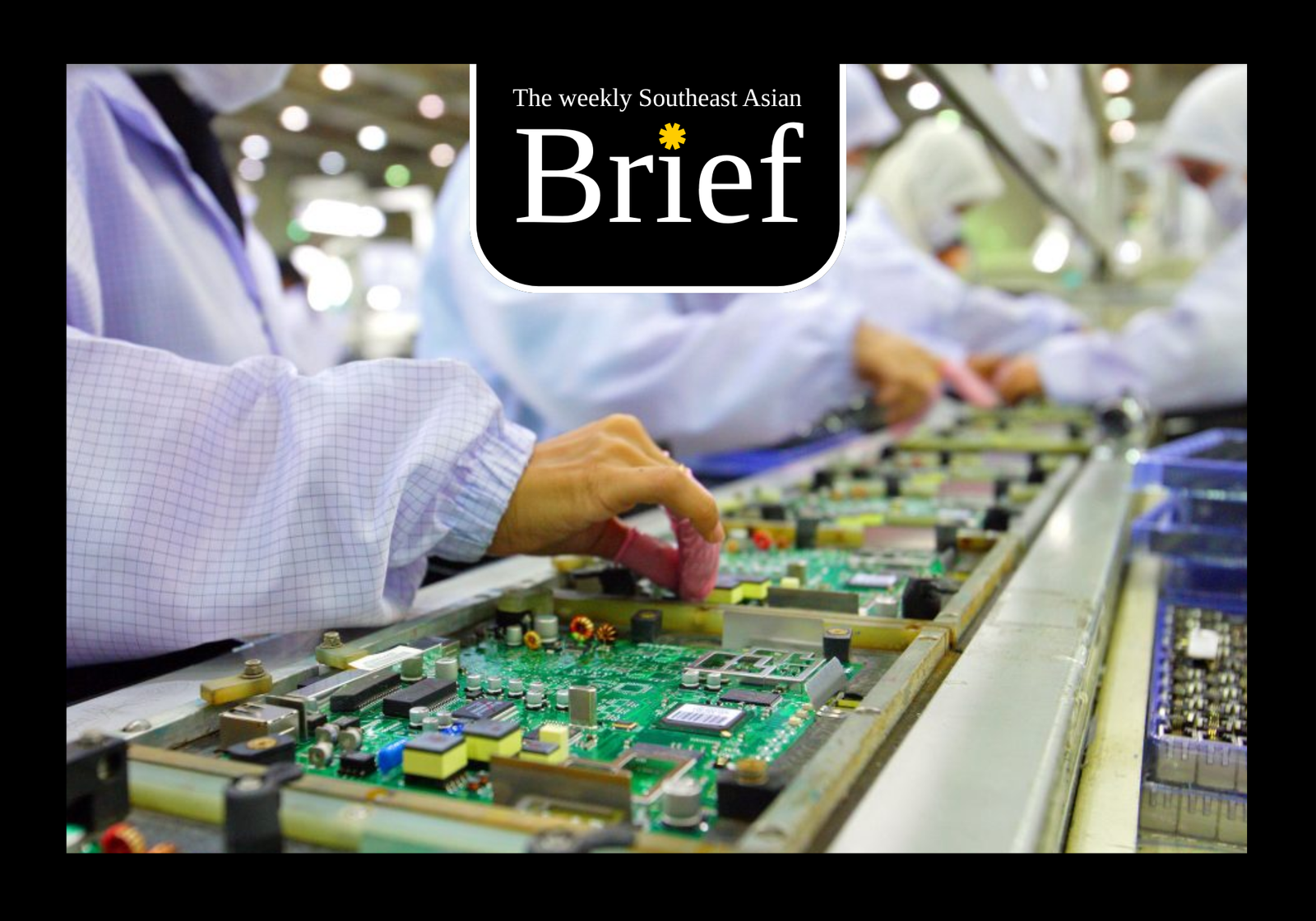
Malaysia is trying to climb the semiconductor value chain to become a highly lucrative Integrated Circuit (IC) design and wafer fabrication hub, leaving behind its conventional Assembly, Testing and Packaging (ATP) branding.
According to the Malaysian Investment Development Authority (MIDA), Malaysia’s electrical and electronics (E&E) sector drew 28.5 billion Malaysian ringgit (7 billion US dollar) in approved investments in 2025. This rapid, structural transformation into high-tech domains demands an adequate foundation; one that relies not merely on physical infrastructure, but on a highly skilled, knowledgeable workforce. Does Malaysia possess both? And what are the current stakes?
Currently, Malaysia is hosting a three-day Technical and Vocational Education and Training (TVET) Day celebration until June 7 in its capital Kuala Lumpur. This event serves as one concrete manifestation of government recognition and commitment, making it the perfect vantage point from which worth examining the broader picture of the country’s future projections. For context, the TVET is an educational system providing industry-focused skills training through schools, colleges and training institutes to prepare learners for employment in technical, skilled and professional trades.
Over the past decade, Malaysia has dedicated extensive efforts to reshaping its TVET landscape, including the formation of a National TVET Council and, most recently, designating June 2 as National TVET Day since 2022.
The ongoing 2026 commemoration extends beyond mere celebrations. Themed “TVET: The Top Career Choice”, it reflects the government’s endeavour to push this momentum further, particularly in dismantling the persistent stereotype surrounding vocational education. As Deputy Prime Minister Ahmad Zahid Hamidy noted, the sector should no longer be viewed as a “second choice” but a “top career path that is capable of producing a future generation of professionals, technology creators, entrepreneurs and industry leaders”. Traditionally, TVET has often been perceived as a less prestigious educational pathway associated with manual or labour-intensive occupations. However, as Malaysia accelerates its ambitions in advanced manufacturing and high-value industries, vocational education is increasingly being recognised as a critical source of skilled talent and a key driver of the country’s economic transformation.
This push is, nevertheless, also a strategic effort to address Malaysia’s structural constraint of a skills mismatch.
On one hand, MIDA is actively promoting Malaysia as a strategic hub in the Southeast Asia region to attract high-value foreign direct investment (FDI). This strategy is explicitly designed to propel the country’s ambition to break into front-end semiconductor manufacturing. However, Malaysia’s actual industrial pipeline still skews heavily towards legacy back-end assembly, where the country holds approximately 13% of global capacity.
Indeed, the outcomes look strong on paper as TVET boasts a robust 95% graduate employability rate. Student enrolment climbed to roughly 492,000 across 1,398 institutions last year. This marked a notable increase from approximately 432,000, with 54.3% of secondary-school leavers now opting for TVET pathways. Moreover, monthly vocational wages in automation and advanced manufacturing (ranging around 3,000 Malaysian ringgit or about 750 US dollar) outperform many general, non-technical degree starting salaries which typically cap at 2000 Malaysian ringgit or 500 US dollar. These figures challenge the long-held perception that TVET leads to lower-status or less rewarding careers, suggesting that vocational qualifications can offer both strong employment prospects and competitive earnings.
Yet, a critical deficit emerges when comparing these figures directly with regional neighbours like Singapore. Only about 6% of Malaysian students currently pursue vocational education, amounting to nearly one-fourth of Singapore’s enrollment rate. Such a societal hesitation triggers a second, more severe bottleneck which is the chronic issue of brain drain. With Malaysia losing roughly 15% of its skilled talent pool annually and a concerning metric showing that only three out of every ten high-tier technical graduates choose to remain domestically.
If this issue isn’t immediately addressed, the net effect will be stark. The combination of a persistent skills mismatch and an impending domestic labor shortage (exacerbated by an aging society) will inevitably force businesses to compete on salary offers. Ultimately, this dynamic could trigger severe wage inflation without any real pipeline growth. Rather than achieving its high-tech ambitions, Malaysia risks experiencing premature deindustrialisation, a structural deadlock where the country becomes too expensive for manufacturing industries, yet remains unable to leap out of its middle-income trap.
The responsibility to avert this structural crisis weighs heavily on the state. To prevent footloose FDI from relocating to regional neighbours, Malaysia must focus short and long-term policies on shifting TVET towards high-growth, high-value (HGHV) skills. The government is already tackling these bottlenecks through the New Industrial Master Plan 2030 (NIMP 2030) to build a tech-based, modern economy. This vision is heavily backed by an expanded 7.9 billion Malaysian ringgit (1.9 billion US dollar) TVET allocation under Budget 2026 (up from 7.5 billion in the previous year). Concurrently, the National Semiconductor Strategy (NSS) injects 25 billion Malaysian ringgit (6 billion US dollar) to train 60,000 high-tier local engineers for front-end manufacturing. With MIDA projecting that these modernisations will unlock 3.3 million new jobs, the blueprint is undeniably optimistic.
In sum, Malaysia’s high-tech ambitions are entirely rational. Modern technology sectors are structurally resilient against global economic shocks compared to conventional manufacturing. Because advanced tech is now critical to national security, it enjoys an inelastic structural demand. Consequently, nations securing these ecosystems will consistently benefit from the permanent future demand for green energy, electric vehicles (EVs) and advanced E&E. Additionally, these sectors possess a unique structural stickiness. Unlike traditional Global Value Chain (GVC) logic that simply chased cheap labour arbitrage, modern tech investments require billions in sunk capital and specialised talent. These dependencies plant deep, immovable roots in the host country, providing Malaysia with its strongest opportunity yet to finally break free from the middle-income trap.
This kind of analysis is the work Kala Advisory does for European investors operating in Southeast Asia. We help companies look past headline enrolment and employability figures to the talent realities that decide whether a high-tech bet pays off, and we weigh that risk market by market across the region. For tailored intelligence on the trends covered here, visit kala-advisory.com.
About The Author




4 thoughts on “Malaysia builds a chip industry but may lack the workers to run it ”