

Shoppers and small businesses at Malaysia’s Petaling Street market in Kuala Lumpur. Across Southeast Asia, household consumption remains a key driver of economic activity despite growing fiscal and cost-of-living pressures. (Unsplash)
The Cushions Beneath the Spending
Across Southeast Asia, household consumption has remained unexpectedly resilient despite inflation pressures, slowing global demand and tightening fiscal conditions. In Indonesia, domestic consumption continues to anchor economic growth even as commodity prices fluctuate and fiscal space narrows. Malaysia is balancing subsidy rationalisation with targeted assistance measures to cushion rising living costs. Meanwhile in the Philippines, consumer spending remains one of the economy’s primary growth drivers despite persistent inflationary pressures and rising household borrowing.
At first glance, the region’s post-pandemic recovery appears relatively stable. Retail activity has remained active across several major urban centres, labour markets have broadly recovered and governments have largely succeeded in preventing severe declines in household purchasing power.
Part of this resilience has also been supported by state intervention. Subsidies, cash-assistance programmes and household-support measures have increasingly become important stabilising mechanisms across several Southeast Asian economies. Domestic demand has remained the primary drivers of growth across most ASEAN economies in 2024 and expected to remain a key pillar of regional growth through 2025 and 2026.
For businesses and investors operating across Southeast Asia, this distinction is important. Stable consumption figures do not always reflect structurally resilient households. In several economies, part of the region’s apparent resilience may also reflect fiscal cushioning, targeted support measures and expanding household credit rather than purely underlying household strength.
In Indonesia, household consumption accounted for approximately 53.9% of gross domestic product (GDP) in 2025, reinforcing its position as the country’s primary growth engine. Yet beneath the headline figure, household consumption growth has consistently lagged overall GDP growth for several consecutive years. Household consumption grew 4.98% in full-year 2024, standing below the economy’s 5.03% overall growth rate, which is a pattern analysts have attributed in part to pressure on the middle class and weakening purchasing power. Fuel subsidies, electricity support and social-assistance programmes have continued to moderate inflationary pressures and protect lower-income households, with support measures remaining closely linked to efforts to preserve domestic demand.
Malaysia presents a similar picture, though more fiscally constrained. Household debt stood at 84.3% of GDP as of the first quarter of 2025—among the highest ratios in ASEAN—even as the government simultaneously undertook its most significant fuel subsidy reform in years. The diesel reform of June 2024, which raised prices by 56% overnight, triggered sufficient public discontent that it was subsequently cited as a factor in the ruling coalition’s loss of a state by-election. As a result, RON95 petrol reform was recalibrated into the more targeted Budi95 scheme. The net annual fiscal savings from the reform, after accounting for expanded cash transfers, amount to approximately 0.3% of GDP—meaningful, but modest relative to the fiscal pressures the reform was designed to address.
Conversely, in the Philippines, household consumption accounted for more than 72% of GDP in 2024, making it one of the most consumption-driven economies in Southeast Asia. Yet part of this resilience has coincided with rapid growth in consumer lending. Consumer loan growth exceeded 21% in Q3 2025, with credit cards accounting for nearly 40% of that increase. At the same time, the Philippine government’s debt-to-GDP ratio climbed to 57.8% in Q3 2025, even as households and corporates were actively deleveraging—highlighting how public borrowing has increasingly filled the gap that private demand alone cannot sustain.
Similarly, in Thailand, household debt stood at approximately 86.8% of GDP in 2025, among the highest levels in Southeast Asia. While elevated household borrowing does not automatically imply vulnerability, it illustrates how credit has become an increasingly important stabilising mechanism in several regional economies.
These policy dilemmas are becoming more common across Southeast Asia. Governments are increasingly attempting to balance social protection, fiscal sustainability and economic growth at a time when public expectations for household support remain elevated. As fiscal pressures mount, the challenge is becoming less about whether support measures should exist and more about how they can be sustained.
The broader question, however, is less about whether these stabilising mechanisms are problematic but if they are becoming structural features of the region’s growth model rather than temporary responses to extraordinary circumstances.
When Spending Hides a Problem
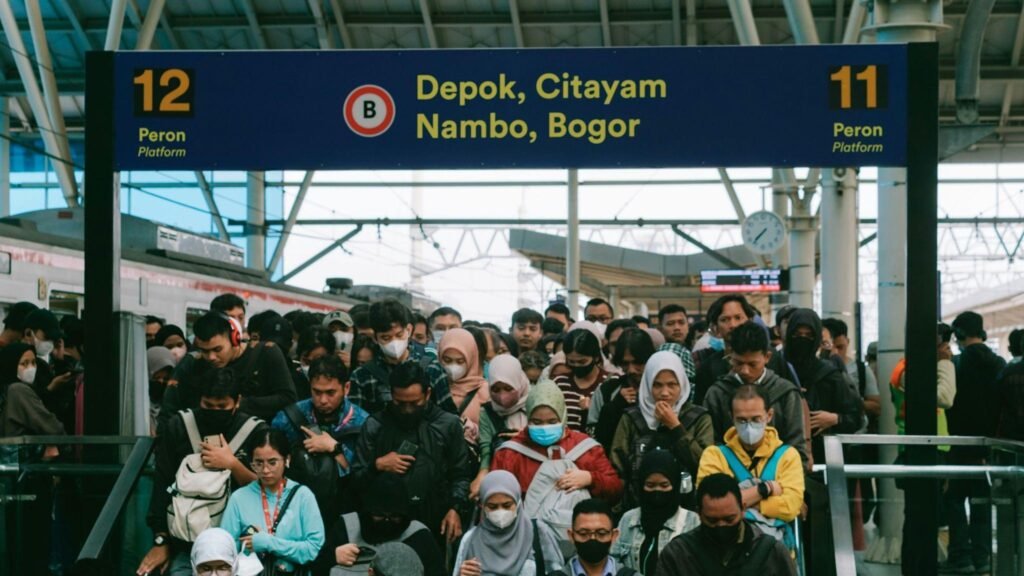
Commuters in Jakarta’s Manggarai central transit station. Household resilience and consumption resilience are not always the same thing, particularly when rising living costs and borrowing pressures shape spending patterns. (Unsplash)
Across much of Southeast Asia, strong household consumption has become one of the region’s most reliable economic stabilisers. For policymakers, this resilience has been encouraging. Domestic demand has helped offset weaker exports, external volatility and geopolitical uncertainty. For businesses, however, the nature of that resilience may warrant closer examination.
Consumption resilience and household resilience are not always the same thing. Households can continue spending even as financial pressures accumulate beneath the surface. Government subsidies may soften the impact of higher energy prices. Targeted cash-assistance programmes may help offset rising living costs. Easier access to consumer credit may allow households to maintain spending despite income constraints. Each of these mechanisms can support economic stability, particularly during periods of uncertainty. Yet they also raise important questions about how durable current consumption patterns may prove over time.
This dynamic is increasingly visible across Southeast Asia. In Indonesia, energy subsidies and social-assistance programmes continue to play an important role in protecting household purchasing power. In Malaysia, efforts to rationalise subsidies have repeatedly required accompanying support measures to cushion households from higher costs. In the Philippines, robust consumer spending has coincided with rapid growth in household borrowing, highlighting the growing role of credit in sustaining demand.
None of these developments necessarily indicate weakness. In many respects, they reflect rational policy responses to extraordinary economic circumstances. Governments across the region have faced the difficult task of preserving social stability while managing inflation, external shocks and fiscal constraints. The result has been a pragmatic mix of intervention, support and gradual adjustment.
The longer-term question, however, is whether these stabilising mechanisms are gradually becoming embedded features of the region’s growth model. Recent assessments by the OECD and IMF suggest that governments across the region continue to face growing pressure to balance fiscal sustainability with demands for social protection, indicating that these trade-offs are likely to remain central policy challenges in the years ahead.
This matters because the sustainability of consumption ultimately depends on factors that are more difficult to engineer through policy intervention alone. Subsidies can reduce immediate pressures. Cash assistance can provide short-term relief. Credit can smooth consumption over time. But none of these mechanisms fully substitute for stronger underlying household fundamentals.
For businesses and investors, the risk is not that consumption suddenly collapses. The more realistic risk is misinterpreting the nature of current demand. Consumption supported by rising incomes and productivity gains behaves differently from consumption supported by fiscal cushioning and expanding household leverage. In the short term, both may generate similar economic outcomes. Over the longer term, however, their implications for market growth, consumer behaviour and investment planning can diverge significantly.
What Businesses Should Be Watching
For much of the past decade, strong domestic demand has been one of the region’s most attractive investment stories. Consumer spending continues to support growth across sectors ranging from retail and consumer goods to banking, telecommunications and automotive sales. Yet as governments confront growing fiscal pressures and households face rising costs of living, businesses may need to look beyond headline consumption figures when assessing future opportunities.
One consideration is the growing importance of policy-transition risk. Across the region, governments are attempting to balance fiscal sustainability with social protection—and the pace of that adjustment is constrained by how deeply households have come to rely on support measures. Malaysia’s subsidy reform experience illustrates the challenge: even a well-designed reform triggered electoral consequences that slowed further action. Businesses in sectors sensitive to household budgets—food and beverage, retail, automotive, consumer finance—should consider stress-testing demand projections against subsidy-reduction scenarios. In Malaysia, full RON95 liberalisation would imply a pump price increase of roughly 50-60% at current oil prices. In Indonesia, any reduction in social subsidies coverage would disproportionately affect lower-income consumption segments.
A second consideration is the quality of demand itself. Standard market analysis tends to focus on GDP growth rates, retail sales and consumer confidence. These remain important, but they may not fully capture the underlying resilience of households. More useful indicators include the household debt service ratio—in Malaysia, the median debt-service ratio (DSR) for newly approved loans stood at 41% in 2024—trends in consumer non-performing loans, real wage growth relative to inflation and the degree to which consumption growth is credit-driven rather than income-driven. In the Philippines, consumer loan growth at over 21% annually is a signal worth monitoring for signs of overextension, even as the banking system remains broadly sound. These metrics, taken together, give a more textured picture of how durable consumer demand is likely to prove.
Third, the three countries examined here are at meaningfully different points in this dynamic, and should not be treated as a single consumer story. Malaysia’s subsidy reform debate is the most advanced and the most politically visible. Indonesia’s consumption challenge is most apparent in the persistent gap between GDP growth and household consumption growth. The Philippines’ rapid credit expansion raises questions about sustainability that are still being answered. Businesses operating across all three markets should map their exposure to each country’s specific policy-transition risk, rather than relying on a regional average that may mask significant variation beneath it.
For regional businesses, the lesson is not to become more cautious about Southeast Asia. The region remains one of the world’s most dynamic consumer markets, supported by favourable demographics, urbanisation and rising levels of economic development. Rather, the lesson is that not all consumption growth carries the same implications for long-term business planning.

A view of Metro Manila’s skyline. Understanding what sustains consumer demand may become increasingly important for businesses operating across Southeast Asia’s fast-growing urban economies. (Unsplash)
Southeast Asia’s consumer story remains one of the region’s greatest economic strengths. Across Indonesia, Malaysia, the Philippines and much of the broader region, household spending continues to provide an important source of economic stability amid an increasingly uncertain global environment.
Yet the question facing businesses is no longer simply whether consumers are spending today. It is whether the foundations supporting that spending will remain intact tomorrow.
Governments have played an important role in preserving household stability through subsidies, targeted assistance and other support measures. At the same time, household borrowing has helped sustain demand in several markets. These mechanisms have contributed to resilience during a difficult period, but they also highlight the increasingly complex relationship between economic stability, fiscal sustainability and household financial health.
For businesses and investors, this suggests a need to look beyond headline consumption figures and examine the drivers beneath them. Strong consumer demand remains one of Southeast Asia’s defining economic advantages. But understanding what is sustaining that demand may become one of the most important business questions of the coming decade.
This kind of analysis is the work Kala Advisory does for European businesses operating in Southeast Asia. We help companies tell demand driven by rising incomes apart from demand propped up by subsidies and credit, and assess that risk market by market across Indonesia, Malaysia and the Philippines. For tailored intelligence on the trends covered here, visit kala-advisory.com.
About The Author




One thought on “Resilient at Home: Understanding Southeast Asia’s High Domestic Demand”