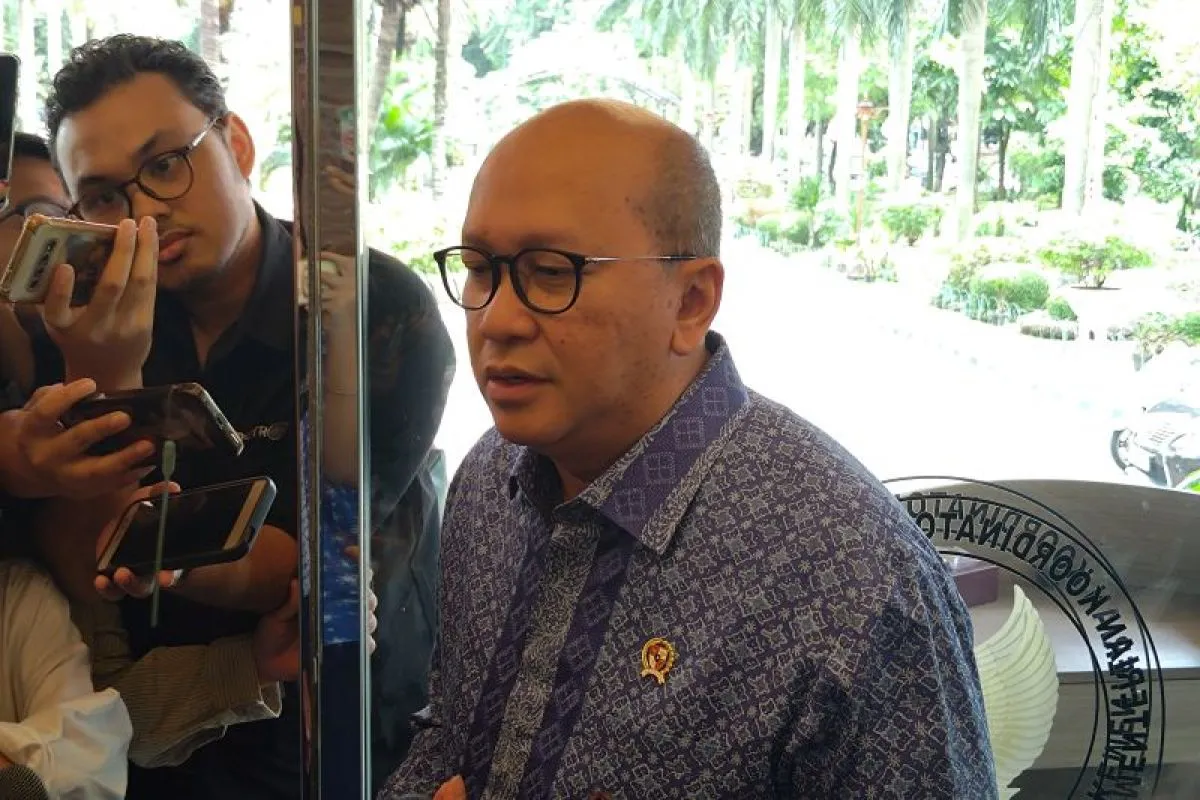
Danantara Chief Executive Officer Rosan Roeslani addresses journalists following a meeting at the Coordinating Ministry for Economic Affairs in Jakarta on May 5. (ANTARA)
Indonesia’s investment management agency Daya Anagata Nusantara (Danantara) has officially entered the stock market as a shareholder of the country’s leading ride-hailing and e-commerce firm, PT GoTo Gojek Tokopedia Tbk (GOTO), with the move aimed at improving the welfare of drivers.
For context, Danantara was established in February 2025 under President Prabowo Subianto’s administration. It functions as a sovereign wealth fund tasked with managing, optimising and developing the country’s strategic assets.
Danantara’s Chief Executive Officer (CEO) Rosan Roeslani officially confirmed the fund’s stake in GOTO on May 5 at the Coordinating Ministry for Economic Affairs in Jakarta. “We have bought into the company and we will gradually raise our shares,” he remarked.
It was until May 11 that Chief Investment Officer (CIO) Pandu Sjahrir, speaking at the Office of the Coordinating Ministry for Food Affairs, disclosed that the stake amounted to less than 1%. According to Pandu, Danantara is developing a “game plan” to increase its ownership and will “communicate it to the public” once finalised.
What does this mean for businesses?
Danantara’s entry into GOTO sends a clear signal to the private sector—particularly those operating in strategic industries such as technology, energy and infrastructure—that state capital is increasingly willing to take a direct role in shaping commercial outcomes.
For GOTO specifically, the proposed 8% commission cap represents a significant squeeze on revenue, compelling the company to pursue efficiencies elsewhere, whether through artificial intelligence (AI)-driven operations, automation or reduced marketing spend, to maintain profitability on much thinner margins. Nevertheless, state involvement is not without its advantages. In the longer term, having a sovereign backer can lend stability to a company’s share price, while also opening doors to government contracts, preferential partnerships and easier access to public funding.
About The Author