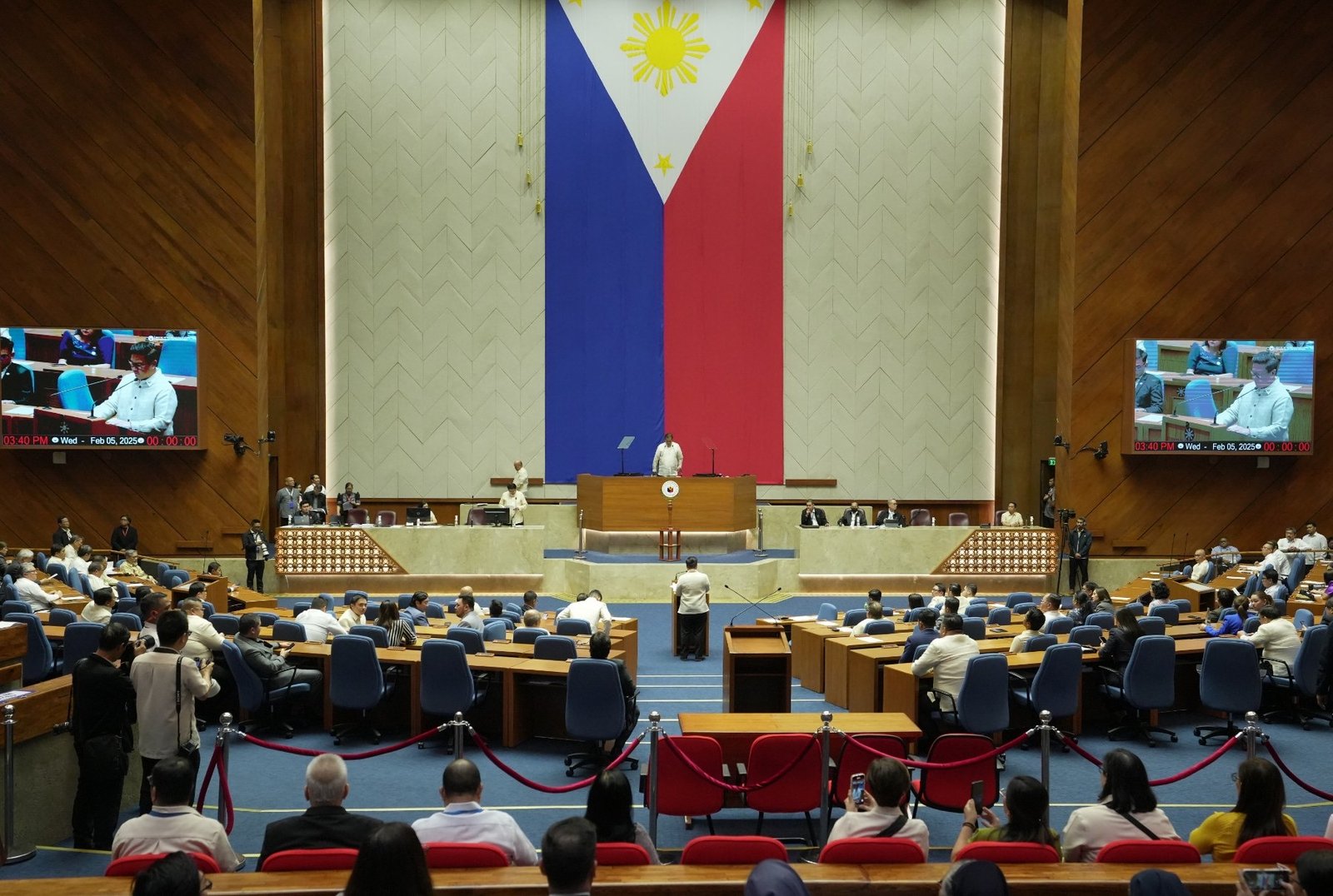
House Speaker Ferdinand Martin G. Romualdez orders endorsement to the Senate of the impeachment complaint against Vice President Sara Duterte, filed by 215 lawmakers on February 5, 2025. (House of Representatives of the Philippines)
The Philippines House of Representatives voted on May 9 to impeach Vice President Sara Duterte for the second time this year, citing allegations over misuse of millions in state funds, unexplained wealth possession, bribery of subordinates and a serious assassination threat to President Ferdinand Marcos Jr. and other top officials.
The plenary session was conducted under strict rules, with 257 voting for impeachment, while 25 stood against and 9 were absent, a tally that far exceeded the one-third threshold required by the 1987 Constitution. House Committee on Justice Representative Gerville “Jinky” Luistro stated that the move was part of a constitutional mandate. “When there are serious doubts about the use of public money, about the integrity of the Statements of Assets, Liabilities and Net Worth (SALN), about the conduct and speech of a leader—the House of Representatives cannot remain silent,” she stated.
The impeachment was based on the House Justice Committee report, Report No. 261 on House Resolution No. 989, which set forth four articles of impeachment: Article I concerns the misappropriation of 612.5 million Philippine peso (10 million US dollar) from the Office of the Vice President of the Philippines and the Department of Education. Article II is associated with the unexplained wealth sourced from SALN reports, leading to allegations of amassing wealth beyond lawful income. Article III addresses claims over bribery, specifically the cash distribution to Department of Education officials to bypass procurement laws. Article IV relates to her remarks of threatening the President, First Lady, and House Speaker.
Under the Philippine Constitution, the impeachment process began with the House of Representatives’ initiation, before moving to the Senate, which has sole power to convene a trial. A conviction needs at least two-thirds of senators—a benchmark that, if proven, would remove Sara from the office and bar her participation in the upcoming presidential race.
The Senate trial will be presided over by the newly elected Senator Alan Peter Cayetano, who replaced Senator Vicente Sotto III. Once the running mate of former Philippine President Rodrigo Duterte in the municipal rally in Davao, Cayetano was also given the foreign secretary seat during Duterte’s presidency—making him no stranger to Duterte’s clan orbit.
Sara’s case has been one of the most unprecedented political conflicts in modern Philippine history, reflecting both constitutional mandate and the deep polarisations between competing political forces within the legislature.
About The Author