
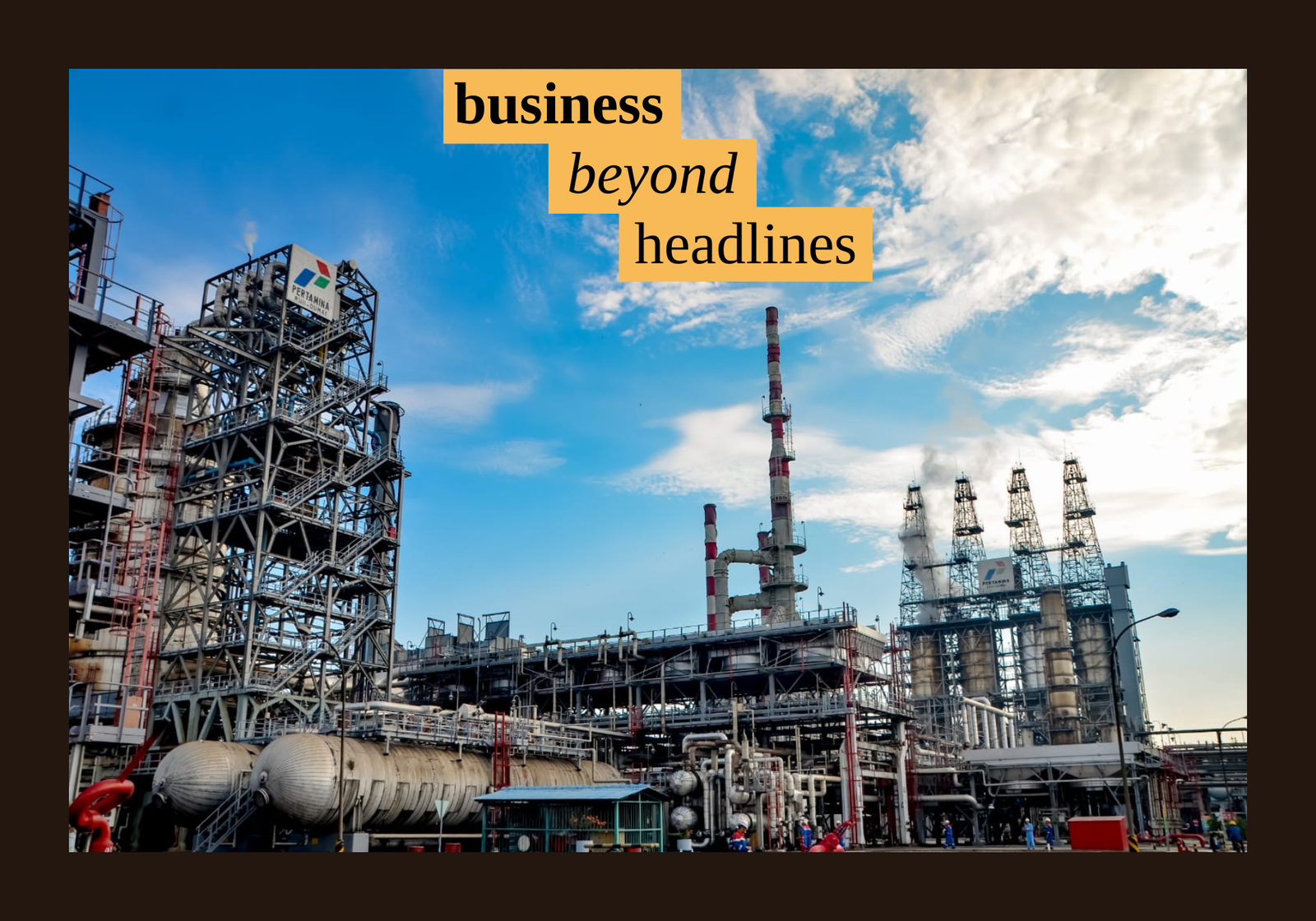
PT Kilang Pertamina Internasional (KPI) Refinery Unit II Dumai, a key crude oil processing facility under Pertamina’s Directorate of Refining, located in Riau. (Wikimedia)
Oil Markets Under Pressure
On April 21, the planned peace talks between Tehran and Washington lost momentum, leaving the situation in the Middle East fragile and uncertain. The continuing tension thus creates an alarming situation for global energy stability. As underlined by the International Energy Agency (IEA), International Monetary Fund (IMF), and World Bank Group’s joint statement on April 13, the war has already driven up the global price of energy such as fuel, gas and fertilisers. Furthermore, both the Agency and the Fund were concerned about the economic viability of low-income countries and enterprises as prices continue to soar.
An IEA report found that the Iran war has generated the biggest global oil disruption in the world’s history, as demand decreases by 80,000 barrels per day. Both oil-importing and exporting countries witness downturn trends, prompting a ‘demand destruction’ of global oil. This is due to the ongoing restrictions on tanker ships in the Strait of Hormuz. As a global critical maritime choke point, it is usually passed by ships carrying 20% of global petroleum consumption, approximately 20 million barrels per day.
The shortage of energy commodities, as inelastic goods which do not have any single spare capacity, will trigger a broader scarcity, resulting in a significant inflation as distribution is severely disrupted. Furthermore, the existence of speculators and countries panic-buying worsens the supply-demand mechanism. While a deal on a two-week ceasefire has been reached by the conflicting parties, there remains no guarantee that it will stabilise the energy market.
Besides the structural factors, sustained risks and threats to seafarers and transport vessels generate serious insurance costs. The aggressive action of Iran’s Islamic Revolutionary Guard Corps (IRGC) against transport vessels created an economic strangulation for insurance companies. The United Kingdom Maritime Trade Operations (UKMTO) recorded that to date, between 22 to 29 ships have been sunk in the Strait of Hormuz. Iran has also shown that geopolitical consideration and alignments matters as China’s ships were reported to be given access to pass the blockade. To the contrary, vessels belonging to governments seen as siding with the United States (US) remain blockaded from passing the Hormuz Strait. Iran was even reported to extract tolls for ships wanting to pass the Hormuz Strait.
The crisis has reverberations all around the globe, including to Southeast Asia. The region requires about 5 million barrels of oil per-day (bpd) and in which 3 million bpd are imported from outside the region. This leaves the nations in the region vulnerable to oil disruptions, particularly those sourced from the Middle East. The blockade of the Hormuz is a testament to that vulnerability.
As the biggest country among its Southeast Asian peers, Indonesia stands out due to its capacity and capabilities, including its vast natural and economic resources. In the past, Indonesia enjoyed abundant revenue from oil production, accounting for over 25% of the total gross domestic product (GDP) in the early 1970s. During the oil crisis in 1973, which was caused by the embargo from Middle Eastern countries, Indonesia, as the main oil-exporting country, saw an incredible amount of soaring prices due to high demand for oil. This resulted in the oil boom as the high prices provided a windfall for the Indonesian economy. From 1979-1983, oil accounted for around 68% to 71% of Indonesia’s foreign exchange earnings, enabling the country to fund subsidy programmes and accelerate economic growth.
That reliance on energy as the main source of economic stability remains a central theme decades later, although the focus shifted from handling a ‘boom’ to mitigating a ‘crisis’. In 2008, Indonesia was mildly impacted by the Global Financial Crisis (GFC). This was caused by the subprime mortgage market crash that led to a credit freeze. In July 2008, the world witnessed a record of 147 US dollars per barrel. By the time Lehman Brothers collapsed in September 2008, banks panicked and completely stopped lending money. As a result, companies and enterprises faced difficulties in paying salaries or buying supplies. To ease the burden on businesses, the Indonesian Government began channeling stimulus packages, including subsidy programmes for fuel and electricity, with 80.5% of subsidy spending on the state electricity company (PLN) and the state oil company (PT Pertamina) to ensure energy availability. Indonesia’s past experiences in dealing with disruptions and shocks to the global energy market should serve as important lessons learned as Indonesia navigates the energy crises from the US – Iran conflict.
Indonesia’s energy mix is still overwhelmingly dominated by non-renewable energy. The total energy supply in 2024 was largely dependent on coal, crude oil, adjacent products and natural gas. The rest are new and renewable energy (NRE). Statistically, coal, crude oil, natural gas and LNG still dominate the total energy supply, accounting for 40%, 29%, and 16% respectively. These commodities are essential for electricity generation and industrialisation.
The remaining 15% is supplied by new and renewable energy (NRE), including hydropower, geothermal, solar, wind, solar-powered lighting, biofuel, biogas, industrial biomass and geothermal. The rise in energy consumption from 3.59 to 4.53 per capita reflects an increase of approximately 26.18%. To reduce its heavy dependence on fossil fuels, the Indonesian government has set a target of achieving 23% renewable energy in the national energy mix by 2025. However, current figures remain below this benchmark, with renewable energy accounting for only around 15–16%.
With regard to energy consumption, Indonesia remains reliant on imported fossil fuels, particularly oil. In 2024, Indonesia imported approximately 127.8 million barrels of oil, while exporting around 27.2 million barrels, reflecting its status as a net oil importer. In contrast, Indonesia continues to be a significant exporter of liquefied natural gas (LNG), with domestic production reaching approximately 912 BBTU and exports around 496 BBTU, placing it among the world’s top LNG exporters.
For Indonesia, the crisis has generated inevitable impacts. Jakarta has begun to increase prices of non-subsidised fuels while remaining cautious not to raise the subsidised ones. The Ministry of Finance has anticipated various scenarios, including global oil prices reaching 100 US dollars per barrel, which has materialised. However, continued volatility in global oil prices is expected to widen fiscal pressures, with the state budget projected to record a year-on-year deficit of around 2.9% of GDP. It is estimated that for every 1 US dollar increase in oil prices, the fiscal burden would rise by approximately 6.7 trillion Indonesian rupiah (around 390 US dollars million). In addition, jet fuel prices have increased significantly by approximately 72.45%as of 1 April 2026, hence further exacerbating cost pressures across the economy.
As an initial response, the Indonesian Government introduced Eight Directives for National Work Culture Transformation that are accelerating changes in national work behaviour; implementing work from home policy; energy efficiency and smart mobility movements; policies effective April 1, 2026; potential fuel savings; refocusing of ministry/institutional budgets; energy and fuel distribution policies; and optimising the Free Nutritious Meals program.
Why Indonesia Remains Vulnerable to Energy Disruption
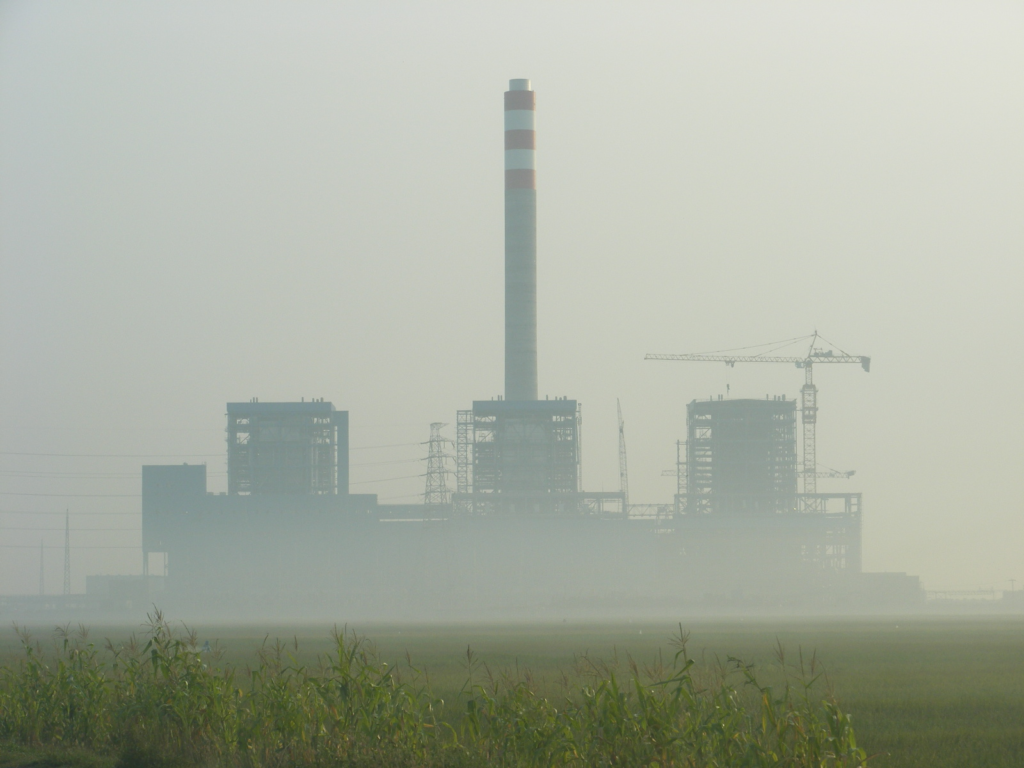
The coal-fired power plant in Sumuradem, Sukra, Indramayu, West Java, operated by PLN Nusantara Power (formerly PT PJB), is a national vital object supplying electricity to the Java–Bali grid.” (Wikimedia/Bkusumu)
The war in the Middle East, and its ripple effects across the global energy market, have exposed the structural vulnerabilities of countries dependent on imported energy. This should be welcomed as a momentum to reflect on Indonesia’s national energy policy.
Since the establishment of the national energy framework, Indonesia’s energy policy has been fundamentally rooted in the pillars of energy sovereignty, energy independence, and energy security. These pillars are supported by a strategic focus on four areas: ensuring national supply, optimising the use of domestic energy sources, diversifying towards alternative energy sources, and implementing robust governance of energy reserves. Nevertheless, Indonesia still finds itself relying on non-renewable energy to meet its domestic energy demands.
Coal accounts for 68% of Indonesian electricity to sustain essential and industrial activities. Apart from that, Indonesia also relies heavily on oil products, which accounted for 39.3% of Indonesia’s total energy demand. As a net energy importer, Indonesia heavily relies on Nigerian and Saudi Arabian crude oil. This energy mix is expected to impede Indonesia’s net-zero commitment.
In 2024, Indonesia emitted around 350 megatonnes of carbon dioxide (MtCO2) and is projected to contribute to 17% more emissions if the trend continues. Infrastructure limitations and financial constraints continue to be the main challenges for Jakarta to achieve its climate goals. Of the 20 billion US dollars needed to reach the net-zero emission (NZE) target, Indonesia has only allocated around 1.5 billion US dollars. To make matters worse, energy subsidies are still primarily directed at fossil fuels. At the same time, Indonesia’s Directorate General of New, Renewable Energy and Energy Conservation only receives around 9% of the total Ministry of Energy and Mineral Resources (MEMR) budget. So far, Indonesia’s climate financing is mostly funded by multilateral financial institutions. Between 2006 and 2023, Just Energy Transition Partnership (JETP), Clean Technology Fund (CTF), Green Climate Fund and Forest Investment Program (FIP) were the main financiers to accelerate international climate agendas, with a total of 465 million US dollars of 1,079 million US dollars disbursed.
The war in the Middle East surely imposes restrictions on Indonesia’s fiscal policies, including against Indonesia’s energy ambition and net-zero commitment. How this will play out in the end will eventually be decided by the perception of threat against national energy resilience and the cost of fiscal reprioritisation that must be undertaken in facing the global energy crisis.
The Minister of Energy and Mineral Resources has decided that Indonesia is diversifying its energy supply by securing a partnership with Russia and the US. This diversification strategy must be safeguarded against potential backlash. For instance, on 23rd of April, the European Union adopted Council Regulation (EU) 2026/506, which is the Union’s 20th round of sanctions against Russia. An Indonesian entity, Karimun Terminal Indonesia, was included in the European Union (EU)’s sanction list. The reason for inclusion was because it is “…used for the maritime transport of crude oil or petroleum products, as listed in Annex XXV, or of mineral products, that originate in Russia or are exported from Russia by vessels practicing irregular and high-risk shipping practices as set out in the International Maritime Organisation General Assembly resolution A.1192(33)”.
This is a test if Indonesia’s decision to diversify its energy supply will be shockproof against such geoeconomic and geopolitical disruption. An economic and political competition between the European Union and Russia should not come at the expense of Indonesia’s energy resilience efforts. China, whose entities were also included in the EU’s sanction list, has condemned EU’s Regulation and asked that their entities be removed from the list. How would Indonesia respond to the EU’s decision? In addressing unilateral sanctions, countries will either cooperate or fight back. Every decision will be weighed against the ultimate consideration of which decision best serves Indonesia’s national interest.
Indonesia’s Energy Future at a Crossroads
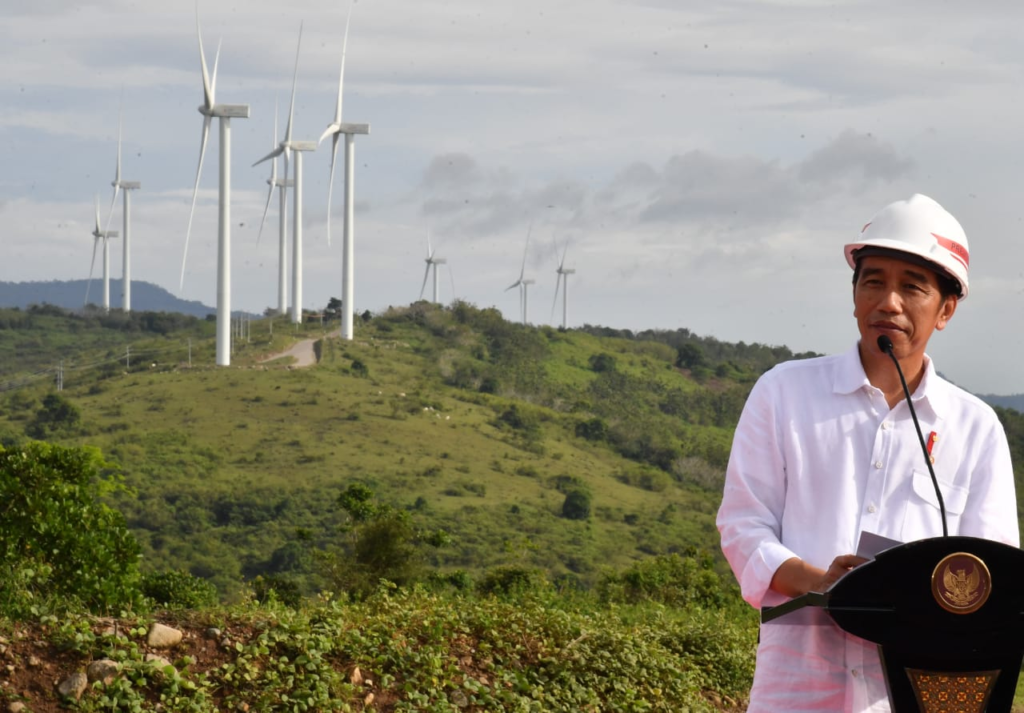
President Joko Widodo inaugurates the wind power plant (PLTB) in Sidenreng Rappang, South Sulawesi, on July 2, 2018, reaffirming the government’s commitment to renewable energy development. (Wikimedia/Sekretariat Presiden RI)
As tensions in the Middle East expose the stark realities of global energy dependence, Indonesia finds itself at a critical crossroads. Some variables that will determine the country’s energy future are energy demand and production capacity. Since 2021, Indonesia’s energy demand has increased due to industrialisation activities and the growth of the transportation sector. The industrial sector, which accounts for 59%, will necessitate Indonesia to keep its reliance on coal, while the transport sector will continue to consume oil. By 2060, some experts predict that the domestic demand may witness a double to a threefold surge. This is in conjunction with the growing electricity demand, which will have increased 3.9-8.7 times.
The heavy reliance on inelastic fuel commodities makes Indonesia highly vulnerable to global oil price fluctuations and supply disruptions. Indonesia consumes 1.5 million barrels per day, while domestic output only reaches 600,000 barrels per day, forcing it to import crude oil from other nations. External factors such as oil price increase, currency rate fall and geopolitical as well as geoeconomic volatility will further increase uncertainty. Furthermore, despite climate initiatives and commitments, coal will remain a dominant part of the energy mix.
To make sense of where these pressures could lead, it helps to examine Indonesia’s possible energy futures through Dator’s Four Futures framework, a foresight tool that maps out divergent trajectories based on how societies respond to change. Rather than predicting a single outcome, the framework traces four archetypal paths: continuation (business-as-usual), limits and discipline (adaptation under constraint), transformation (systemic reinvention), and decline or collapse (breakdown under stress). Each reveals a different face of Indonesia’s energy dilemma, and together they form a more complete picture of the road ahead.
- Continuation
The continuation scenario represents the path of least resistance, one in which existing policies and institutional habits persist with only minor adjustments. In Indonesia’s case, this would mean managing volatility by muddling through, preserving current policy trajectories without undertaking meaningful transformation. Amid friction in the Strait of Hormuz, for instance, the Ministry of Finance would be forced to stretch the state budget to keep subsidised fuel prices in place.
Under this trajectory, Indonesia makes incremental progress on its renewable energy commitments but falls short of the 23% NRE target, hovering instead around 17-18%. Coal remains the primary source for electricity generation, even as a slow, partial transition unfolds under frameworks such as the JETP, CTF, the Green Climate Fund and the FIP. Progress is real but modest, never matching the scale of the challenge.
- Limits-and-discipline
If continuation describes drift, the limits and discipline scenario describes a forced reckoning. In this future, fiscal and political constraints compel the government to make hard, disciplined choices, not because transformation is embraced, but because the costs of inaction become unmanageable. Indonesia currently spends 520 trillion rupiah (31.5 billion US dollars) annually on oil imports, 90.6% of which fuels the transport sector. As long as subsidies remain concentrated on fossil fuels, price distortions and eroding competitiveness will eventually demand correction.
Ultimately, fiscal pragmatism and political prioritisation will shape the direction of the energy transition, which must compete with a crowded field of national priorities. At present, the transition is influenced by shifting priorities and budgetary trade-offs: a big portion of national budget are being directed to finance priority programs, especially the Free Nutritious Meals (MBG) programme and other priorities that cost hundreds of trillions of rupiah per year. Under a limits-and-discipline future, this fiscal narrowing forces the state to confront the true cost of its energy choices and begin rationalising them, even if reluctantly.
- Transformation
Where limits and discipline reacts to constraint, the transformation scenario imagines a deliberate, forward-looking reinvention of the energy system itself. It envisions a future in which Indonesia proactively restructures its energy base to achieve genuine security and independence, rather than simply responding to crisis. A number of initiatives already point in this direction: advancing geothermal energy, establishing the Green Energy Corridor in Sulawesi, developing waste-to-energy facilities (with a goal of 34 operational plants by 2027), and promoting the widespread adoption of electric vehicles.
Significant progress has already been made in solar energy. Indonesia has built its largest Solar Power Plant (PLTS), a ground-mounted facility in Purwakarta, West Java, with a capacity of 100 MWp. Two additional plants, each with a 1 MW capacity, are equipped with Battery Energy Storage Systems of 4 MW. Looking ahead, the country plans to expand solar capacity to a total of 100 gigawatts.
This transformation is also unfolding at the subnational level. The Provincial General Energy Plan, which serves as a master plan for long-term energy management, has been enacted in at least 34 of 37 provinces. Eight had already met their 2025 renewable energy mix targets by 2023, and three in particular, Aceh, East Kalimantan, and East Nusa Tenggara, have allocated more than 70% of their renewable energy funds. Looking further ahead, Indonesia is scaling up its geothermal ambitions through the PT SMI Geothermal Fund, expected to supply 5.5 GW by 2035, and advancing a transition to B50 biodiesel through large-scale oil palm and cassava plantations in Papua.
- Collapse
Yet transformation is far from guaranteed, and the fourth set of futures explores what happens when systems falter. In this scenario, geopolitical and geoeconomic impact erupts following a blockade of the Strait of Hormuz, drawing in other countries and triggering a full-scale oil supply crisis. Indonesia’s daily shortfall of 600,000 barrels against 1.5 million barrels of demand becomes acute. Indonesia’s currency weakens sharply, pushed by oil prices reaching 115 US dollar per barrel to around 17,500 per dollar, and subsidised fuel prices surge by 30%. At this point, the country is no longer managing a transition but struggling simply to maintain basic energy functions.
Taken together, these four futures expose Indonesia’s vulnerabilities in domestic energy security, but they also illuminate where intervention matters most. The first priority is to increase domestic oil production and expand refinery capacity. The inauguration of the Refinery Development Master Plan (RDMP) Balikpapan in January 2026 was a notable and consistent policy by the Government, whose campaign promises were anchored on energy and food resilience.
Additionally, to buffer against energy shortages, particularly amid volatility in the Middle East and the risk of Strait of Hormuz disruptions, Indonesia must diversify its import partners. The Agreement on Reciprocal Trade (ART) opens a useful channel for Liquefied Petroleum Gas (LPG) supply. Beyond fossil fuels, Indonesia should double down on biodiesel and bioenergy programs, including geothermal, wind, solar, biomass, and ammonia, by building on and strengthening existing frameworks. The Indonesian Government should also make the most of the momentum from President Prabowo’s visit to Moscow.
Indonesia’s current energy policies present both serious challenges and meaningful opportunities. Electricity remains largely dependent on coal and other fossil fuels, and oil still supplies 90% of the transport sector, creating fiscal and environmental vulnerabilities that compromise long-term energy security. Despite a target of 23% NRE, actual figures have only reached 16-17%, a gap that points to structural weaknesses in planning and investment. To secure its energy future, Indonesia must accelerate energy diversification, expand more refinery capacity, and strengthen the financing frameworks that will make transformation possible.
About The Author



2 thoughts on “Southeast Asia Energy Security Series: #1 Indonesia”