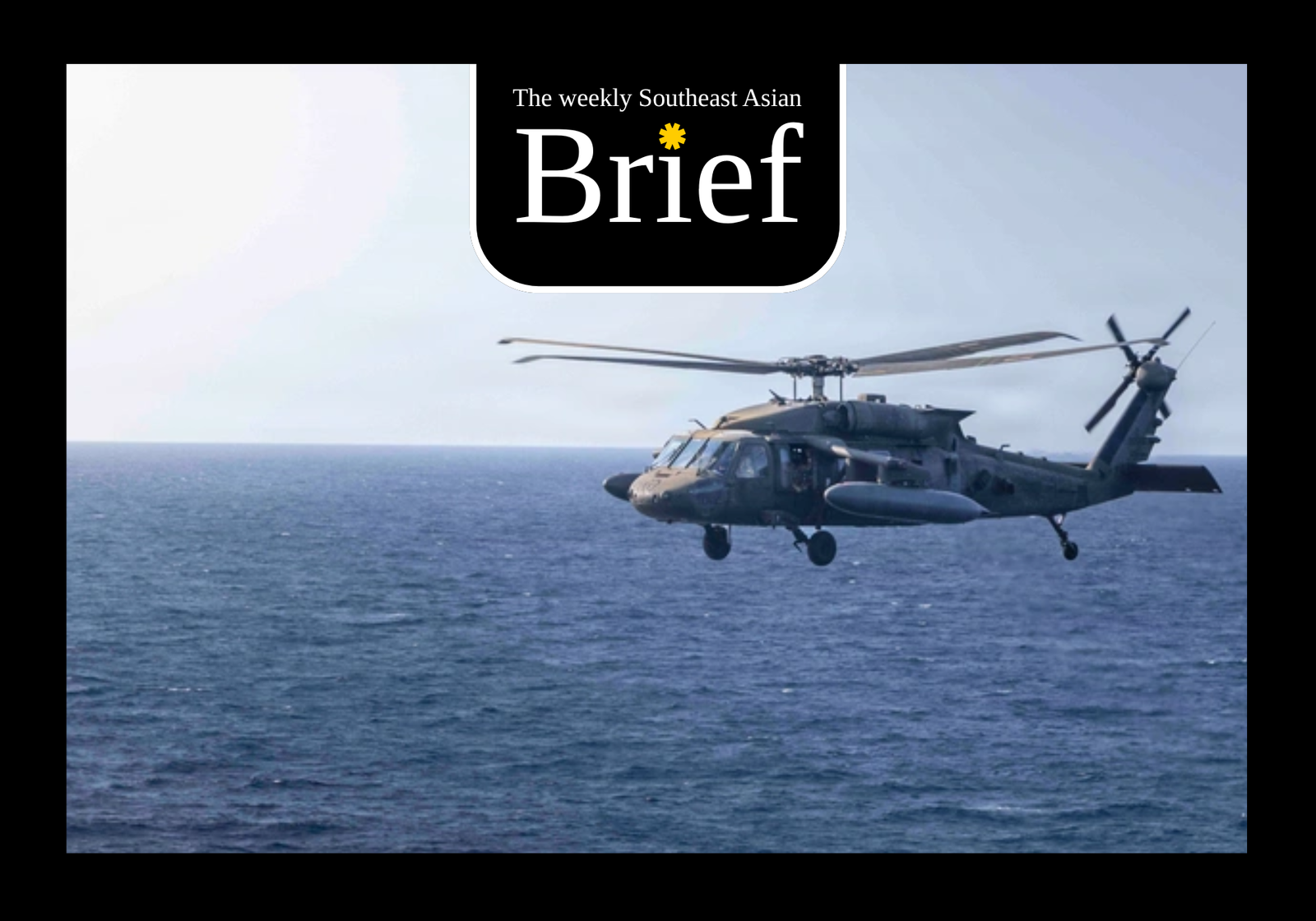
A US Army UH-60 Black Hawk from Task Force Saber, 25th Combat Aviation Brigade, flies over the Luzon Strait during Balikatan 2026 joint drills in the Philippines, April 28, 2026. (US Army/Sgt. Olivia Cowart)
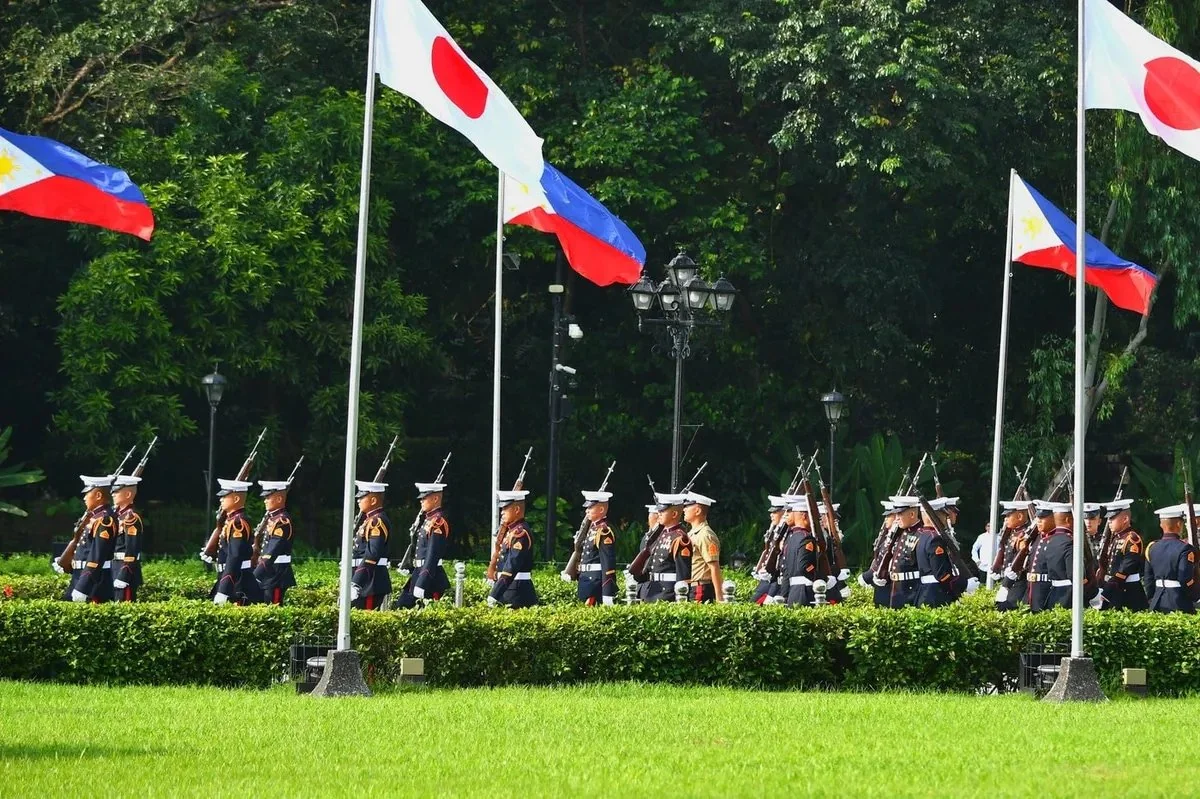
The Philippines, along with the US, Australia, Japan, Canada, France and New Zealand, formally commenced Exercise Balikatan 2026, marking the 41st iteration of the biggest annual joint military drill across Southeast Asia on April 20. The exercise, set to conclude on May 9, coincides with the 75th anniversary of the US-Philippines Treaty of Mutual Defense. Moreover, Czechia, Lithuania, the Netherlands, Poland and the UK joined as observers.
Balikatan 2026 was held in numerous spots across the Philippine archipelago, including Itbayat, located 160km south of Taiwan and Palawan, facing the South China Sea. A key highlight of this year’s exercise is a significant emphasis on technological integration, featuring the deployment and testing of advanced systems in cyber defense, unmanned systems, and missile technology, such as the US Army M142 High Mobility Artillery Rocket System (HIMARS), Typhon, and the US also intended to conduct a test for the Navy-Marine Expeditionary Ship Interdiction System (NMESIS).
Beyond the technical sector, the joining parties also conduct maritime strike drills, a core component that aims to improve the readiness of “real-world” scenario drills targeting simulated maritime threats. Multiple frigates and other warships were deployed. Most notably, Australia sent its Anzac-class frigate HMAS Toowoomba.
The US also deployed its Destroyer Squadron (DESRON) 7, a Singapore-based squad, to conduct the deployment of littoral combat ships (LCS) rotationally across Southeast Asia. They are also accompanied by the USS Ashland.
The Philippines operates its BRP Tarlac (LD-601), a Makassar-class frigate made in Indonesia, as well as ROK-Hyundai-made BRP Miguel Malvar (FFG-6), BRP Antonio Luna (FF-151).
Meanwhile, the Japan Maritime Self-Defense Force assigned their destroyer vessel, including JS Ise and JS Ikazuchi. At the same time, the Royal Canadian Navy sent its Halifax-class frigate, the HMCS Charlottetown (FFG 339), a 26-meter-long vessel that supported Canada’s multilateral operations and exercises within the Indo-Pacific region.
Under the Multinational Maritime Event (MME), these vessels are tasked to carry out some mock operations, including gunnery training, anti‑submarine warfare drills, deck‑landing drill, along with search‑and‑rescue and medical evacuation exercises. These warships are heavily armed with Vertical Launch Systems (VLS), a set of silos for air defense, in addition to naval guns and anti-submarine weapons.
A crucial element of the exercise was the integrated air and missile defence (IAMD) drills, which took place on April 26 to 29, where the US, Philippine, Japanese and other forces coordinated to validate defensive readiness. Japan deployed its newly built Type-88 cruise missile (SSM-1) and Japan Self-Defense Force Type 11 (Tan-SAM Kai II) for a live-fire exercise.
The US also contributed its Ground-Based Air Defense (GBAD) and Counter-Unmanned Aircraft Systems (C-UAS) to bolster joint operations. Specifically, the U.S. Marine Corps focuses on utilising their high-mobility system, such as the Air Defense Integrated System (MADIS) and AN/TPS-80 Ground/Air Task-Oriented Radar (G/ATOR).
Meanwhile, the US Army utilised short-range air defense systems such as the US Army AN/TWQ-1 Avenger. Testing also included the Vehicle-Agnostic Modular Palletized ISR Rocket Equipment (VAMPIRE) as a precision-strike system and the Fixed Site-Low, Slow, Small UAS Integrated Defeat System (FS-LIDS). For air operations drills, the US deploys its C-130J Super Hercules to conduct Maximum Endurance Operations.
The Philippines showcased its own advanced capabilities, including the joint development of the BrahMos cruise missile system from India. Additionally, it will also test the Typhon missile system, with its Mid-Range Capability and operate the Israeli-developed SPYDER (Surface-to-air Python and Derby) (SPADS).
These combined weaponries and systems collectively belong to the category of Ground-Based Air Defense (GBAD), with a specific focus on Short-Range Air Defense (SHORAD) and Counter-Uncrewed Aerial Systems (c-UAS) missions.
These collective weapons and systems are specifically designed to protect ground units in a “saturated” aerial environment. They primarily function as a protector to shield critical infrastructure from low-altitude threats, such as drones, helicopters and cruise missiles.
Finally, a specialised training in Cyber Operations Exercise was conducted at Camp Aguinaldo to protect critical military and public infrastructure using Intelligence, Surveillance and Reconnaissance (ISR) assets and utilising the Command and Control (C2) node. Apart from the defensive drills, the officers from multiple participating countries also attended the Senior Enlisted Symposium, which included vital training on cyber-attacks and countering misinformation.
About The Author