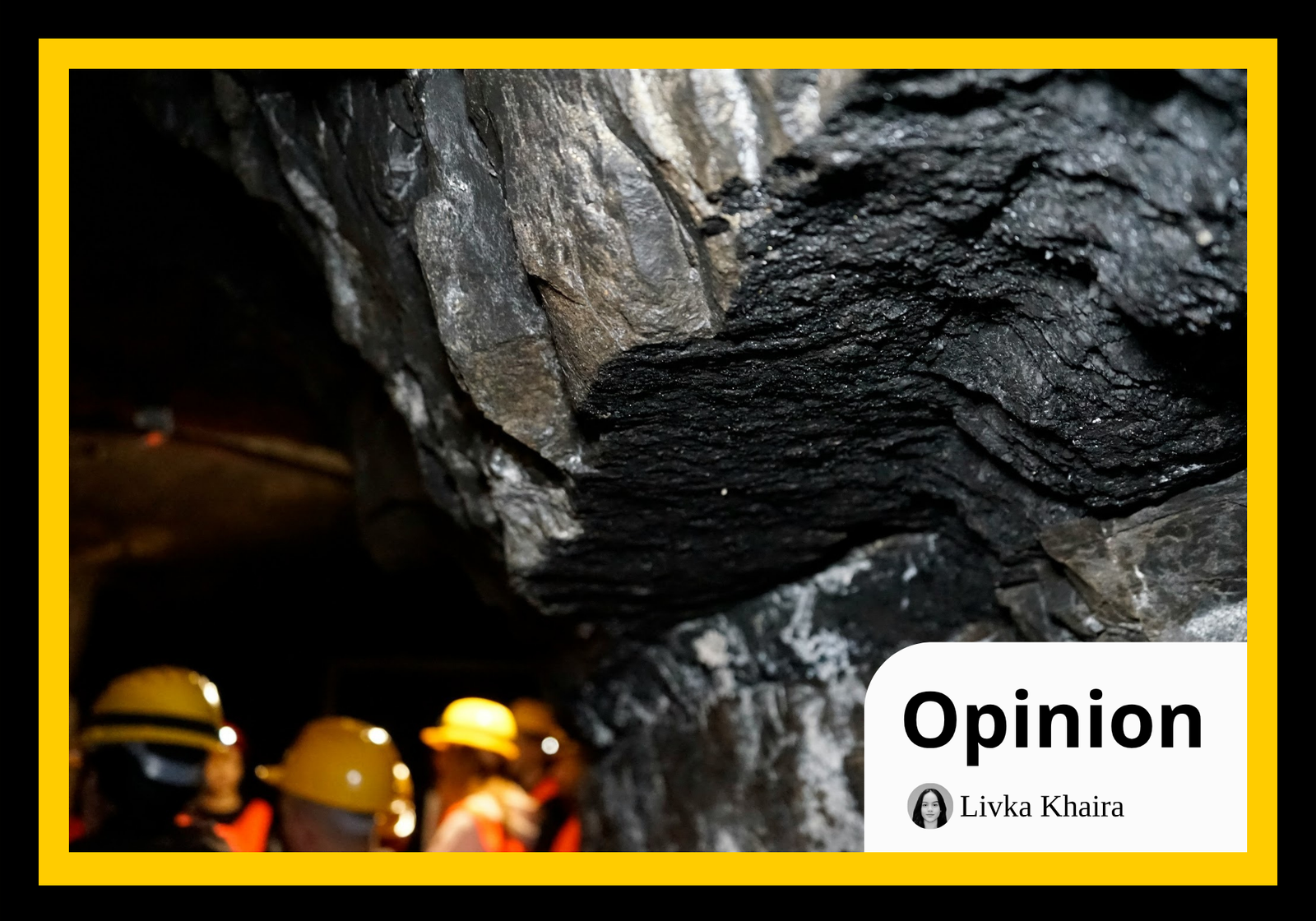
Workers at an active extraction site in an underground mining operation (Unsplash/Dillon Kydd)
Livka Khaira is an independent economics researcher and program specialist for energy and healthcare at OCBC. The views expressed are her own and do not represent SEA Daily or that of another organisation.
The persistence of “zombie” mining refers to entities that are legally revoked but remain operational. Every year, an estimated 3.5 trillion Indonesian rupiah (201.7 million USD) in state revenue is lost within Indonesia’s mining sector.
In the case of a firm such as PT AKT, a 1 billion US dollars loan can create a sunk-cost dynamic in which compounding interest makes it more costly to halt operations than to continue them, even after permits are revoked.
Why Operations Continue
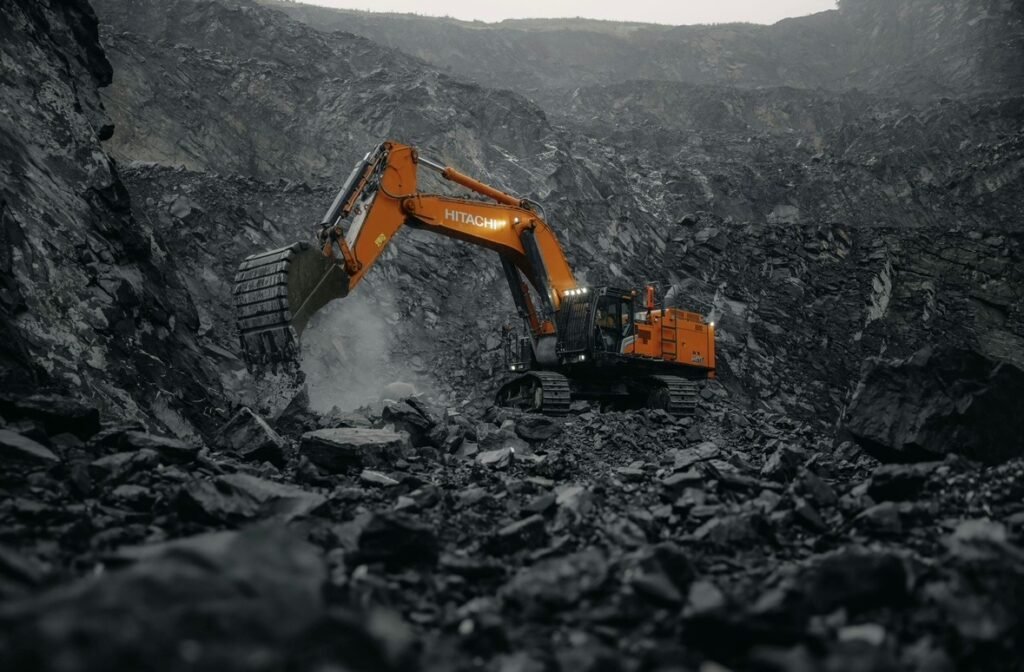
An excavator clearing debris and minerals (Unsplash/Kateryna Babaieva)
For firms under financial strain, continued extraction becomes a source of liquidity. High-grade coking coal further strengthens these incentives, making supply chains through the regulatory arbitrage of document trading possible.
These firms also profit from the Domestic Market Obligation policy. The 70 US dollar per tonne price effectively acts as a floor, cushioning inefficient operators particularly as global coal prices have declined from their 2022 peak due to supply-demand imbalances, while Indonesian production has remained elevated.
At the same time, permit revocations at the central level are not always matched by enforcement at the regional level as reflected in the persistence of illegal operations despite large-scale permit revocations and recurring enforcement cases across regions.
And the high-level acquittal in June 2022 (MA decision 2205 K/Pid.Sus/2022) based on a lack of specific intent, may signal to the market that legal risk in Indonesia is merely the cost of doing business.
Regional Enforcement Comparisons
Australia utilises the Upfront Rehabilitation Bonds holding over 3.3 billion Australian dollars (2.3 billion US dollars) in deposits to ensure that when a permit is revoked, the state already holds the funds for closure. In Indonesia, the 1,735 abandoned pits in East Kalimantan represent an unpaid tab that the state will eventually have to pay.
Vietnam maintains a centralised mineral management system. The 2010 Mineral Law placed strategic mining under MONRE, reducing the role of regional licensing. This limits gaps between central policy and local enforcement that remain more pronounced in Indonesia, where regional players can play both sides of the fence.
In the Philippines, a 2017 audit led to the closure of 23 mines, but its impact was limited due to reliance on manual inspections, without the digital integration Indonesia now possesses.
Credibility and Capital
With coal production exceeding 775 million tonnes in 2025, above the government target of 735 million tonnes, Indonesia is entering oversupply conditions, particularly as global demand growth moderates and prices weaken. Ironically, exports reached over 550 million tonnes, yet still below official targets, indicating softer-than-expected external demand.
As Indonesia positions itself as a global hub for the energy transition through its nickel sector, these dynamics may extend beyond revenue losses by increasing the country’s risk premium. There is also a risk that such liabilities could be absorbed indirectly by public institutions, including sovereign investment vehicles such as Indonesia’s sovereign wealth fund Danantara.
Resources are still committed to low-productivity coal production rather than being reallocated to higher-value industries like energy transition infrastructure and downstream processing.
One practical entry point is through rehabilitation-linked financing. The banking sector is already regulated and relatively centralised under the Financial Services Authority (OJK), making it easier to act through financial channels than through mining enforcement. State-owned banks will push back, especially where exposure is high, but it is still a plausible route if tied to non-performing loan discipline rather than sectoral policy.
Clean exit incentives are also necessary to motivate businesses to voluntarily close or renovate locations in a manner consistent with financial restructuring.
Moving earlier in the lifecycle is also an option. Australia’s rehabilitation bonds require firms to set aside closure costs upfront, that changes the incentives quite directly and less reliance on enforcement later, and fewer cases where operators can simply walk away, though they are more likely to be introduced gradually, applying to new or renewed permits.
Institutional reforms can also reduce gaps between central policy and regional enforcement. More centralised systems, such as in Vietnam, illustrate how aligning authority can limit inconsistencies in implementation, particularly where penalties alone have limited effect.
About The Author