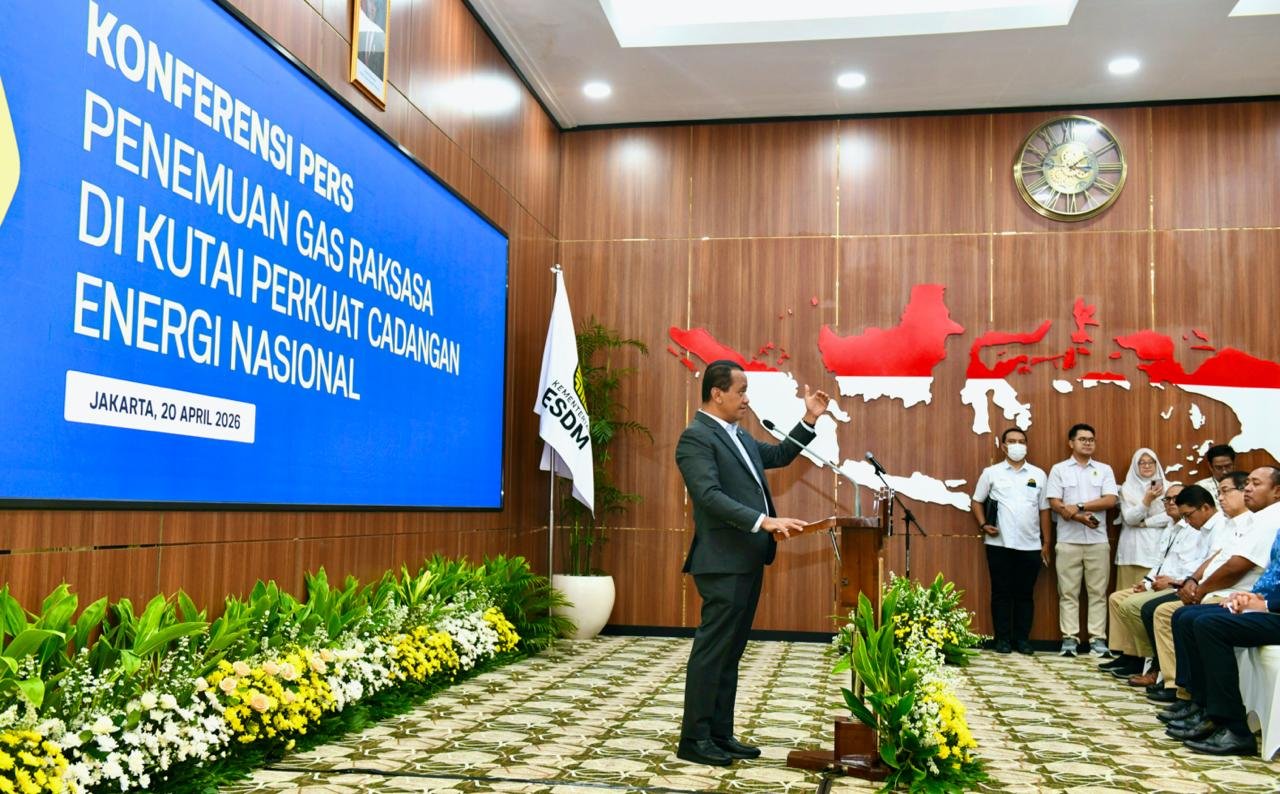
Press Conference on the Massive Gas Discovery in Ganal Block, April 20th. (Ministry of Energy and Mineral Resources Indonesia)
Indonesia discovered a major gas reserve at Geliga-1 exploration well—a working area operated by Italian energy company ENI at the Ganal Block offshore Kutai, East Kalimantan. A potential 5 trillion cubic feet (TCF) of gas and 300 million barrels of condensate were disclosed in ENI’s emailed statement. On April 20, Bahlil Lahadalia, Indonesia’s minister of energy and mineral resources, expressed appreciation for the company in a press release, stating the finding as “giant and remarkable”.
Operating since 2001, ENI has made proven track records with the latest being Geng North exploration in 2023 and Konta-1 discovery in 2025. For the development of Gelila-1, ENI planned to leverage existing infrastructure, one of it being the Gula gas project, to accelerate the production timeline and optimise project costs.
Building on this, ENI is projected to peak at 2,000 million standard cubic feet per day (MMSCFD) by 2028, marking a substantial leap from its current output of 600–700 MMSCFD. Furthermore, production is set to be scaled up even further to reach 3,000 MMSCFD by 2030.
The discovery arrives at a critical moment, as regional energy markets reel from the US-Israel war on Iran. Bahlil also claimed it as part of Indonesia’s journey in “reclaiming energy-self sufficiency” as mandated by President Prabowo Subianto, adding that the country still holds significant untapped opportunity in its oil and gas reserves.
Presently, Indonesia’s daily oil consumption stands at 1.6 million barrels per day (bpd), more than double of its current lifting rate of 605 thousand bpd. To close this gap and fulfill its energy independence target by 2030, Jakarta is committed to both maximising existing deposits and continuing the search for new ones.
What does this mean for businesses?
For businesses operating in Indonesia, the Geliga-1 discovery signals a shifting energy landscape worth watching closely. Jakarta’s fuel subsidy commitment, maintained even through the current Middle East crisis, now has stronger domestic backing.
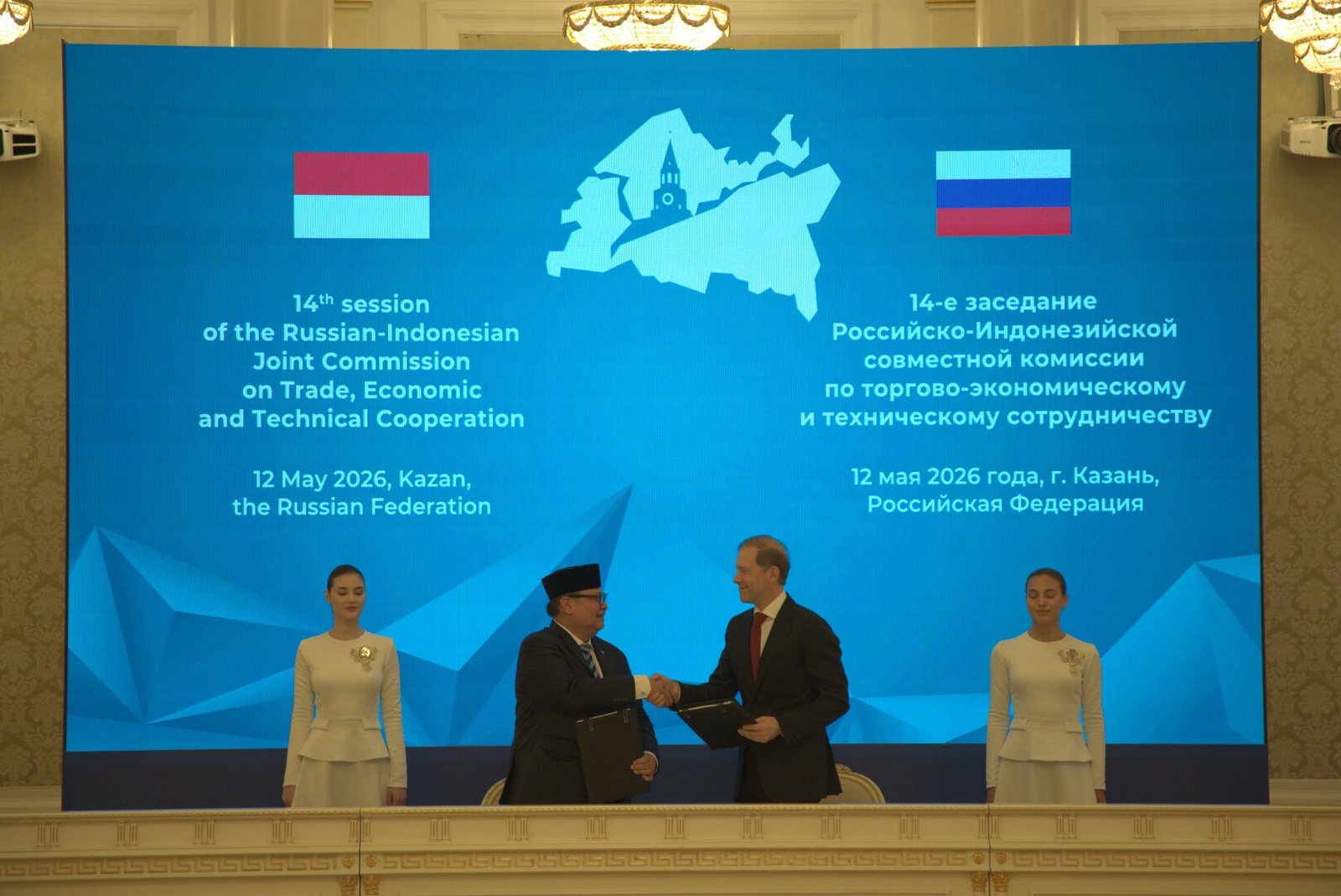
The find also carries strategic weight beyond production numbers. President Prabowo’s recent visit to Russia, where Moscow expressed interest in building refineries and storage facilities in Indonesia, suggests Jakarta is actively assembling the infrastructure backbone needed to translate reserves into real energy independence—echoing the self-sufficiency Indonesia last achieved under Suharto in the 1970s–90s. For investors and energy firms, the window is open, but realising this potential will hinge on whether Indonesia can develop the regulatory clarity to match its ambition.
About The Author