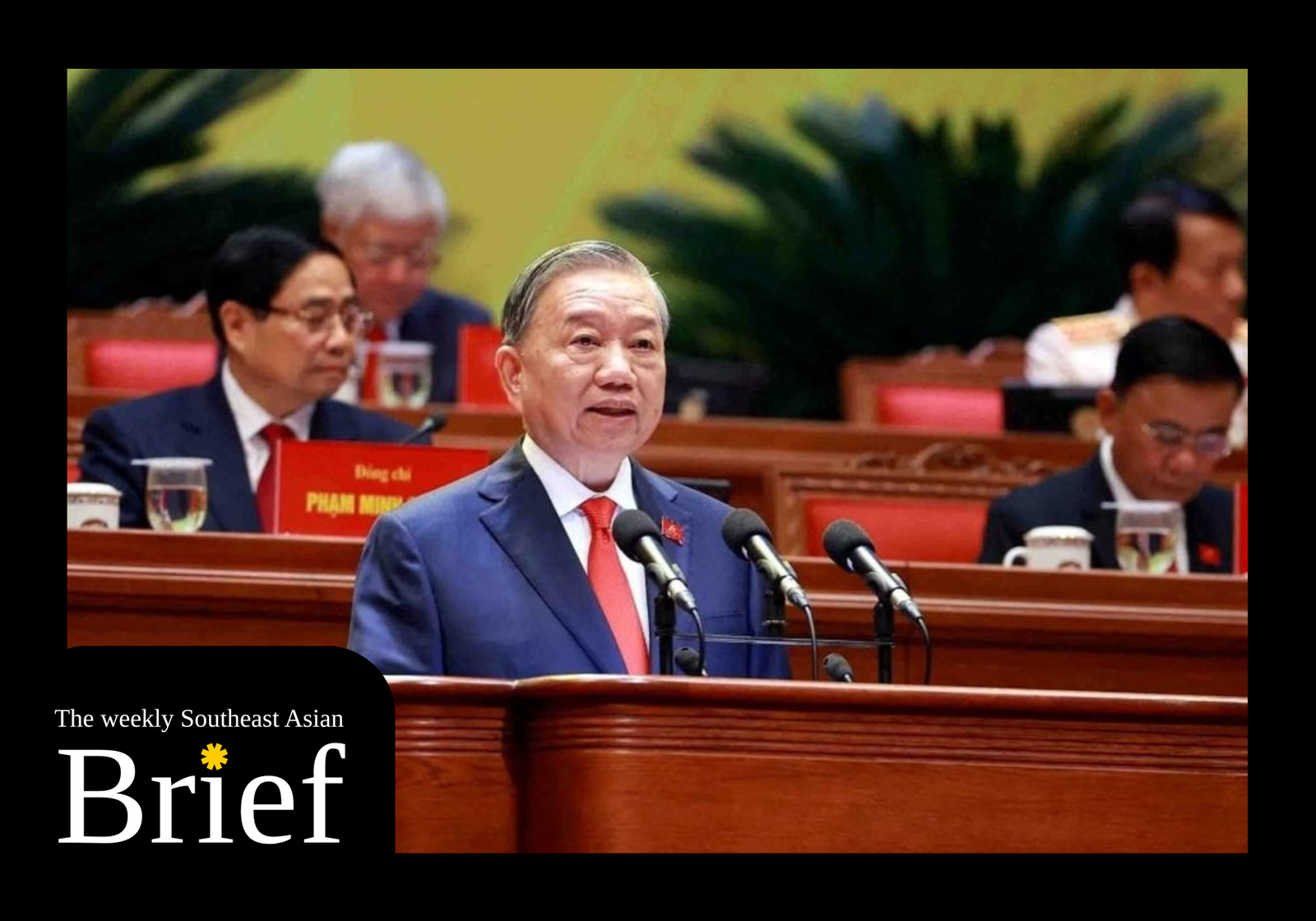
Vietnam’s Communist Party General Secretary To Lam speaks during the 14th National Party Congress in Hanoi, Vietnam, on January 20, 2026. (VNA)
Vietnam has 2025 as ASEAN’s strongest economic performer, with GDP growth reaching 8.02% that year and the national economy expanding to around US$514 billion.
At its 14ᵗʰ National Party Congress starting on January 19, the ruling Communist Party once again highlighted this record as proof of effective governance and long-term policy continuity.
This economic performance is closely linked to Vietnam’s single-party political system, in which the Communist Party holds a monopoly on power and national leaders are selected through internal party processes rather than competitive elections.
Political authority is concentrated within party institutions, with limited space for political opposition, which prioritises stability and policy continuity and enables long-term economic planning. Over time, this has shaped an informal social contract in which public support is based mainly on economic success, stability, and rising living standards rather than electoral participation.
Within this system, leadership continuity is seen as essential to sustaining economic performance and political stability. This context helps explain why the Secretary-General of the Communist Party of Vietnam, the most influential political position in the country, Tô Lâm, was unanimously reappointed by the Communist Party’s Central Committee in the 14ᵗʰ congress to serve another five-year term, as he pledged further reforms to accelerate growth in the export-reliant economy.
However, this emphasis on leadership continuity and economic delivery also raises expectations. The government’s 10% growth target appears more as a political promise than a fully realistic objective, especially given Vietnam’s heavy reliance on exports, which leaves the economy exposed to US tariffs and wider global uncertainty in a shifting world order. If growth were to slow, the leadership may place greater weight on maintaining control and stability, potentially putting strain on the informal social contract, thus demonstrating the fragility of the system.
About The Author