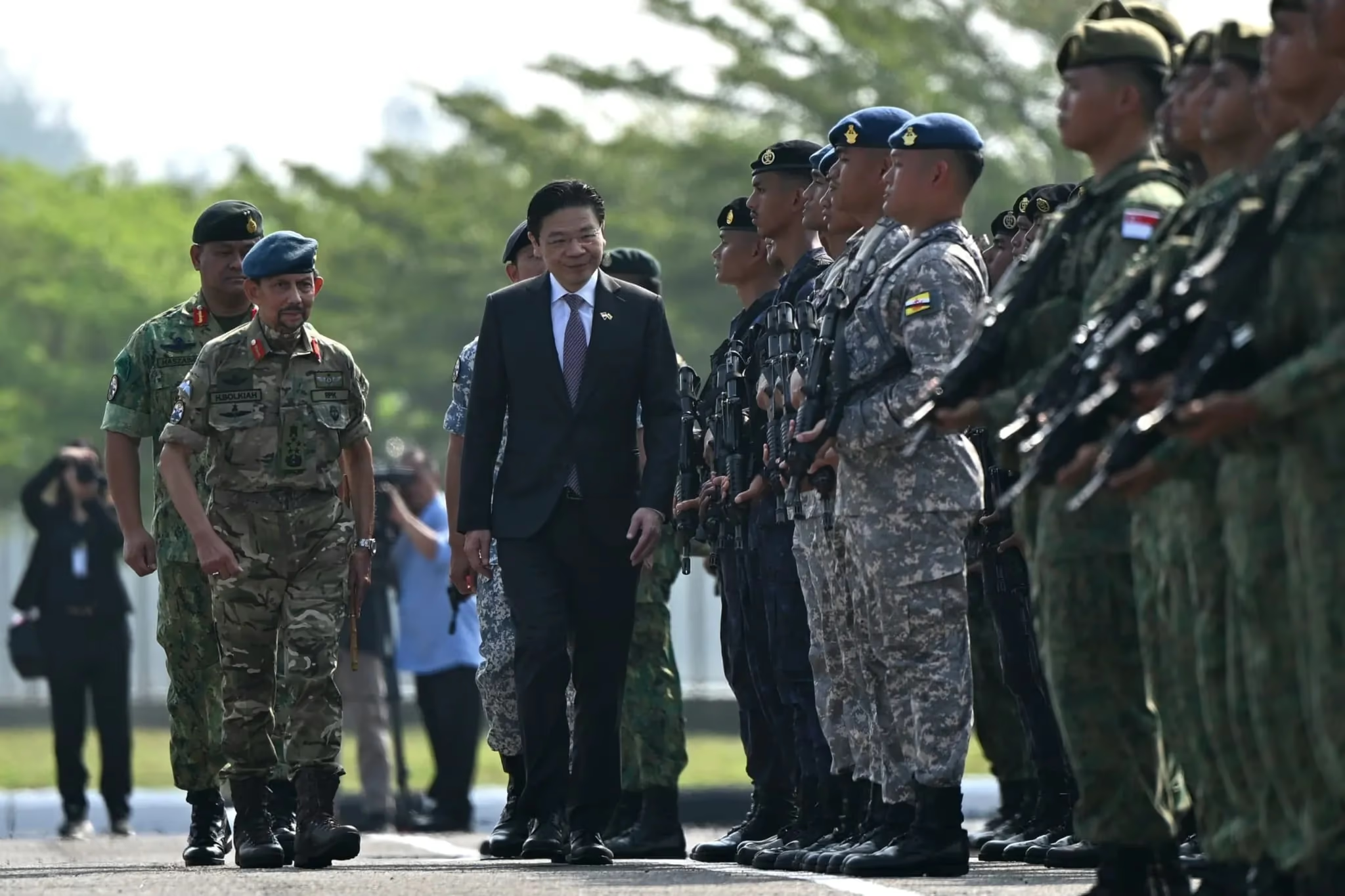
Singapore and Brunei militaries take part in a joint parade marking 50 years of bilateral defence relations. (Ministry of Defence-Singapore)
On October 10, Singapore and Brunei Darussalam marked its 50th anniversary of bilateral defence relations with a joint military parade, bringing together personnel and operational assets from the armed forces of both countries.
The parade was attended by Singapore Prime Minister (PM) Lawrence Wong and Brunei Sultan Hassanal Bolkiah, who inspected the joint contingent comprising members of the Singapore Armed Forces (SAF) and the Royal Brunei Armed Forces (RBAF).
The event involved 256 personnel and operational assets from the two countries’ land, naval and air forces. It included a naval sail-past by Singapore’s Maritime Security and Response Vessel Protector and Brunei’s patrol vessels KDB AS-SIDDIQ and KDB DARUSSALAM. Two Singapore Air Force H225M helicopters and three Royal Brunei Air Force S-70i Black Hawk helicopters also took part in an aerial fly-past.
Following the parade,PM Wong and Sultan Hassanal Bolkiah jointly launched a commemorative gallery documenting milestones in bilateral defence cooperation and the people-to-people ties developed over five decades.
The parade forms part of a year-long programme marking the golden jubilee, which has included bilateral exercises across all three services. Activities include Exercise Maju Bersama, Exercise Rintis Bersama, Exercise Airguard and Exercise Pelican.
Both countries have also introduced new areas of cooperation. SAF and RBAF’s air forces launched Exercise Vanguard, a framework encompassing ground-based air defence, helicopter and unmanned aerial vehicle training. Their armies have jointly developed the Binturan Bridge, while their navies have opened an underwater demolition range to support joint training and the development of naval diving capabilities.
Singapore and Brunei formally established defence relations in 1976, which their cooperation has since expanded from training exchanges to regular bilateral exercises, professional military courses, senior leadership engagements and collaboration in emerging security areas.
The 50 years of partnership reflects sustained defence cooperation, but its long-term value will depend on whether joint exercises and personnel exchanges deliver measurable improvements in operational readiness and interoperability. The new challenge is whether new initiatives translate longstanding ties into tangible military capabilities.
About The Author