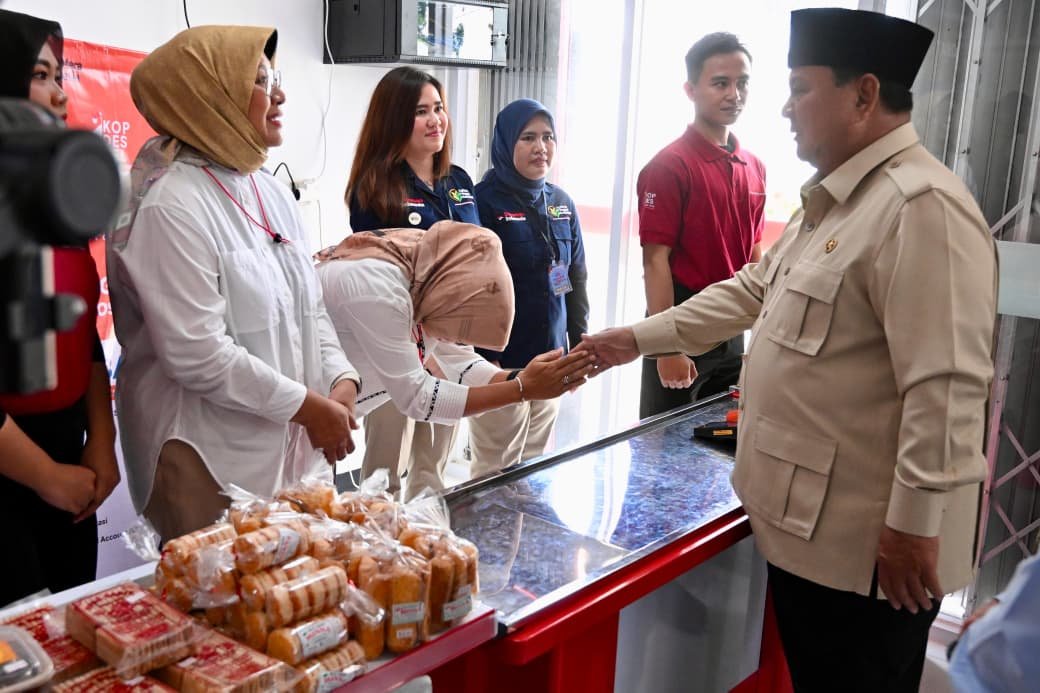
President Prabowo Subianto inaugurates 1,061 Merah Putih cooperatives in East and Central Java, strengthening grassroots economic development. (BPMI Setpres/Cahyo)
The Indonesian rupiah has been strangled, with the currency weakening to 17,602 rupiah against a dollar. However, this hardly alarmed Indonesian President Prabowo Subianto, insisting that the unequal exchange rate was irrelevant to ordinary Indonesians.
Speaking at the inauguration of Marsinah’s House on May 16, he bluntly stated, “I am certain that there are always those who—I don’t know what it is, I really don’t get it—every so often, [they say] Indonesia is going to collapse, going to descend into chaos, going to do this and that.” He dismissed any concerns over the exchange rate as largely irrelevant to ordinary Indonesians and argued, “the people, the people in the villages, they don’t use dollars, do they? Food is secure, energy is secure. Many countries are in a panic, yet Indonesia is still fine.”
He returned to a similar theme on the same day. During his keynote speech at the inauguration of 1,061 the Red and White Village/Urban Neighbourhood Cooperative (KDKMP) in Central and East Java on May 16, Prabowo urged that rural communities not worry about the soaring dollar prices.
“Whatever the dollar does, however many thousands it goes to, you people in the villages don’t use dollars, isn’t that right?” he said. Believe me, our economy is strong, our fundamentals are strong. Whatever people want to say—Indonesia is strong. Believe in our strength. Believe in our people. All leaders must work for the people.”
During these occasions, Prabowo maintained that his free nutritious meals programme (MBG) and the Red and White Village Cooperatives (Kopdes Merah Putih) would stimulate and strengthen national economic growth. Prabowo pledged that the Kopdes will be multiplied thirtyfold across Indonesia in August.
Almost subsequently, Indonesian Finance Minister, Purbaya Yudhi Sadewa, also joined the defence and slammed criticisms of The Economist’s editorial piece titled, “Indonesia’s president is jeopardising the economy and democracy”. The magazine linked Prabowo’s expansive populist projects, mainly the MBG and Kopdes, which might endanger Indonesia’s fiscal discipline. Purbaya directly dismissed the criticism as “stupid” during public attendance, arguing that the piece misinterpreted his central bank liquidity measures aimed to stimulate domestic money growth.
Taken together, Prabowo’s and his minister’s rebuttal conveyed a confidence with considerable commitment—though critics argue that the power of the message is inversely proportional to its actions in addressing the problems raised. This raises questions about whether his rhetoric reflects resistance to public scrutiny and domestic concerns.
About The Author