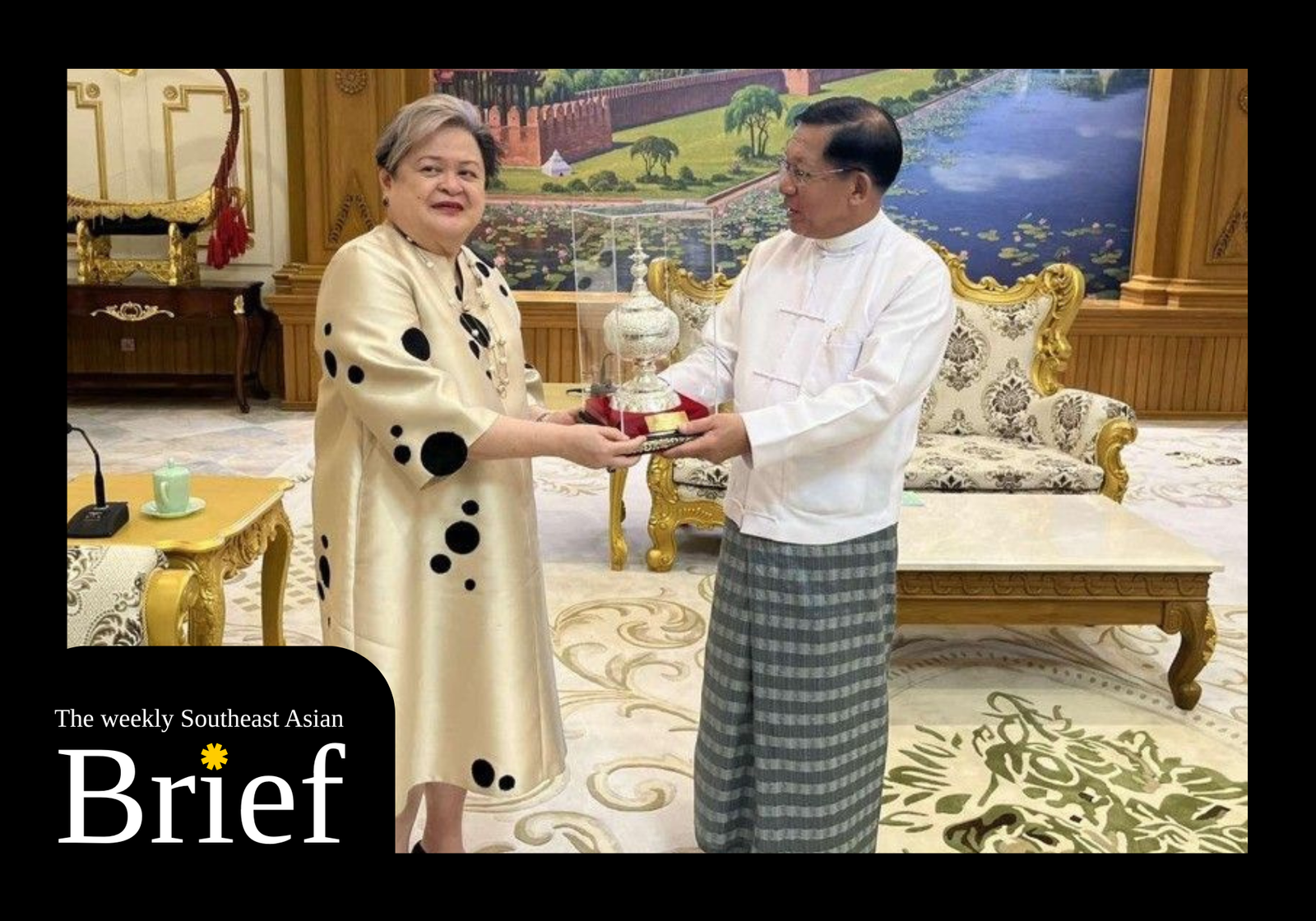
Filipino Foreign Affairs Secretary Lazaro with Myanmar Acting President Senior General Min Aung Hlain during her visit as ASEAN Chair on January 6, 2026 (News Watch Plus PH).
On January 6, 2026, only five days after the Philippines officially took on the ASEAN chairmanship, Foreign Affairs Secretary Theresa Lazaro made an official visit to Naypyidaw, Myanmar’s capital city.
The visit placed Manila at the centre of ASEAN’s most unresolved crisis, while also highlighting a potential tension between the Philippines’ foreign policy orientation and the bloc’s consensus-driven approach.
Compared to other ASEAN member states, Manila’s foreign policy stands on an argument of international law to the end of defending its sovereignty. It adopts a firm alignment with the United States and its allies while distancing itself from China.
For instance, the Philippines recently signed defence cooperation deals with Japan and South Korea as well as receiving billions in US military aid while maritime tensions with China continue to escalate.
The visit has therefore raised questions about whether the Philippines is bending its traditionally more principled foreign policy to fit the bloc’s pragmatic norms.
Notably, Filipino officials have maintained contact with Myanmar’s military authorities, who briefed them on what they described as efforts to restore peace and stability. Official statements said Filipino Foreign Affairs welcomed the cooperation and pledged to continue engagement during the Philippines’ chairmanship.
In this context, the Philippines’ reliance on engagement and cautious diplomacy points to a chairmanship focused on maintaining the status quo rather than pursuing norm-based foreign policy by pressuring the Myanmar junta to at the very least improve its human rights track record.
How far this approach can deliver concrete outcomes will most likely depend on changes in both domestic conditions and regional dynamics over the year.
About The Author