Official logo of the One Data Indonesia (Satu Data Indonesia) integrated government data portal. (Satu Data Indonesia)
Reja is a lecturer at the Political Science Department of Universitas Pembangunan Nasional “Veteran” Jakarta. The views expressed are the author’s own and do not represent SEA Daily or that of another organisation.
Seven Years On, Still Unknown
In an age when data underpin everything from economic planning to public services and artificial intelligence (AI), Indonesia has quietly been pursuing one of its most ambitious governance reforms. Yet, despite its potentially transformative impact, few Indonesians have ever heard of One Data Indonesia (also known domestically as Satu Data Indonesia).
Since the enactment of Presidential Regulation No. 39 of 2019, Indonesia has sought to establish a unified national data governance system through its government’s data.go.id portal. The initiative was inspired by internationally recognised open data platforms such as data.gov in the US and data.gov.uk in the UK, reflecting former President Joko Widodo’s vision of creating a government that makes decisions based on integrated, reliable and accessible data.
The underlying logic is that government data should no longer exist in isolated institutional silos. Instead, they should be accurate, up to date, interoperable, accountable and easily shared across ministries and public agencies. Such integration would improve public services, strengthen policymaking and support more sustainable, evidence-based economic development.
Unfortunately, that ambition has yet to be matched by public awareness.
Seven years after the regulation came into force, One Data Indonesia remains unfamiliar to most Indonesians. Even within the government’s inner circle, understanding of the initiative is largely confined to officials whose work directly involves data management. Public communication has been limited, leaving many Indonesians unaware that a national strategy for integrated data governance even exists.
This lack of awareness matters because the project is far more than an administrative reform. It represents Indonesia’s equivalent of the open data movements adopted by many developed countries, where publicly accessible, standardised government data have become essential for improving transparency, encouraging innovation and strengthening democratic accountability.
Reliable national data are fundamental to good governance. They enable policymakers to identify where poverty persists, where public investment is needed, how healthcare and education should be allocated, and whether development programmes are delivering meaningful results. Without integrated and trustworthy data, effective policymaking becomes considerably more difficult.
In an interview, Agung Budi Santoso—former Chair of the Household Affairs Committee (BURT) of the House of Representatives (DPR RI) and the original initiator of the Academic Paper and Draft Bill on One Data Indonesia—is confident that the project observed, underlined the project’s importance in the government’s digital reform and stated that while challenges remain, they can be overcome if every stakeholder commits to its implementation.
“I recognise the importance of implementing One Data Indonesia. However, there are still many challenges in its implementation. I remain optimistic that One Data Indonesia can become much stronger in the future if we all work together.”
Sectoral Ego and the Limits of Coordination

Indonesian President Prabowo Subianto organising a meeting with his cabinet members in 2025. “Sectoral ego”—the tendency of government ministries and agencies to prioritise their own interests and credit rather than collaborate with one another—remains a major challenge for effective governance in Indonesia. (Indonesian Presidential Cabinet)
His optimism, however, must contend with a longstanding challenge in Indonesian public administration, institutional fragmentation.
Despite the existence of a national framework, many ministries, government agencies and regional administrations remain reluctant to share data through the official One Data Indonesia platform. Institutional “sectoral ego” continues to undermine efforts to create a genuinely integrated national data ecosystem. Organisations often continue to manage information independently, treating data as institutional assets rather than national resources.
This is perhaps the greatest obstacle facing One Data Indonesia today.
According to Apriyani Dewi Azis—who chaired the first Academic Paper and Draft Bill Team on One Data Indonesia within the House of Representatives Expertise Agency—the governance structure itself remains one of the initiative’s weakest points.
“There needs to be a single institution with sufficient authority to require ministries and government agencies to share data,” she argues.
Without such leadership, One Data Indonesia risks becoming little more than a coordination forum rather than a functioning national system.
Recognising these weaknesses, Indonesia’s Legislative Body of the House of Representatives agreed in July 2026 to propose the Draft Law on One Data Indonesia as an official parliamentary initiative. Shortly afterwards, the House formally approved the proposal during its plenary session, marking an important milestone in strengthening the legal foundation of national data governance.
During the parliamentary discussions, the body’s Deputy Chair and Chair of the Working Committee, Sturman Panjaitan, highlighted why the issue extends far beyond technology.
“Data are a measure of prosperity,” he remarked. “They show where poverty exists, how people earn their incomes, and countless other indicators. Those data must always be accurate and continuously updated.”
His comments underline an increasingly important reality, that in the twenty-first century, data have become strategic national infrastructure.
The Challenge Is Governance, Not Technology
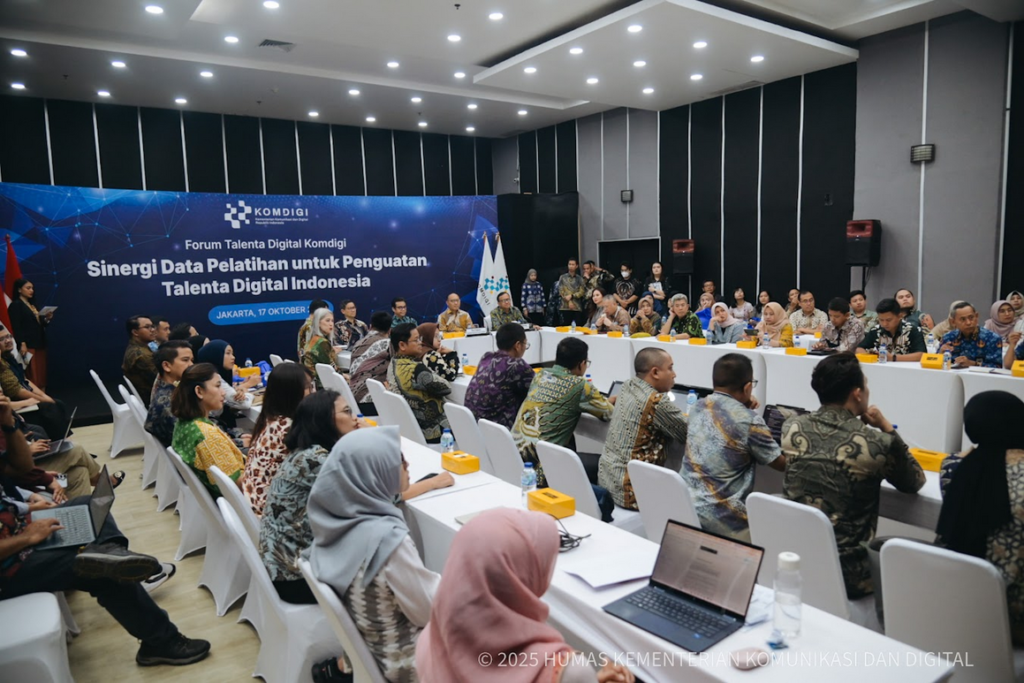
A training session for digital talents organised by the Indonesian Ministry of Digital and Information Affairs in 2025. (Indonesian Ministry of Digital and Information Affairs)
The proposal to elevate One Data Indonesia from a Presidential Regulation to a parliament-approved Law is not new as it was first initiated in 2021 by Agung Budi Santoso during his tenure as a Member of Parliament from the Democratic Party. Over the following three years, researchers from the Parliamentary Expertise Agency, together with experts from Commission I of the DPR RI, conducted extensive legal research, comparative studies and stakeholder consultations to prepare the Academic Paper and Draft Bill.
As one of the researchers involved in that process, I found that the proposed legislation requires several important additions if it is to provide a comprehensive legal framework.
First, it must establish clear provisions concerning data security and cybersecurity. Second, it should clearly distinguish the role of One Data Indonesia from existing institutions responsible for national statistics, geospatial information and the management of sensitive financial data. Third, the One Data Indonesia Portal itself deserves a dedicated chapter within the legislation, particularly as Indonesia prepares for the full implementation of the National Data Centre.
A comprehensive law should not merely regulate data standards. It should govern how national data infrastructure operates as an integrated ecosystem.
Human capacity presents another significant challenge. Many officials across ministries, agencies and regional governments still lack sufficient understanding of how One Data Indonesia should function in practice. Meanwhile, the Presidential Regulation assigns responsibilities to numerous institutions without clearly identifying a single authority capable of enforcing compliance.
This institutional ambiguity weakens implementation.
Should the House of Representatives ultimately enact a comprehensive One Data Indonesia Act, it should also establish enforcement mechanisms, including sanctions for institutions that fail to fulfil their obligations to contribute data to the national system. Effective governance depends not only on cooperation but also on accountability.
Indonesia has invested considerable effort in developing digital government, modernising public administration and promoting evidence-based policymaking. Yet these ambitions cannot be realised while government data remain fragmented across institutions.
Technology is not the principal challenge. The greater challenge lies in governance.
One Data Indonesia has the potential to become one of the country’s most important public sector reforms, strengthening transparency, improving public services and supporting more inclusive economic development. But that potential will only be realised if government institutions move beyond institutional boundaries, embrace a shared vision of national data governance and recognise that public data ultimately belong to the nation, not to individual organisations.
The question is therefore no longer whether Indonesia needs One Data Indonesia. The real question is whether Indonesia is prepared to make it work.
About The Author