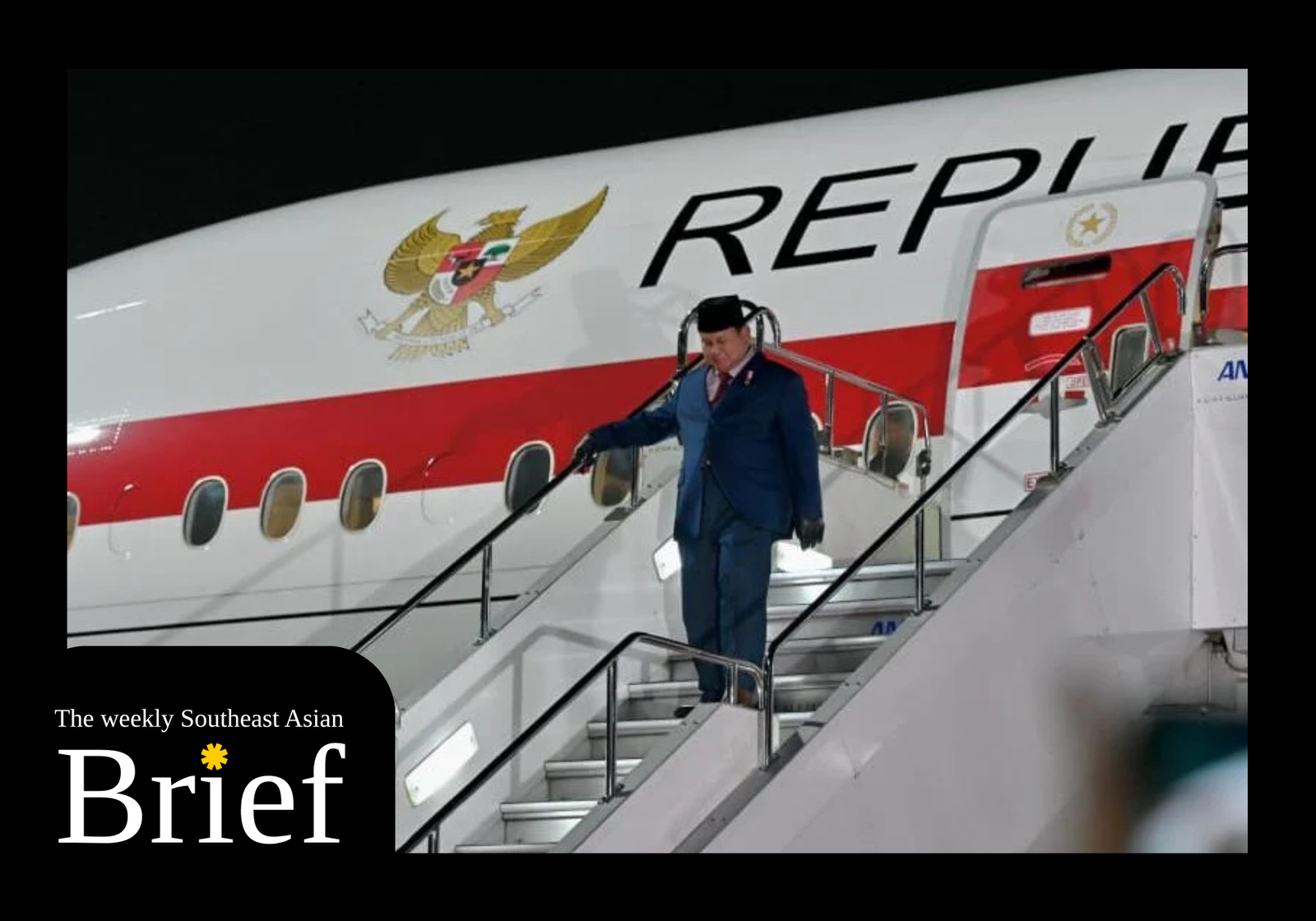
Indonesian President Prabowo Subianto arrived at Haneda Airport, Tokyo, Japan, on March 29. (Indonesian Presidential Secretariat)
“As middle powers, we have the same concerns. We both need stability and peace.” On April 1 in Seoul, Indonesian President Prabowo Subianto emphasised this point to South Korean President Lee Jae-Myung.
After a four-day tour of South Korea and Japan, President Prabowo returned to Jakarta on 2 April—his first official visits to both countries since taking office in October 2024. The trip produced over US$23 billion in combined investment pledges and Memorandum of Understanding (MoU) signings, spanning energy, critical minerals, defence, artificial intelligence, and finance. But the real significance of the tour lies not in the headline numbers. It lies in what Jakarta is building: a diversified web of strategic partnerships designed to insulate Indonesia from great-power pressure while extracting maximum value from each relationship.
The most closely watched agenda item was the KF-21 Boramae fighter jet programme, a joint South Korean–Indonesian development project launched in 2015.At their summit on 1 April, Presidents Lee and Prabowo confirmed that joint development is on track for completion by June, and discussed Indonesia’s planned purchase of 16 KF-21 units—what would be South Korea’s first export sale of an indigenously developed fighter. Lee also pitched a new naval shipbuilding partnership, signalling Seoul’s intent to expand defence cooperation beyond aerospace.
In Tokyo, the defence dimension was quieter but no less significant. Japan’s Official Security Assistance programme has expanded sharply under Prime Minister Sanae Takaichi, and a proposed trilateral security arrangement with Australia was reportedly on the table—including a potential joint training facility on Morotai Island. For Indonesia, these conversations sit within a broader procurement landscape that now includes Rafale jets from France, F-15EX fighters from the United States, KAAN jets from Turkey, and an ongoing evaluation of Chinese J-10Cs. Managing five parallel supplier relationships from five different geopolitical camps does raise maintenance cost and occasionally pose interoperability problems. However, the concept is not incidental—it is the operational expression of Jakarta’s bebas aktif doctrine: free and active non-alignment, now applied to defence hardware.
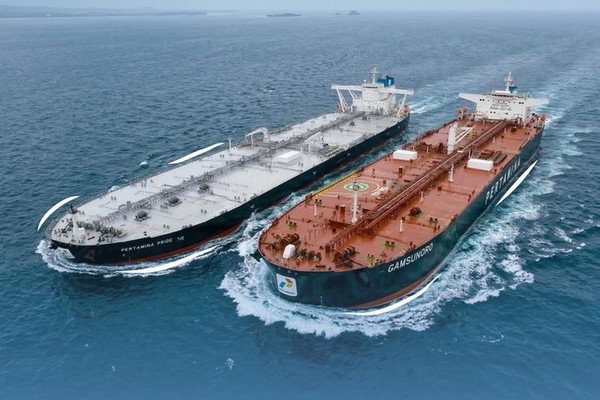
Both legs of the trip were shaped by the ongoing Middle East conflict. In Tokyo, the centrepiece was Japan’s US$20.9 billion commitment to the Abadi gas field in the Masela Block in Indonesia’s Maluku province—a flagship deep-water project that has been stalled for years and whose revival now carries strategic weight as traditional shipping routes face disruption. Overall, Prabowo’s Japan leg produced US$23.1 billion in investment pledges, heavily concentrated in energy, including clean energy and carbon capture partnerships.
In Seoul, energy security was equally front and centre. Lee explicitly framed Indonesia as a vital source of LNG and coal, noting that South Korean companies are set to receive some 820,000 tonnes of Indonesian LNG this year.The two sides signed agreements on clean energy cooperation and critical minerals supply chains—the latter directly tied to South Korea’s battery and EV manufacturing sector, which is seeking to reduce its dependence on Chinese-controlled nickel and cobalt processing.
Prabowo returned to Jakarta already implementing austerity measures to manage the fuel crunch—including a new work-from-home policy for civil servants and budget cuts intended to save an estimated Rp243 trillion (US$14.2 billion). The East Asia tour was, in this sense, as much about energy diplomacy as strategic partnership-building.
The broader pattern is worth noting. Seoul elevated the bilateral relationship to a “Special Comprehensive Strategic Partnership—a designation reportedly unique to Indonesia among South Korea’s partners. Lee conferred the Grand Order of Mugunghwa, Korea’s highest civilian honour, on Prabowo. In Tokyo, the visit was framed as a deepening of the existing Comprehensive Strategic Partnership, with Emperor Naruhito hosting a state luncheon.
To sum up, these are not merely ceremonial gestures. They reflect a shared recognition among mid-sized Indo-Pacific powers that the US–China binary is an inadequate frame for their interests. Jakarta, Tokyo, and Seoul are each, in different ways, building lateral connections that hedge against dependence on any single great power. Indonesia’s advantage is that it has something each of them needs: energy, minerals, market size, and strategic geography. The question is whether Jakarta is building faster than it is thinking.
About The Author