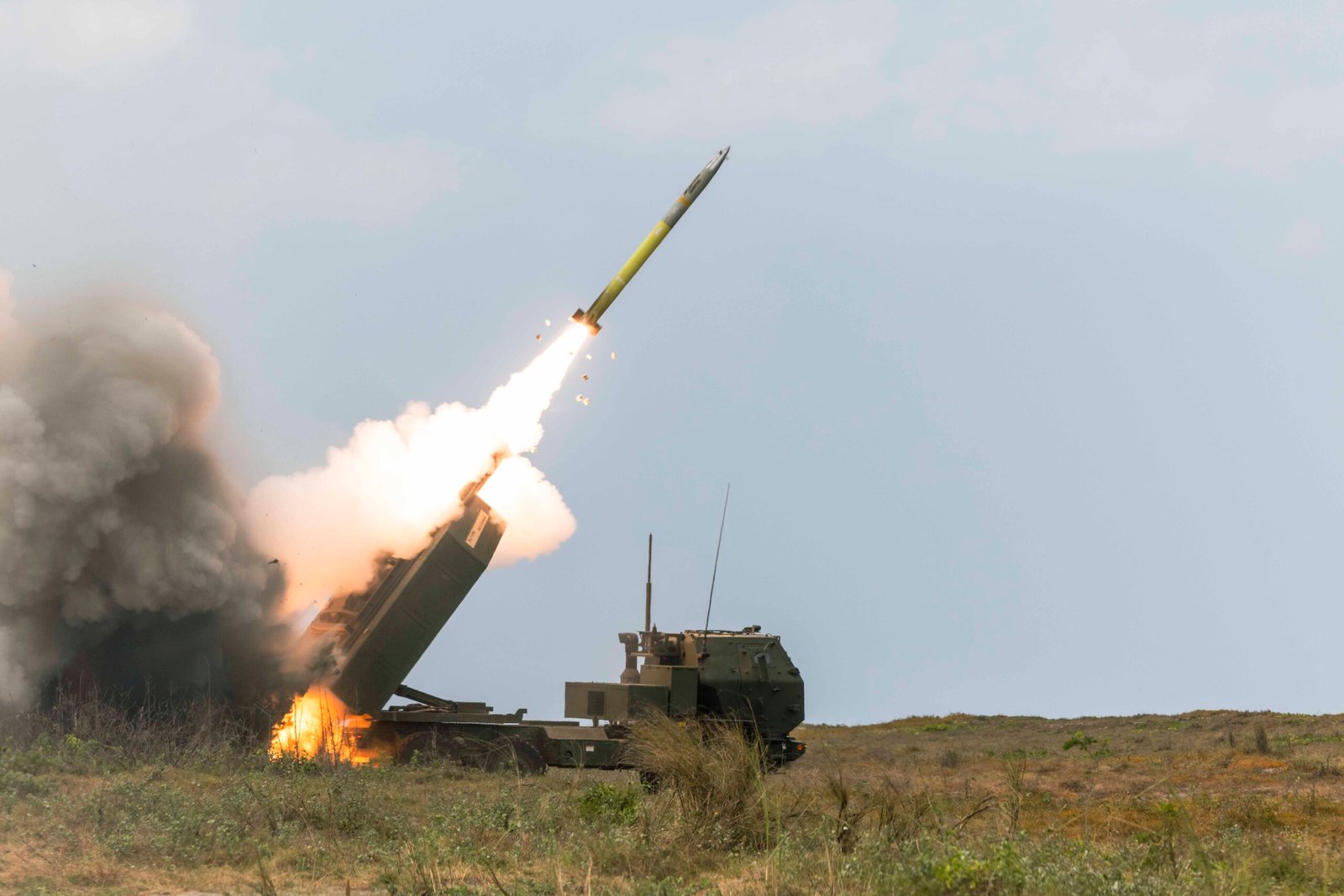
A U.S. Army HIMARS fires during Balikatan 23 live-fire training at the Naval Education, Training and Doctrine Command, Philippines, April 26, 2023. (U.S. Marine Corps photo by Sgt. Samuel Fletcher)
Commenced on April 20, the 41st iteration of Exercise Balikatan, an annual joint military exercise between the US and the Philippines, has drawn sharp criticism from the Chinese authorities.
Speaking on the very same day, Guo Jiakun, the Spokesperson of the Ministry of Foreign Affairs of China, stated that, “no military and security cooperation should be conducted at the expense of mutual understanding and trust as well as peace and stability in the region,” adding that such cooperation may “backfire” when they target or harms the interests of any third party.
As a response, the Chinese Southern Theatre Command, one of the five joint theatre commands of the Chinese People’s Liberation Army (PLA), recently conducted military drill operations on April 24 near Luzon Island, deploying Naval Task Group 107 as part of “corresponding military operations”. Training includes air‑sea coordination, live‑fire training, rapid manoeuvres, and underway replenishment, all designed to examine the effectiveness of integrated joint operations.
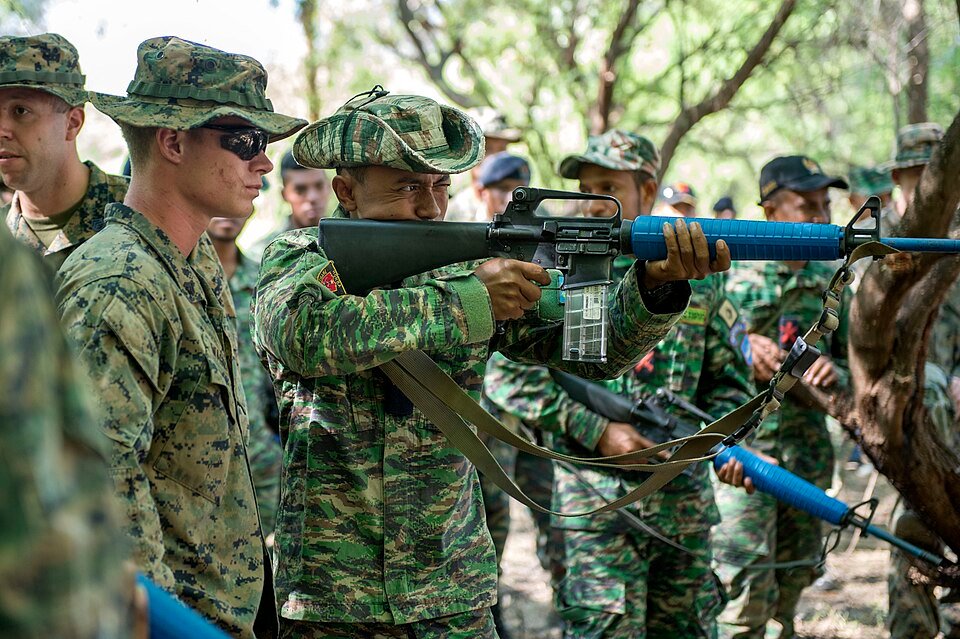
Such reactions are perhaps unsurprising, given the scale of the exercise. This year’s Balikatan exercise—the largest ever —features over 17,000 military personnel from the United States, the Philippines, Japan, Canada, France, Australia and New Zealand. Training spans maritime security, live-fire drills, and cyber defence, reflecting a broader commitment to the principle of a free and open Indo-Pacific.
Apart from military preparedness, this exercise has also evolved to strengthen strategic partnerships with the participating countries. In particular, the Philippine Navy reinforced its commitments on the United Nations Convention on the Law of the Sea (UNCLOS) alongside the Japan Maritime Self-Defense Force (JMSDF). The Philippines Department of Defence also expanded C4ISR capabilities (command, control, communications, intelligence, surveillance and reconnaissance) and cyber defence cooperation with Canada.
Despite China’s objection, the Philippines assured that the exercise would continue. “We are unfazed,” Rear Admiral Roy Vincent Trinidad said, emphasising that the Philippines would not scale back the joint military drills with its “like-minded partners”.
About The Author