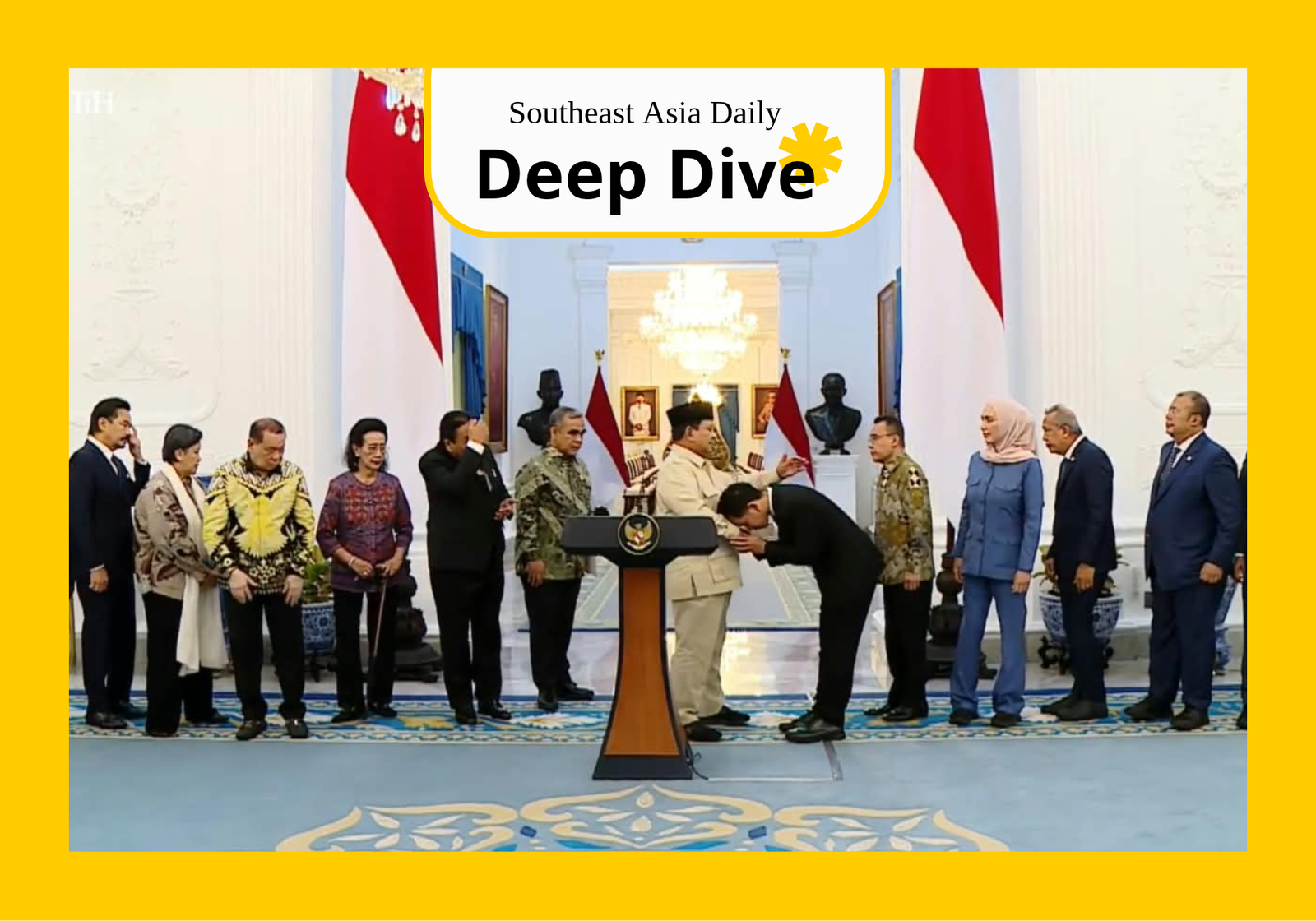
Then-Indonesian Vice President Gibran Rakabuming Raka respectfully kissed President Prabowo’s hand after his resignation from office in November 2026. (Indonesian Presidential Office)
Political Misadventure
On November 12, Indonesia’s 14th Vice President, Gibran Rakabuming Raka, resigned from his office. It marks only the second time a sitting Indonesian Vice President vacates their position, after the country’s first Vice President, Muhammad Hatta, stepped down in 1956. Despite being unprecedented, Gibran’s resignation is not shocking as it follows a longstanding political feud between him and President Prabowo Subianto, who increasingly distances himself from Gibran and his father, Indonesia’s seventh President Joko Widodo. The lack of surprise is also caused by the fact that Gibran’s entry into politics was not without controversy.
The ex-vice president made his TV debut after his father, Joko Widodo, won Indonesia’s presidential election in 2014 against current president, Prabowo Subianto. During the occasion, Gibran decided to lash out after being insulted for not accompanying his father’s campaign against Prabowo.Coming from a non-politician and non-military background, Joko Widodo’s family felt like fresh air in Indonesian politics. The previous First Family, the sons of the country’s sixth president, Susilo Bambang Yudhoyono, are always proper and regal. In counterpoise, Gibran has devil-may-care and gnarly attitude and his brother Kaesang Pangareb is very jovial. Joko Widodo’s family was increasingly charming in the public’s eyes when they promised to avoid politics. Again, unlike the Yudhoyonos.
But power is a siren. The brothers answered the call and began their political odyssey. In 2019, Gibran ran as the mayor of Solo, where his father was once mayor, and before finishing his term, he joined his father’s former political adversary, Prabowo, to run as vice president.
“Don’t worry, Mr. Prabowo,” Gibran stated when he officially became Prabowo’s runnîg mate in 2023. “I am already here.”
Gibran was born in 1987. In 2024, during the elections that saw Prabowo-Gibran victory, he was 37, a few years short before fulfilling the age requirement to become a Vice President (40 years old). But in 2023, a college student from Solo, Almas Saqibbirru, challenged the age limit rule to the Constitutional Court. Almas argued that the limit negatively impacted young leaders like Gibran. Despite questions about Almas’ legal standing, including from former Chief Justice Jimly Asshiddiqie, the Court allowed him to argue his case. Incidentally (or not), the Court was led by Anwar Usman who married President Widodo’s sister in 2022.
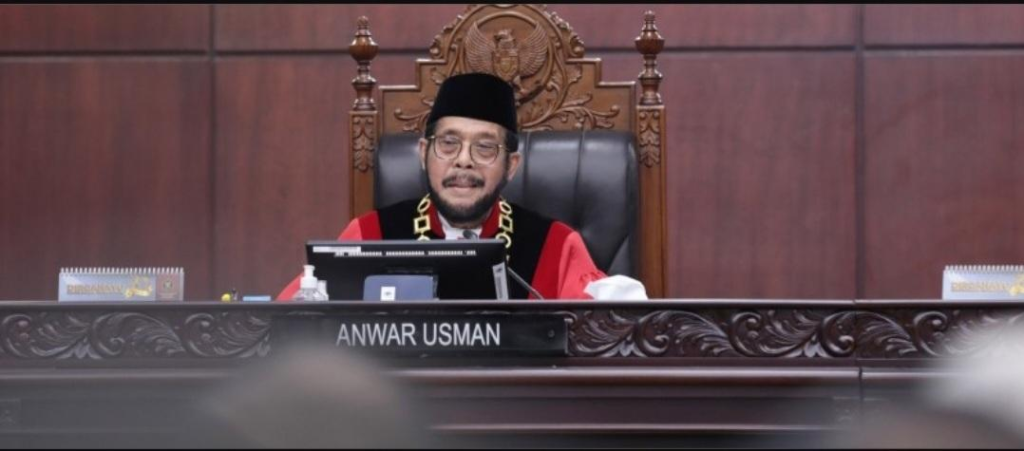
Former Chief Justice of the Constitutional Court Answar Usman. Source: Mahkamah Konstitusi RI
The ruling was marred with backlash. Former Vice Minister of Law Denny Indrayana publicly demanded Chief Justice Anwar Usman to recuse himself since his family member had “a direct interest” in that case. Facing the possibility of violating the ethics of his own Court, the nonchalant Chief Justice still continued to preside over this case. Apex courts elsewhere have faced the same question, and their answers show how far the line on recusal can be drawn. In the US, Justice Ketanji Brown Jackson recused herself from the case on Harvard University’s race-conscious admissions policy because she was a member of Harvard’s board. The link was institutional, since she held a role at one of the parties. More recently, Justice Samuel Alito also recused himself from a case involving an energy company. He holds no stake in that company, but he has investments in the sector, so the link was indirect. Both justices stepped aside on connections that are less direct than the one in Usman’s case, where a family member stood to benefit from the outcome.
Nothing good comes from meddling with the courts and the Constitution. Too many people, sadly, fail to correctly appreciate that great danger. In Why Nations Fail, Acemoglu and Robinson told a story of Hugo Chavez in Venezuela who meddled with the Supreme Court’s independence to gain favourable ruling, practically ruining the check and balance in his country (alongside its economy). Thomas Jefferson long warned about the sanctity of the “independence of the Legislature, executive and judiciary of each other” and how the judiciary needs this the most. But what independence when the Chief Justice was the sitting president’s brother-in-law?
The Constitutional Court handed Almas a victory with a 5-4 decision, which opened the path for Gibran. If Anwar Usman had recused himself, the result would have been 4-4 with the Deputy Chief Justice Saldi Isra voting against Almas. That scenario would have seriously impeded Gibran’s candidacy. But that was a what-if scenario.While President Prabowo is busy with his own policy battle—usually geopolitics, his flagship (but often criticised) free nutritious meal programme, and the phantom of “foreign interventions”—Gibran’s vice presidency was often empty of policymaking. It is known that President Prabowo is well-guarded by his own men, which apparently did not encompass Gibran (some observers took this as a sign of a cracked relationship, but that might be misnomer since Prabowo’s innermost circle is not freely accessible to other ministers as well). The millennial vice president then resorted to something he excels at: social media.
For years, Gibran already showed his political-savviness on X (formerly Twitter) before moving to Instagram and TikTok became his arsenal. Imitating his father’s populist style (“blusukan”), Gibran often posted videos with the common people. Additionally, Gibran explored AI, although his discourse was often limited to mastering the use of Generative AI instead of addressing pertinent issues such as data centres or the employment problems.
Still, Gibran ruled comfortably over his digital kingdom, until came a contest from Twitter. In August 2026, the same Denny Indrayana who reprimanded the Chief Justice announced a hundred-thousand dollar cash prize for anyone who could show Gibran’s high school diploma.
Three months later, Gibran fell.
How It Unraveled
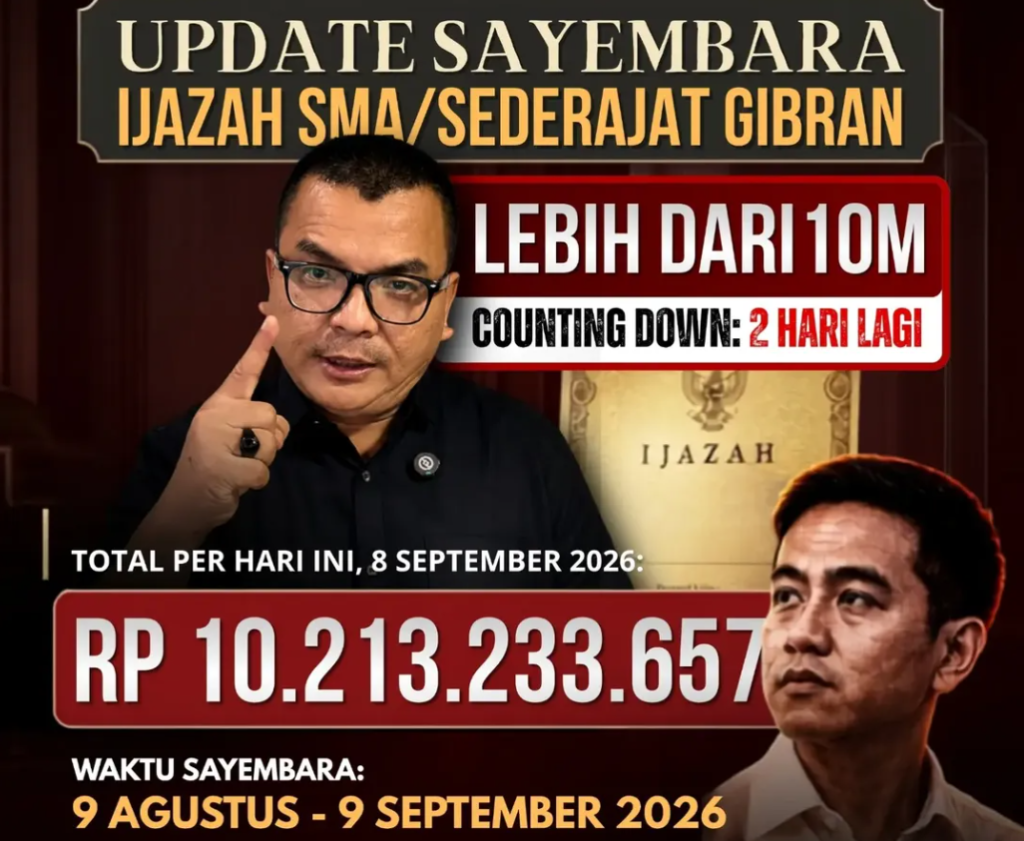
A screengrab from Denny Indrayana’s social media account offering more than 10 billion US dollar (547,000 US dollar) for those who can showGibran’s high school diploma.(@dennyindrayana/instagram)
For years, President Joko Widodo has become a subject of college diploma controversy, being accused of faking his college diploma. Earlier this month, former Minister of Youth Roy Suryo even managed to get the former president summoned to the court to show his real diploma. Gibran savvily weathered the issue early by showing his college diploma from Management Development Institute of Singapore (MDIS).
For some time, few doubted Gibran’s education credentials. But Denny Indrayana made a different move: He was asking for Gibran’s high school diploma.
After graduating middle school in Solo, Gibran relocated to Singapore and studied at Orchard Park Secondary School until 2004. Here, the mystery began: Gibran went to Sydney to study at the University of Technology Sydney (UTS), but then returned to Singapore in 2007 to study at MDIS. At the beginning of his vice president candidacy, Gibran was also thought to have finished his master’s in Sydney (the official website of Solo city wrote that Gibran studied at UTS after MDIS), but a closer reading indicated that Gibran did not study at UTS as a college student, but in a pathway program (“insearch”), before choosing to study at MDIS.
Denny Indrayana’s inquiry revealed fresh questions:
Did Gibran actually finish high school? It is important sîce aspiring vice presidents require to have at least completed high school. If so, where? Because Gibran did submit a document that he had high school education to the Ministry of Education and the election commission
The Constitutional Court granted Denny Indrayana the opportunity to bring forth his case, this time without Uncle Anwar Usman on Gibran’s side, who had since retired. The Court invited officials from the Ministry of Education which in 2019 issued the proof that Gibran finished high school. For days, the justices questioned the experts about international education.
Gibran’s camp argued the confusion simply came from the different education systems between Indonesia and Singapore. But that did not explain everything.
The finding showed that Gibran did not take the A-level in Singapore (equivalent to high school). And although the education expert in Gibran’s camp, Ina Liem, pointed out that there were alternative routes, such as pathway programmes, Gibran did not actually receive the graduation certificate from the UTS pathway either. He only received the “Certificate of Attendance” before enrolling at MDIS in Singapore.
That same “Certificate of Attendance” was the document that Gibran submitted to the ministry to secure his proof of high school education. Justice Saldi Isra finally asked the ministry official if there were other documents that Gibran submitted. None was the answer.
And that was the beginning of an end.
On October 6, the Constitutional Court ultimately decided they found no evidence that Gibran had a high school diploma or equivalent.
A few weeks later, the Supreme Court also ruled that the proof/document that the Ministry of Education issued for Gibran’s high school certificate was invalid.
Within a month, the two highest courts ruled against Gibran.
Within another month, Gibran exhausted all his legal avenues.
Quo Vadis, Gibran?
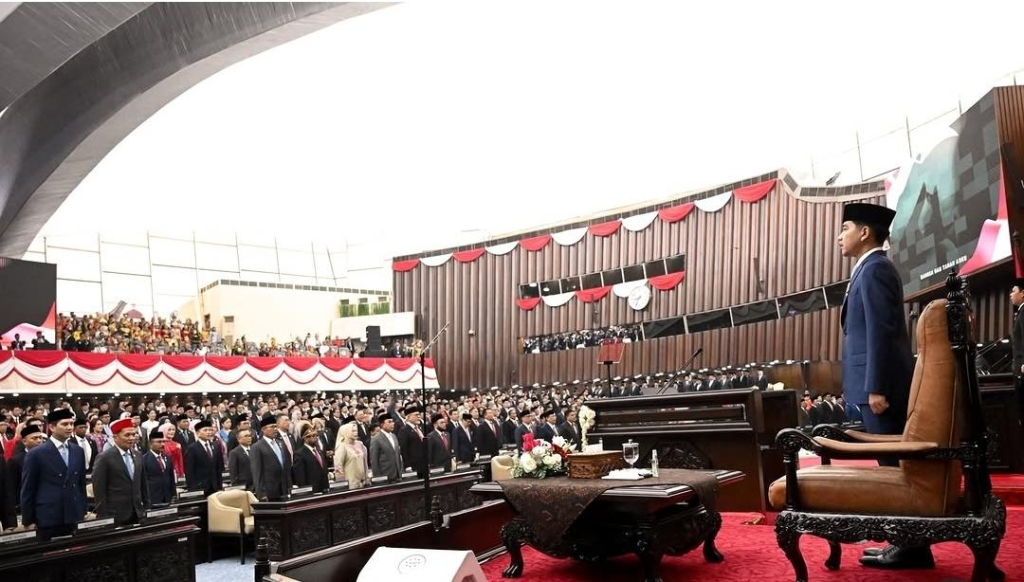
Gibran’s at the parliament in August 2026. Source: gibran_rakabuming/instagram
A day before his resignation, Gibran announced his intention to “keep fighting”, while his team believed that showing Gibran’s “Advanced Diploma” certificate from MDIS would fix this high school drama. His hail mary was to bring this case to the State Administrative Court (a lower court), a move so illogical that the Coordinating Ministry of Law Yusril Ihza Mahendra tossed that notion away in front of the TV cameras. Meanwhile, members of the Parliament began to move against Gibran.
A day after promising to keep fighting, Gibran sent his resignation letter to President Prabowo. Things passed uneventfully. On 12 November 2026, Prabowo formally announced Gibran’s resignation over the education issues. Prabowo hugged Gibran before letting him go. Later, Gibran uploaded a video on social media in which he assured he did not resign because of education issues.
The Economist published an anxious headline that Gibran’s resignation would increase domestic destability. Their anxiety was imaginative yet simplistic. Indonesian politics is not so simple anymore.
First, there are no signs of hostility between Prabowo and Gibran. Nor has former President Jokowi ever openly criticised Prabowo (his brother-in-law, the former Chief Justice, now serves as a presidential advisor). Communication problems? Perhaps, as evidenced by their contrasting understanding of the resignation. But, Gibran has had a mostly peaceful relationship with Prabowo in the past two years.
And secondly, gone was the day when Indonesia had a clear opposition. These days it’s possible to politically compartmentalise, to flex political muscles to intimidate your own allies, and to share bed with former enemies. A clear illustration is former Vice President hopeful Muhaimin Iskandar who now serves as President Prabowo’s minister after losing to him in the 2024 elections. Prabowo and Gibran do not have the same political base either. Gibran’s supporters are the loyalists of his father. On social media, Gibran’s supporters claim that they would not vote Prabowo if it was not for Gibran, but it did not mean Prabowo’s supporters were happy with Gibran as vice president either. All things considered, the two politicians are successful in showing a united front to the last moment.
But for now, Gibran will repose and hide his claws.
No Hero
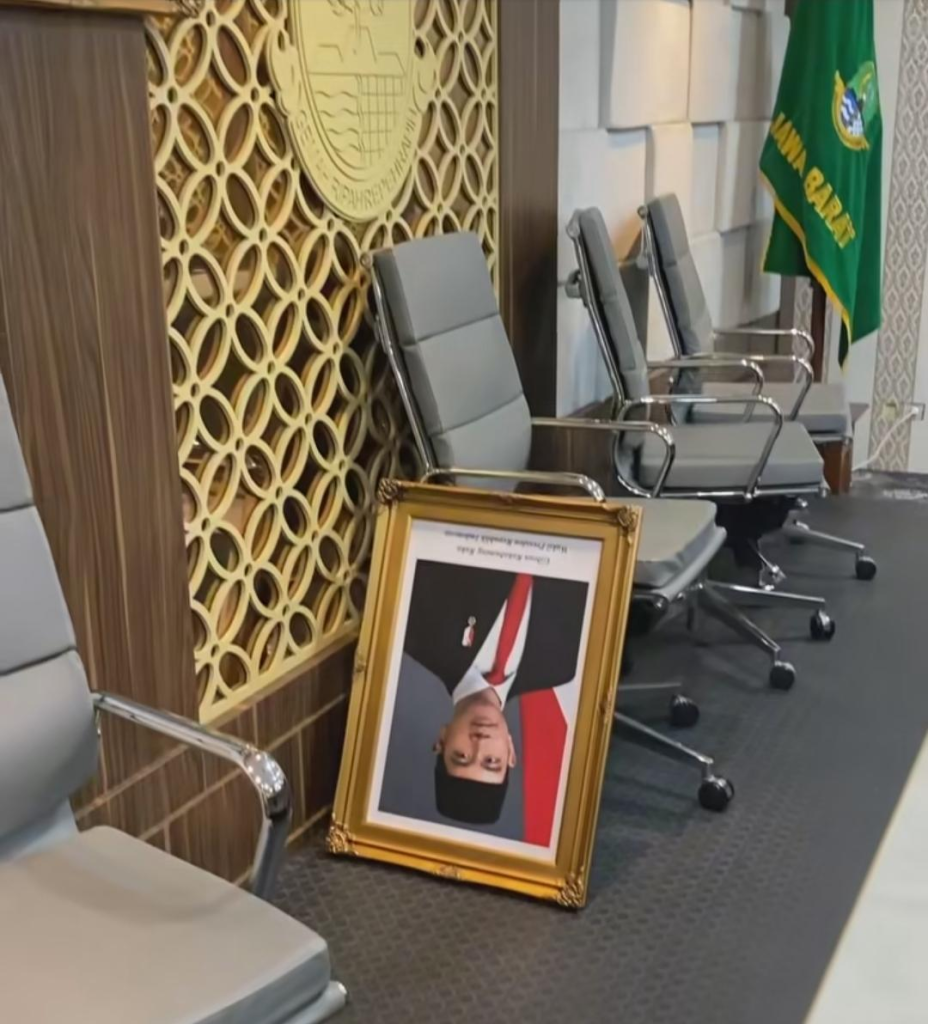
A viral video showed Gibran’s official portrait removed at the Regional House of Representatives in West Java.
There is no hero in this story. Indeed, Gibran is a victim, but a victim of his own game. He overplayed and overreached. Like Icarus, he rose too fast and fell before he knew it.
Nor can we be certain about Denny Indrayana’s motive in revealing Gibran’s diploma problem. Was it heroic? Was it political? The only one closer to hero is perhaps the Constitutional Court which seemingly remedied the error of their path when they failed to reprimand their own Chief Justice. It’s their redemption story.
Gibran had multiple opportunities to fix this issue beforehand. He could have taken A-level, or finished his pathway program, or passed the “Paket C” program from the Indonesian government for those without a high school diploma. Gibran missed them all. Likewise, the Courts no need to entertain his “Advanced Diploma”: It’s never part of the proceeding and Gibran himself never relied on it when trying to get his high school proof from the education ministry.
Had Gibran kept his promise not to get involved in politics, this political misadventure might have never happened. To be the first vice president who had to resign in the last 50 years, the first in the Reformation era.
In 2024, an account named “fufufafa” from Indonesia’s online forum Kaskus became viral. Fufufafa became notorious for its harsh comments, including to Prabowo. Social media users believed that account was linked to Gibran. Not easy for Gibran to deny it, since the news media (alongside a legion of netizens) found various things that allegedly linked fufufafa to Gibran’s handles, including his Twitter, his email, his phone number, and not to mention “fufufafa” admitted his name was Raka (which is Gibran’s middle name) who studied at MDIS.
For many years between 2014-2019, “fufufafa” wrote excruciating mockery about Prabowo: His divorce, his son’s sexuality, his loneliness and calling him having a mini stroke.
A day before his resignation, Gibran Rakabuming Raka: “Mr. President [Prabowo] is just like my own father.”
About The Author