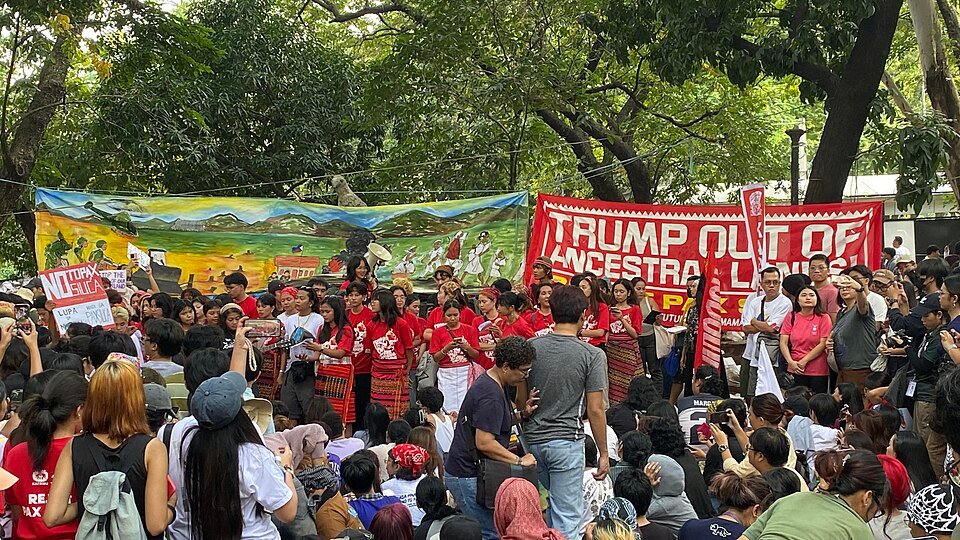
Protesters gather in Manila to demonstrate against US President Donald Trump’s visit and the proposed Pax Silica initiative during the 49th ASEAN Summit on November 17. (Wikimedia/Kej Andres)
On November 17, demonstrators gathered to protest US President Donald Trump’s visit to the Philippines and the proposed US-led Pax Silica initiative, as the country hosted the 49th ASEAN Summit and Related Summits.
Protestors were expected to march towards Mendiola near Malacañang, where Trump was scheduled to meet Philippine President Ferdinand Marcos Jr on November 18. The demonstrations centred on opposition to Pax Silica, a US-led initiative intended to strengthen supply chains for critical minerals, semiconductors and other advanced technologies through international partnerships.
They warned that the initiative could place additional pressure on the Philippines’ natural resources, particularly mining areas, agricultural lands and territories occupied by Indigenous communities.
The proposed initiative has faced scrutiny over its potential environmental and social consequences, particularly concerning the development of a proposed Economic Security Zone in Luzon. Meanwhile, protesters have called for greater transparency over the negotiations and questioned whether the initiative would adequately protect local communities and livelihoods.
The demonstrations also coincided with heightened security measures across Metro Manila. The Philippine National Police (PNP) deployed approximately 25,000 personnel around summit venues and nearby areas.
US President Trump arrived in Manila to attend the ASEAN-US Special Summit and hold bilateral discussions with Philippine President Marcos Jr. The two leaders were expected to discuss cooperation in defence and security, trade and investment, and regional developments.
However, US Ambassador to the Philippines Lee Lipton clarified that no major announcement concerning Pax Silica was planned during the summit. He said decisions would be made in consultation with the Philippine government, while Malacañang confirmed that negotiations remained ongoing.
The protests highlight the domestic challenges surrounding the Philippines’ expanding economic and technological cooperation with the US. While Pax Silica could create opportunities for investment and participation in advanced technology supply chains, concerns over environmental protection, Indigenous rights and resource management remain unresolved.
As negotiations continue, the Marcos administration faces the challenge of balancing economic and strategic cooperation with the US against domestic demands for transparency and safeguards for affected communities.
About The Author