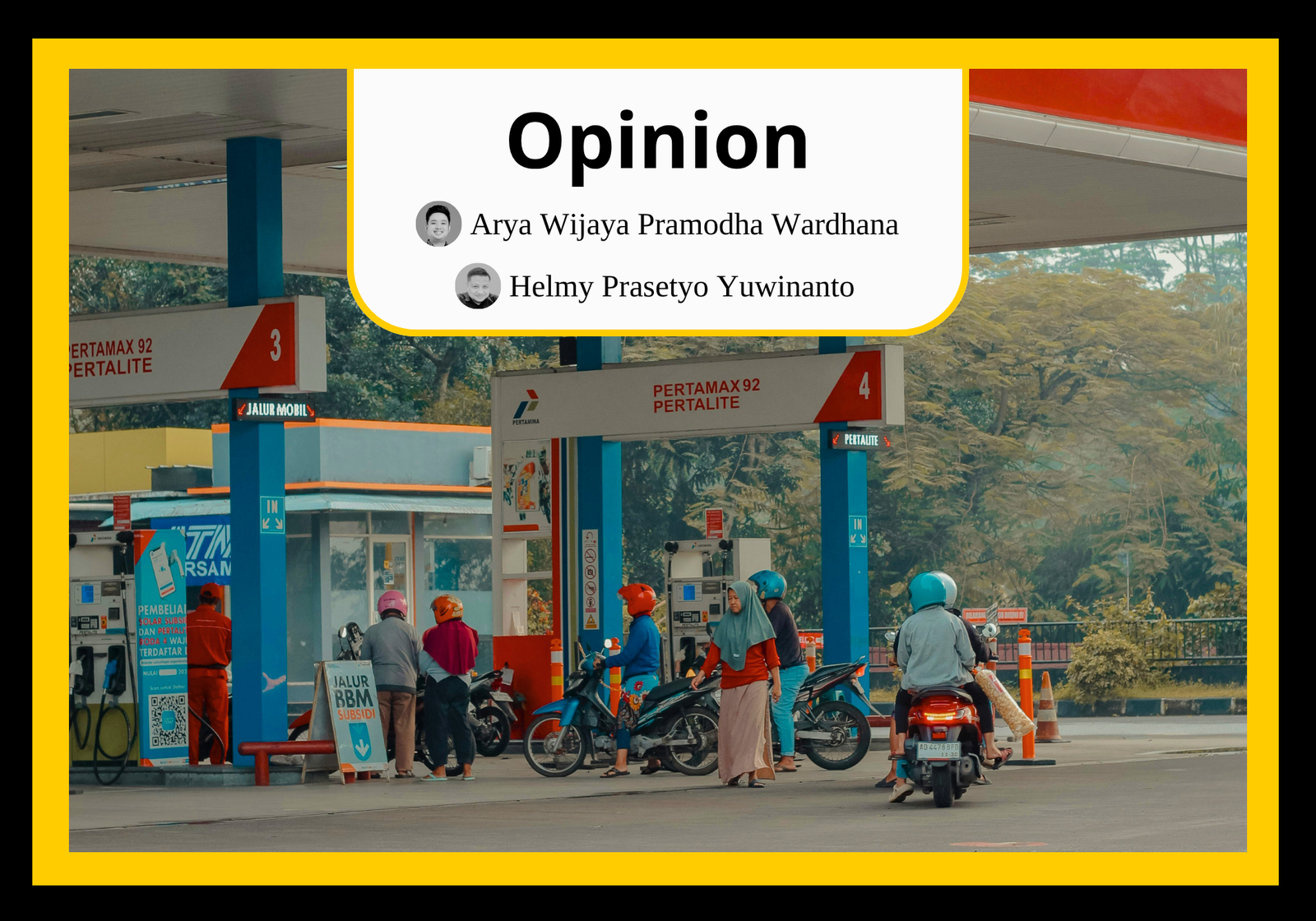
A Pertamina petrol station in Central Java, Indonesia. (Unsplash/Rayhan Avisena)
Arya Wijaya Pramodha Wardhana is a lecturer at the Department of Information and Library, Faculty of Social and Political Sciences, Universitas Airlangga. His research interests include information studies, the information society, modern cultural studies, and media literacy. His work primarily explores the intersection between digital information access and its social implications, with a particular emphasis on strengthening media literacy within contemporary culture.
Helmy Prasetyo Yuwinanto is a lecturer at the Department of Information and Library, Faculty of Social and Political Sciences, Universitas Airlangga. His research interests include information policy, digital surveillance, and copyright studies.
The views expressed are the authors’ own and do not represent SEA Daily or that of another organisation.
The conflict in Iran that erupted in mid-2026 shook the global oil market and forced almost all ASEAN countries to adjust their fuel prices in a short period. What is intriguing is not the price increase itself, as global crude oil prices affect all countries, but rather how each government chooses to communicate that increase to its citizens. Indonesia, Malaysia and the Philippines faced exactly the same shock but chose three very different paths. This comparison reveals an undeniable lesson: a mathematically correct policy can fail completely if the process is ignored, and conversely, a policy that is nominally painful can be accepted by the public if communicated in the right way.
Anatomy of A Price Shock
We start with Indonesia, because this is where the bitterest lesson occurred. On June 10, 2026, state-owned fuel company Pertamina raised the price of Pertamax RON 92 from 12,300 Indonesian rupiah (0.69 US dollar) to 16,250 Indonesian rupiah (0.91 US dollar) per litre, a 32% increase that was announced and implemented almost simultaneously, without a significant transition period. The consequences were predictable. Vehicle queues piled up at gas stations as many drivers hurriedly switched to subsidised Pertalite RON 90, leading to stock scarcity and delay in distribution, forcing the government to prepare additional logistical compensation on short notice. The government indeed emphasised that the inflationary impact would be limited because Pertamax’s market share is only 7%, but a quick survey showed that the cost of living sentiment actually worsened, especially in the Greater Jakarta area, which covers the capital and its satellite cities. This approach could be described as a “shock and cover” strategy, which involves shocking the public first and then closing off the space for debate before protests can be organised. The strategy is indeed effective in suppressing political discussion in the very short term, but it shifts the burden from the policy-making chamber to the fuel distribution lines in the field and that is a place much harder to control by the central government.
Some economists like Daniel Kahneman, Jack Knetsch and Richard Thaler have long warned about this phenomenon through their classic study on price fairness standards in the market. In their research, it is explained that the public tends to consider a price increase fair if the cause is clear, such as a surge in production costs or currency depreciation, but considers it unfair if it seems to exploit the situation unilaterally, regardless of the magnitude of the increase. In the same understanding and generalisation, it can be interpreted that consumers can accept a significant price increase as long as they feel involved in the process and are given time to adjust, but they will be furious even at a small increase if it feels sudden and non-transparent. Indonesia instead chose a path that violated this principle, and the result was uncontrolled consumer migration, not the neat subsidy savings that were expected.
The Predictability
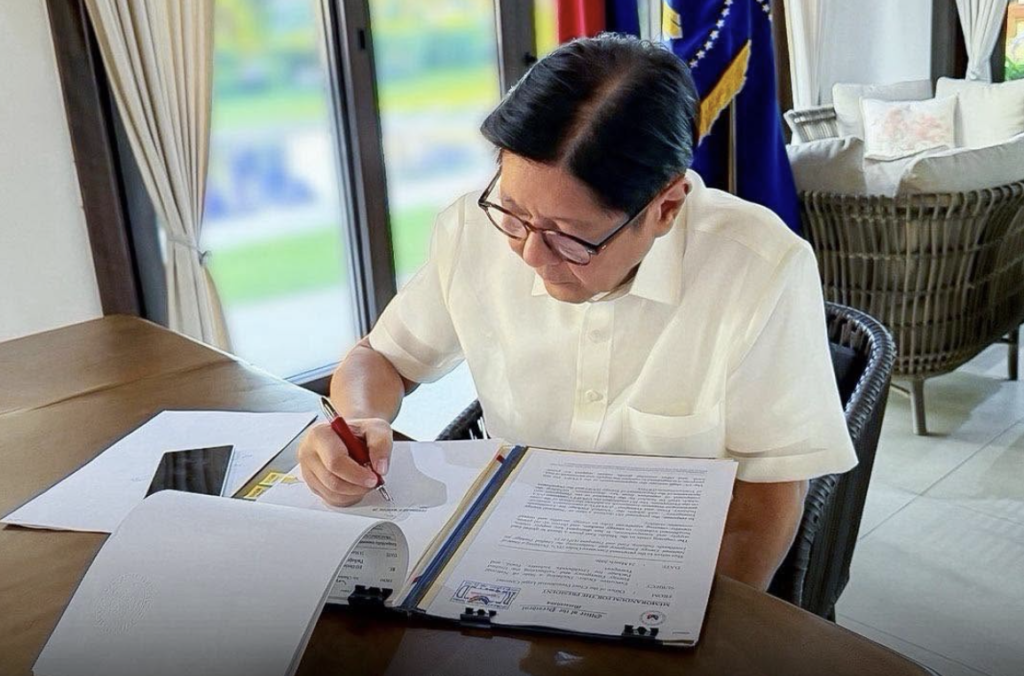
Philippine President Marcos Ferdinand Jr. signing Executive Order No. 110, declaring a state of national energy emergency in March 2026. (Presidential Communications Office)
Compare that with the Philippines. Since March 2026, the Philippine Department of Energy has tightened the weekly price adjustment scheme, where oil and gas companies are only allowed to change rates every Tuesday, with some significant increases implemented gradually or staggered. In the week of June 2 to 8, 2026, Premium 95 gasoline was traded in the range of 86.72 Philippine peso (1.41 US dollar) to 92.25 Philippine peso (1.50 US dollar) per litre, compared to the pre-crisis average of 50.43 Philippines peso (0.82 US dollar) to 60.27 Philippine peso (0.98 US dollar). That translates to an increase of 40 to 70%, an amount that is clearly not small and remains painful for households and transportation business operators. However, the predictable weekly rhythm provides something that the Indonesian case lacks, namely certainty. Transport entrepreneurs can factor the projected increase into their fare calculations, households can schedule refuelling before the adjustment day, and the media had time to communicate the reasons for the increase to the public before it actually happens. Inflation has indeed continued to rise, as reflected in the May consumer price index (CPI) which grew by 4.1% year-on-year, but daily volatility has significantly decreased, reducing the shopping panic that usually exacerbates the psychological impact of a price increase.
More importantly, the Philippines publicly publishes its pricing formula, which refers to the MOPS reference price plus logistics tariffs, allowing the public to verify whether the price increase is justified or manipulated. Such transparency fosters trust and eliminates the space for rumours or conspiracy theories that usually arise whenever energy prices suddenly increase. Indonesia, on the other hand, has not yet implemented the publication of an equivalent pricing formula, so every price increase is always accompanied by public speculation about the motives behind the decision.
Malaysia took a different third path. Starting on September 30, 2025, Kuala Lumpur launched a two-tier scheme called BUDI 95, where RON 95 is sold at 1.99 Malaysian ringgit (0.49 US dollar) for 18 million verified residents in the system, while general consumers pay the market price of up to 3.75 Malaysian ringgit (0.92 US dollar) per litre. Fiscally, this approach has proven to be neat, with subsidy savings reaching around 4 billion Malaysian ringgit (987.7 million US dollar) in just the first quarter of 2026.
The implementation on the ground also showed general acceptance. The process of validating population data did cause long queues at rural gas stations, and the May audit found a 7% cost overrun in subsidy cards. However, political resistance to this policy is relatively low, largely because the government communicated the plan six months before the official launch. A Merdeka Center survey even showed that 64% of respondents considered this scheme fair for low-income groups. An approach like the targeted shield indeed requires significant investment in digital infrastructure and carries the risk of data breaches and card misuse, but it proves that conditional subsidies can be accepted by the public if designed and communicated well in advance.
Malaysia stands out from the other two countries by clearly distinguishing between citizens who qualify for subsidies and those who do not. This approach is politically risky, as such differentiation can easily be politicised as discrimination or injustice among groups. However, because the Malaysian government engaged in a long period of socialisation and explained the eligibility criteria in detail long before the launch, the public actually accepted the logic behind the differentiation. This shows that conditional subsidies are not just a matter of technical database issues but also a matter of political communication about who deserves state assistance and why they are eligible for it.
No Reform Survives Without Trust
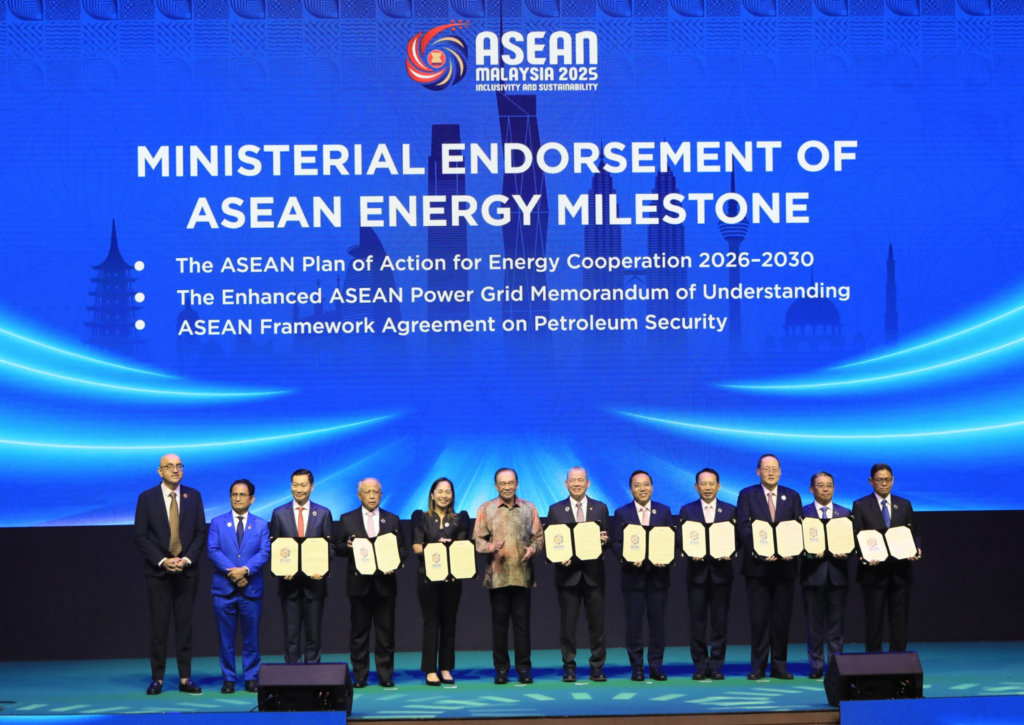
The 43rdASEAN Ministers on Energy Meeting (43rd AMEM) in October 2025. (ASEAN Secretariat)
If we look at the macro impact of the three, the pattern becomes clearer. Indonesia’s headline inflation widened from 2.7% to 3.08% between May and June, forcing its central bank to maintain the reference interest rate at 6.50% while preparing foreign exchange interventions as the Indonesian rupiah depreciated to the level of 17,850 Indonesian rupiah per US dollar. The Philippines, on the other hand, recorded a surplus in tax revenue despite cutting fuel tariffs, thanks to the post-pandemic recovery in consumption, although the external risk of a current account deficit of 3.2% of gross domestic product (GDP) remains a homework for the government. Malaysia claims subsidy savings equivalent to 0.8% of GDP, which is quite helpful in fiscal consolidation towards the target deficit of 3% of GDP by 2027.
There is also a regional dimension that deserves collective consideration. The energy price shock due to the conflict in Iran underscores that ASEAN actually faces the same structural vulnerability, namely a high dependence on crude oil and refined product imports from a region prone to geopolitical turmoil. So far, discussions on ASEAN’s energy resilience have mostly revolved around strategic reserves and pipeline infrastructure, whereas the lessons from these three countries show that domestic policy resilience is just as important as physical supply resilience. Forums like the ASEAN Ministers on Energy Meeting could serve as a platform for sharing best practices, such as how the Philippines designs a weekly price cycle or how Malaysia builds a verification system for subsidy recipients, so that each member country does not have to repeat the same mistakes when facing the next energy price shock.
Up to this point, the main argument of this article remains that the main issue is not the price set in each country but rather the way the decision is made and communicated. These three countries actually share the same risk in the future if the established patterns are not improved. Indonesia is indeed still holding the price of the subsidised Pertalite fuel, but the fiscal pressure is becoming heavier, as seen from the 208% year-on-year increase in energy subsidy spending until May, making the state budget space increasingly tight and further price adjustments are likely unavoidable in the near future.
If the next adjustment is again done with a shock and cover pattern like the Pertamax case, the government could expect to face the same problems, namely sudden consumer migration, pressure on subsidised fuel distribution and erosion of public trust in national energy decision-making. The Philippines is also not entirely safe, as a net importer of oil products, its dependence on the weekly price cycle remains vulnerable to a current account deficit that has reached 3.2% of GDP. Therefore, if global oil prices continue to be under pressure in the long term, the fiscal space to maintain liquified petroleum gas (LPG) and kerosene tax cuts could also shrink. Malaysia also faces its own risks, as the BUDI 95 scheme, praised for its targeting accuracy, still relies on the reliability of the data verification system, and the 7% leakage of subsidy cards in the May audit indicates that the costs of monitoring and system updates in the future will not be cheap, especially if the number of beneficiaries continues to increase amid widespread cost-of-living pressures.
In the case of Indonesia, at least three lessons are to be learned from its neighbours’ approach. First, open the fuel pricing formula to the public following the example of the Philippine Department of Energy, as such transparency has proven to reduce rumours and increase the legitimacy of pricing policies. Second, create a 12-month phased roadmap to equalise the prices of Pertalite and Pertamax, so that sudden consumer migration like what happened in June 2026 can be prevented from the start. Third, convert subsidies into data-based direct assistance, for example, utilising the database of the Extreme Poverty Alleviation Acceleration Targeting (P3KE) to distribute QR code-based fuel vouchers, emulating the spirit of BUDI 95 but with stricter data security to prevent leaks like those experienced in Malaysia from recurring in Indonesia. Moreover, the discourse on energy prices should not be monopolised by executives alone but should involve universities and independent research institutions so that the public receives explanations from more diverse and trusted sources.
Energy shocks are indeed unavoidable as long as the world remains dependent on the geopolitical stability of oil-producing regions like Iran and we must accept the reality that domestic fuel prices will continue to move in line with such global fluctuations in the future. However, the resilience of an energy policy is ultimately determined not by how quickly the government can raise prices, but by how well the government prepares its people to face such increases. Indonesia can learn a lot from the predictability of the Philippines and the precision of Malaysia’s subsidy targets, while both countries can actually learn from Indonesia’s ability to maintain subsidised diesel prices to ensure the stability of the national logistics sector. The main lesson remains the same for any energy policymaker in the region, namely that price reform is not only economically correct, but it must also be socially and politically appropriate, because policies that overlook the second dimension will sooner or later lose public support, which is most needed when a crisis occurs.
About The Author