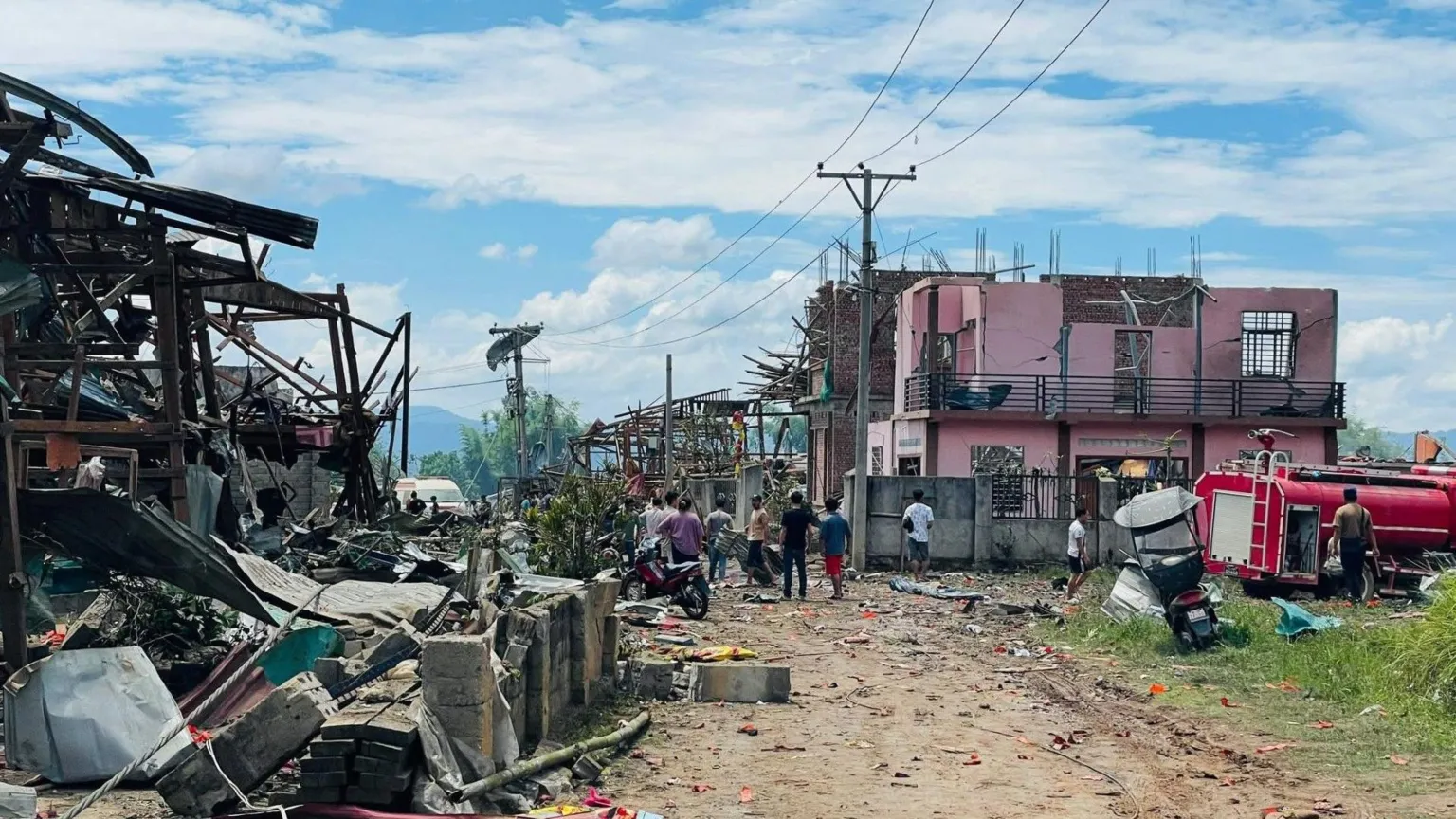
Damage is seen at a commercial property in Barangay Calumpang, General Santos City, following the 7.8-magnitude earthquake that hit Mindanao on June 8, 2026. (PCG)
On June 8, a powerful 7.8-magnitude earthquake struck the southern Philippines, with its epicentre located off the coast of Mindanao island. The earthquake caused massive casualties and widespread destruction, collapsing buildings, triggering landslides and leaving 32 victims dead.
The earthquake also triggered tsunami alerts in several countries across the Asia-Pacific region, including Indonesia, Japan and Australia. Authorities closely monitored sea-level changes and advised residents in vulnerable coastal areas to remain vigilant. The warnings were later lifted after experts confirmed that the risk of a major tsunami had passed.
Rescue teams have launched large-scale evacuation operations, relocating approximately 10,000 residents from affected areas. Medical response teams have also been deployed to provide assistance to survivors. More than 100 injured individuals have been transported to hospitals and temporary medical facilities for treatment. Evacuation efforts remain ongoing as authorities continue efforts to locate around two dozen people who are still missing.
An official death toll has yet to be confirmed, as the Philippines National Disaster Agency continues to compile and cross-check information from local sources. A verified update is expected to be released within the next few days.
Electricity and telecommunications services throughout the province were disrupted, although both have since been restored. The earthquake adds to a series of natural hazards that regularly affect the Philippines, as the country is situated along the Pacific Ring of Fire and frequently experiences earthquakes, volcanic activity, and severe tropical storms.
About The Author