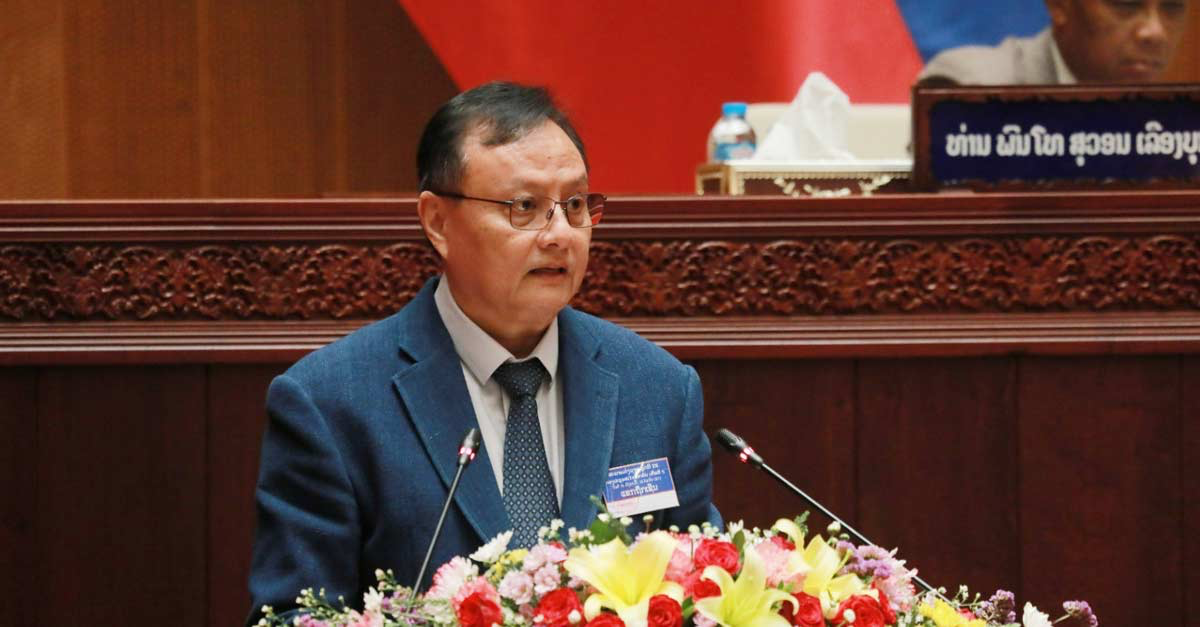
The Minister of Finance, Santiphap Phomvihane. (Pasaxon)
On January 30, Laos’ Ministry of Finance reviewed its 2025 financial performance and outlined policy priorities for 2026 at a meeting held on January 29. The Lao economy grew by 4.8% in 2025, with inflation easing to around 8.8% and macroeconomic stability broadly maintained despite domestic and global challenges. The review marked the final year of the current five-year socio-economic development plan and highlighted progress in poverty reduction, regional integration, and investment attraction. The discussions also focused on preparations for 2026, a pivotal transition year in which Laos is expected to graduate from Least Developed Country status, requiring adjustments to fiscal strategy, revenue mobilisation, and long-term development planning.
Business implications
The government’s review signals a stronger push towards fiscal discipline and modernised revenue collection as Laos prepares to get out of the Least Developed Country list in 2026. Businesses should expect tighter tax enforcement, fewer exemptions, and greater use of digital revenue and payment systems. At the same time, priorities around logistics, infrastructure, and financial modernisation may create opportunities for firms supporting public sector reform. As concessional support declines, competitiveness, efficiency, and value-added investment will become increasingly important for companies operating in Laos.
About The Author