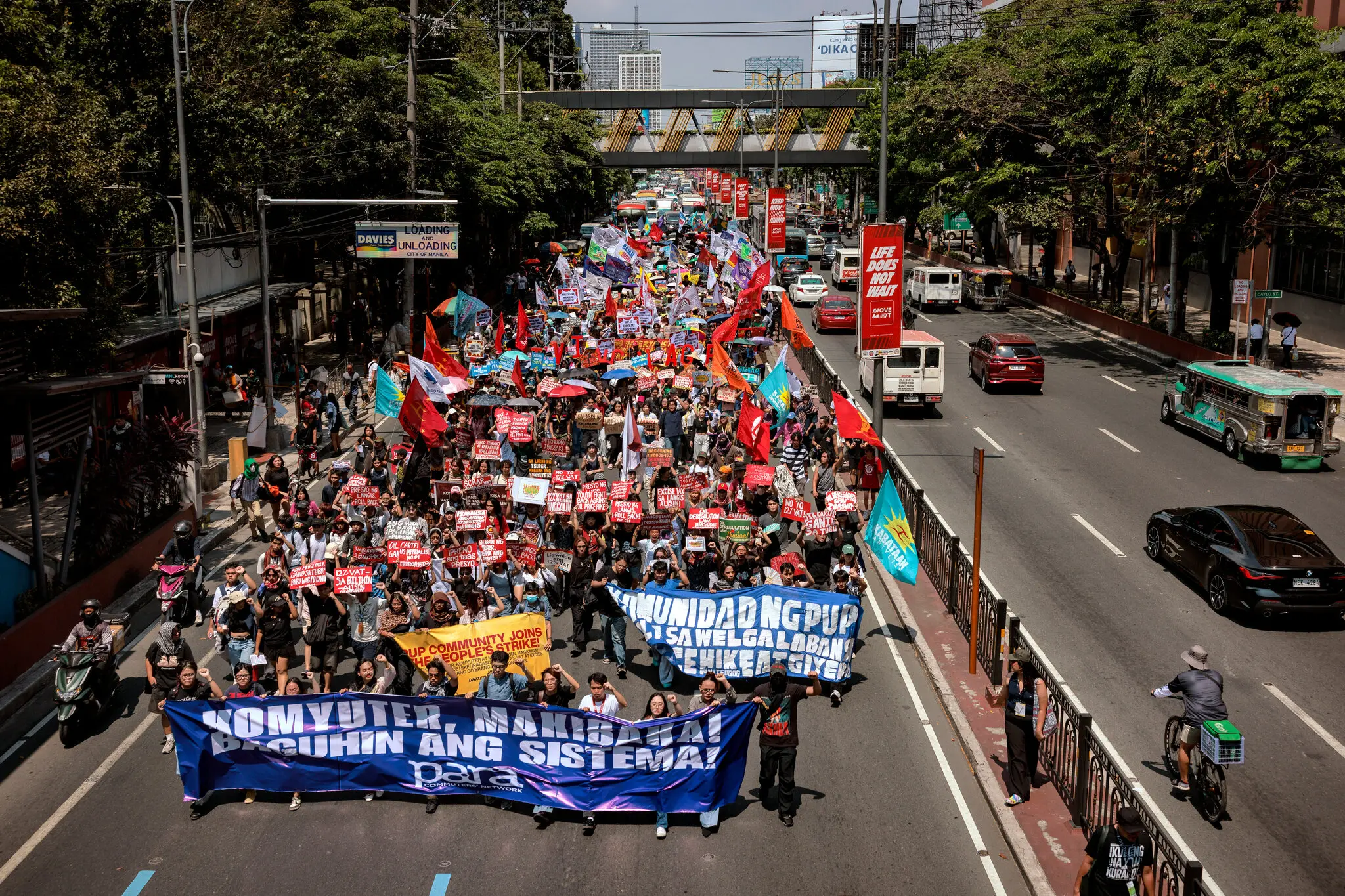
Civilians including transport workers marching in the streets of Manila to launch a strike in protest amid rising fuel costs. (Ezra Acayan / Getty Images)
On March 26, hundreds of transport workers in Manila, the Philippines, have launched a strike in protest against surging fuel prices, as the Philippines grapples with a worsening energy crisis. Diesel and petrol prices have more than doubled since the outbreak of war involving Iran on 28 February, prompting the government to declare a national energy emergency.
The two-day strike disrupts transport services across parts of the capital. Many drivers say the rising cost of fuel has severely affected their livelihoods, leaving them struggling to cover daily operating expenses and provide for their families. The Philippines is heavily dependent on imported oil, making the country particularly vulnerable to global supply shocks and rising energy prices.
The strike comes in the same week that a tanker carrying more than 700,000 barrels of Russian crude oil arrived in the country. Presidential spokesperson Claire Castro confirmed that the Sierra Leone-flagged vessel Sara Sky had delivered the shipment earlier in the week. The government has said it is exploring alternative sources of energy imports to reduce reliance on traditional supply routes.
President Ferdinand Marcos Jr. has pledged to diversify the country’s oil supply, noting that around 98% of the Philippines’ fuel requirements normally pass through the Strait of Hormuz, a key shipping route in the Middle East that has become increasingly sensitive amid regional tensions.
Transport groups leading the protest have put forward a range of demands, including the removal of fuel taxes, tighter controls on oil prices and an increase in passenger fares to help drivers cope with rising costs. Drivers of jeepneys, the country’s iconic and inexpensive minibuses were among the main participants, alongside motorcycle and ride-hailing drivers.
About The Author