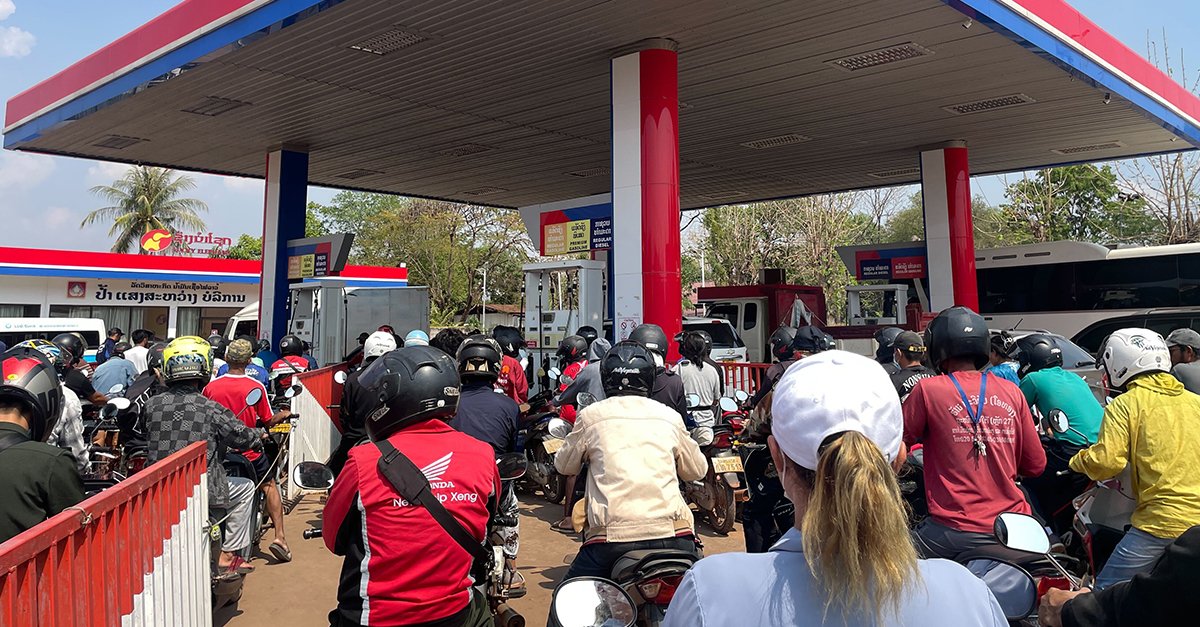
Motorists queue to refuel in Vientiane Capital during a fuel shortage in Laos, March 2026. (Thongsavanh Souvannasane)
On March 28, Laotian media outlets reported that the country is experiencing rising inflationary pressure, with prices increasing sharply during the first quarter of 2026, according to the latest report from the Ministry of Finance. The country’s headline inflation rate reached 9.7% in March, marking the third consecutive monthly rise. This follows rates of 6.2% in February and 5.1% in January, pushing the quarterly average well above the government’s annual ceiling of 5%.
The Consumer Price Index (CPI) climbed to 267.0 in March, compared with 258.7 the previous month and 243.3 in March 2025, indicating sustained year-on-year price growth. Rising costs were recorded across almost all major categories of household spending, placing increasing pressure on consumers.
The most significant surge came from goods and services, which increased by 39.8%, largely driven by rising global and domestic gold prices. Transport and communications rose by 18.1%, while housing, water, electricity and cooking fuel increased by 17.2%. Healthcare and medicines climbed 13.9%, education rose 12.2%, and alcohol and tobacco increased by 10%. Restaurants, hotels and clothing also saw price rises ranging between 7% and 9%.
A major factor behind the spike in transport costs has been a sharp rise in fuel prices linked to tensions in the Middle East. The unrest, which began in late February, disrupted shipping through the Strait of Hormuz, a key route through which roughly one-fifth of the world’s daily petroleum supply passes.
The impact on domestic fuel prices has been dramatic. Diesel rose from LAK 19,970 (US$0.91) per litre on 26 February to LAK 44,340 (US$2.02) by 28 March, representing an increase of more than 120% within a month. For the first quarter of 2026, Laos recorded an average inflation rate of 7%, already exceeding the government’s target.
What does this mean for businesses?
Laos’ accelerating inflation, driven largely by surging fuel and commodity prices, poses significant risks for businesses operating in the country, particularly through rising operating costs, weakened consumer purchasing power, and increased price volatility. The sharp spike in transport and energy costs will likely squeeze margins across logistics-dependent sectors such as retail, manufacturing, and tourism, while higher prices for essentials may dampen domestic demand. At the same time, currency pressure and inflation overshooting government targets could lead to tighter monetary or fiscal measures, adding further uncertainty for investors. In the near term, companies may need to adjust pricing strategies, delay expansion plans, or diversify supply chains to mitigate the impact of sustained cost inflation.
About The Author