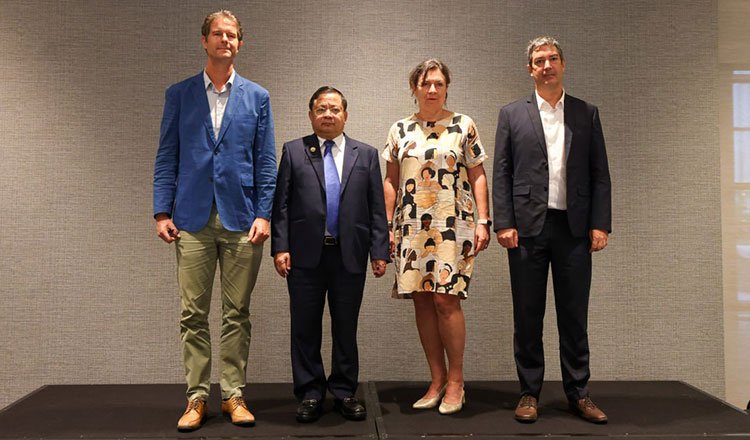
Bastiaan Teune, SNV Country Director in Cambodia; Por Nimol, Undersecretary of State of the Ministry of Mines and Energy; Carmen Heinze, Representative of the Netherlands Enterprise Agency (RVO); Vladimir Rojanski, Representative of the European Union to Cambodia (SNV)
On March 10, Cambodia’s Ministry of Mines and Energy (MME) and SNV Netherlands Development Organisation concluded two clean cooking programmes designed to improve rural livelihoods while promoting sustainable energy use. The Higher Tier Cooking Component (HTCC) and Smoke Free Village (SFV) projects, implemented between 2022 and 2026, were officially closed at a ceremony in Phnom Penh.
The event was led by Por Nimol, Undersecretary of State at the MME, and Bastiaan Teune, SNV’s Country Director in Cambodia, with representatives from the European Union and the Netherlands Enterprise Agency also in attendance. The initiatives aimed to encourage households to shift from traditional smoky cooking methods to cleaner alternatives, supporting both environmental protection and public health.
According to SNV, the HTCC project supported 62 rural small and medium-sized enterprises (SMEs), including 42 female-owned businesses, enabling the sale of 31,653 clean cookstoves and the installation of 731 domestic biodigesters. Meanwhile, the SFV project reached approximately 111,000 households, significantly improving cooking practices in rural communities. Officials said the initiatives also support Cambodia’s climate commitments under the United Nations Framework Convention on Climate Change (UNFCCC), contributing to national targets for emissions reduction and long-term carbon neutrality.
A new memorandum of understanding (MoU) between the MME and SNV was also signed to continue cooperation on clean energy and rural development.
In terms of implications for businesses, the projects highlight growing policy support for clean energy and sustainable technologies in Cambodia, creating opportunities for companies involved in renewable energy solutions, household energy products and rural service delivery. Entrepreneurs and SMEs may benefit from increasing demand for clean cooking equipment and related services as adoption expands. The emphasis on innovation funding and female-led enterprises also suggests stronger support for inclusive business models and local entrepreneurship. Over the longer term, expanding access to clean energy could stimulate rural economic activity, creating new markets for consumer goods, distribution services and community-based enterprises.
About The Author